
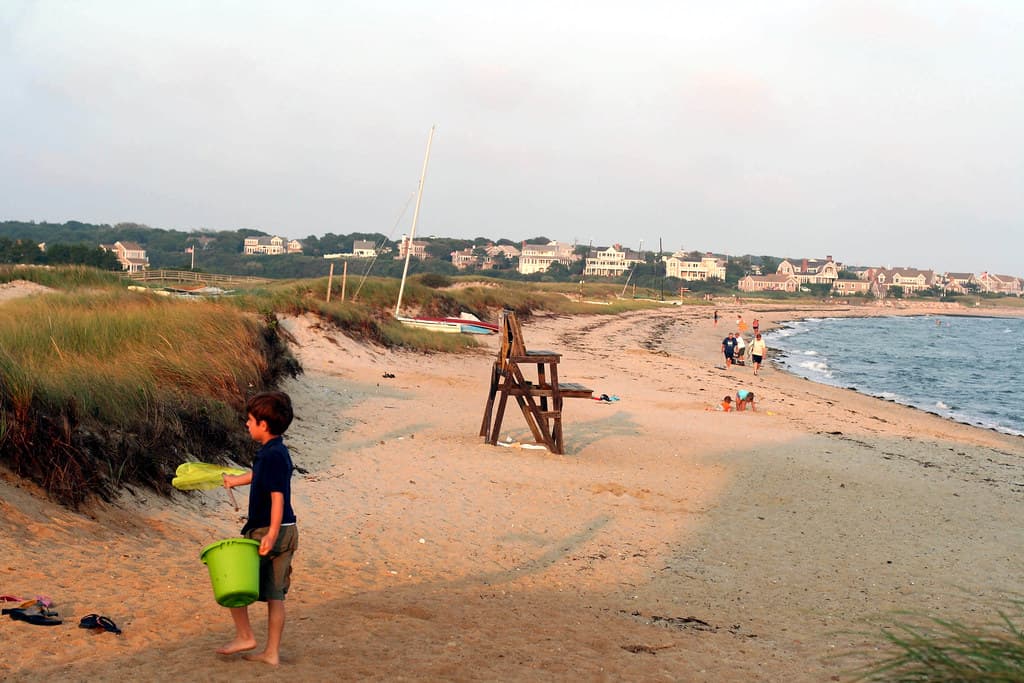
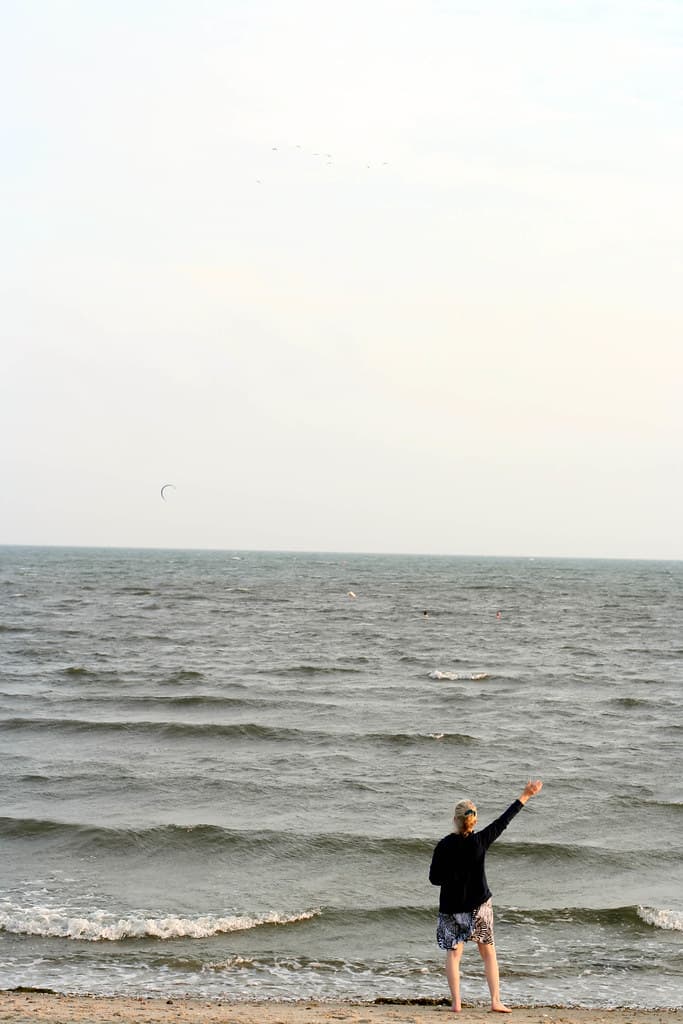
Locals in Chatham guard their beach access jealously, and Cockle Cove earns its anonymity through lack of signage and a residential approach that discourages wandering tourists. You'll park along a narrow lane where beach plum thickets scratch against passenger doors, then cross a short boardwalk onto sand that slopes gently into Nantucket Sound. The cove faces southwest, sheltered from open-ocean chop, and at low tide the waterline retreats to reveal flats studded with moon snail shells and stranded green crabs.
“One of Cape Cod's few remaining neighborhood beaches where town residents still outnumber visitors on peak summer weekends.”
 Credit: Flickr
IMG_0058 Cockle Cove Beach
Families claim their territory early on July mornings, planting umbrellas in the softer sand near the dunes while toddlers dig moats that fill and drain with each wavelet. The beach lacks facilities—no lifeguard stand, no snack bar—so you carry in what you need and carry out what remains. Teenagers practice their pitching arms with driftwood; fathers teach children to read the wind by watching how the eelgrass bends in the shallows. By late afternoon, the sun hangs directly over the water, turning the surface into hammered bronze.
September brings the best conditions: fewer families, warmer water retention from summer heat, and striped bass feeding close to shore as baitfish migrate. You might share the beach with a single dog walker or a pair of kayakers launching from the sand. The quiet feels earned, not manufactured, the kind of seclusion that exists not because a place is remote but because it asks you to look carefully before you find it.


