
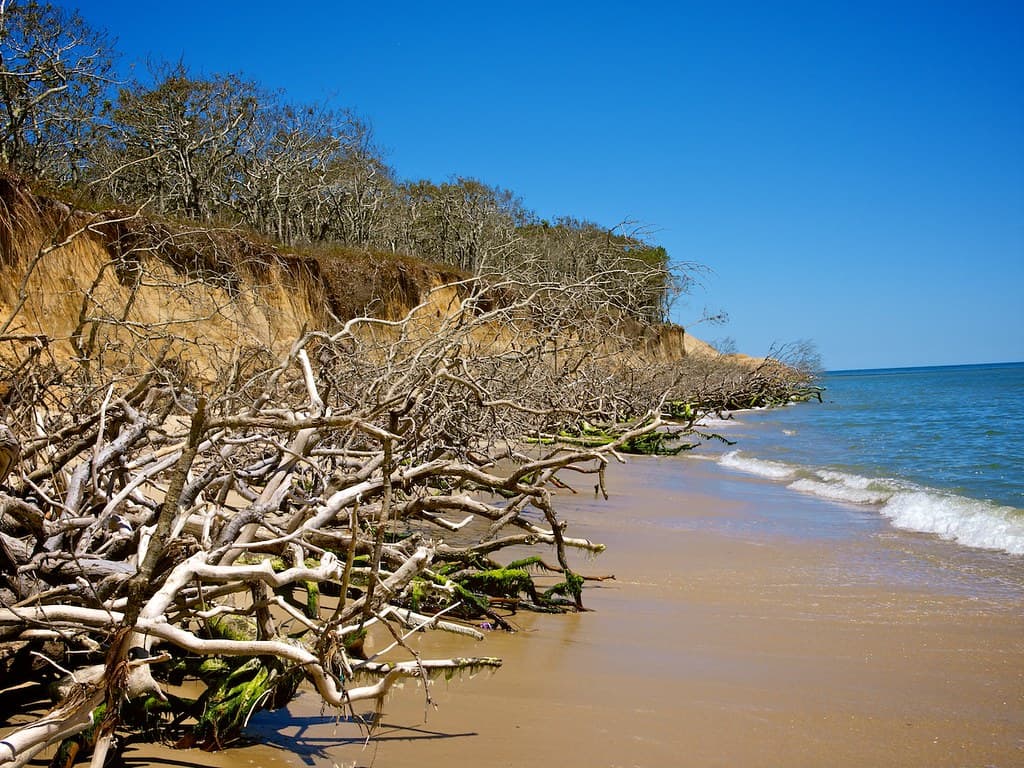
The drive alone tells you this isn't a beach for umbrellas and volleyballs. Sand track ruts snake through beach plum and Rosa rugosa, and when you crest the final dune, the Atlantic unfurls in slate-blue swells that collide with the outgoing tide from Katama Bay. This collision zone creates one of the Vineyard's most notorious rip currents—locals call it "the washing machine"—and the beach wears its wildness openly. Driftwood tangles mark the high-tide line; horseshoe crabs lumber through shallows during their May spawn.
“The confluence of ocean and bay creates a perpetually shifting coastline where rip currents and migratory fish runs dictate the rhythm of every visit.”
 Credit: Flickr
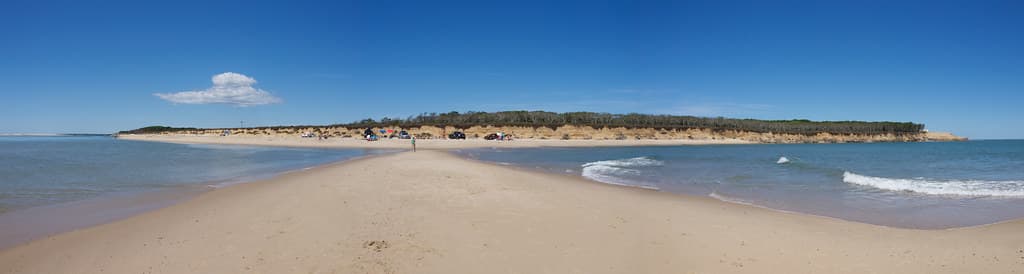
Wasque Beach on the Sandbar
Wasque sits on Chappaquiddick's southeastern shoulder, a barrier beach that's been breached, healed, and breached again by nor'easters. The point itself shifts like a living thing: sandbars migrate, channels deepen, entire sections of shoreline vanish after a single winter storm. You'll share the sand with striped bass fishermen who arrive before dawn, their rods angled into the whitewater, and birders tracking piping plovers through the dunes.
The Trustees of Reservations manage this 200-acre reserve, keeping development at bay and vehicle access limited to permit holders. Walk east toward the point and the crowds—such as they are—disappear entirely. Seals bob in the rip during autumn. The wind carries salt and the faint diesel note of the Woods Hole ferry, miles west. By late afternoon, the sun sets behind you, throwing long shadows across sand that holds your footprints only until the next tide.


