
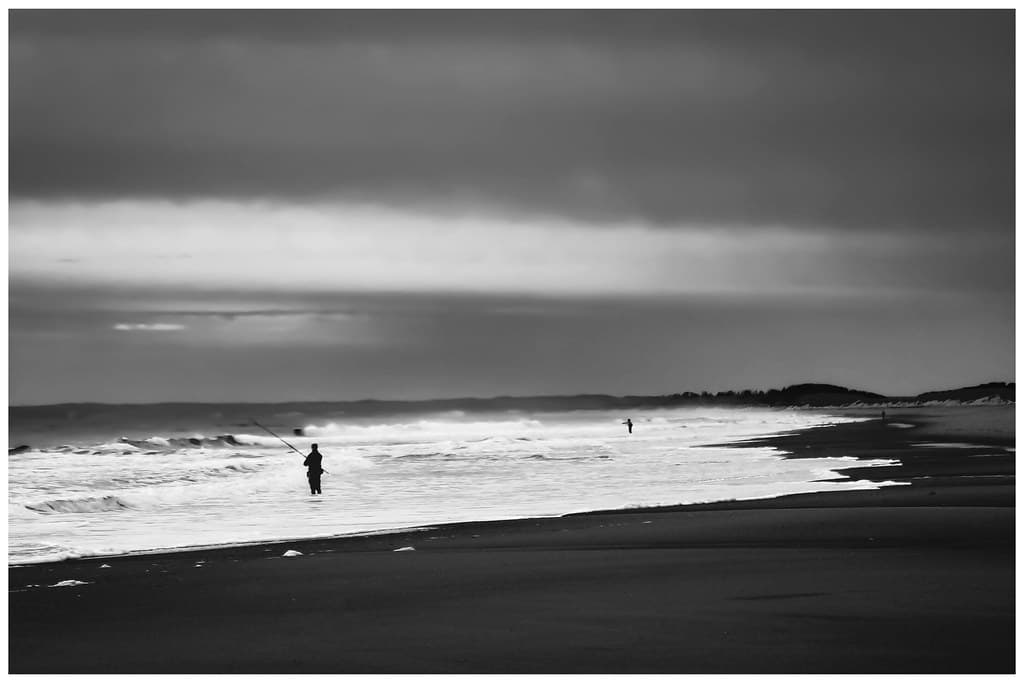
The drive across the single-lane Plum Island Turnpike takes you over tidal channels where egrets stalk minnows and cormorants sun themselves on wooden posts. Once you park at one of the numbered lots along Northern Boulevard, the boardwalks deposit you onto sand that shifts from fine gray to coarse tan depending on recent storms. The beach runs unbroken for miles, backed by dunes that shelter endangered shorebirds during nesting season—expect roped-off sections from April through August.
“One of the few New England beaches where federal wildlife protection has permanently frozen development, leaving only sand, surf, and migratory flyway traffic.”
 Credit: Flickr
Plum Island Beach, Newburyport
Waves here are shaped by the Merrimack River mouth to the north, creating sandbars that shift with every nor'easter. Winter brings clean groundswell and empty line-ups; summer delivers beachgoers and softer reform waves. The southern end near Parking Lot 1 tends toward mellower conditions, while the northern stretches near the Refuge entrance pick up size and power. Seals appear in autumn, trailing bluefish runs that bring striped bass close to shore.
The Parker River National Wildlife Refuge occupies the island's southern two-thirds, meaning no development beyond the beach grass. You'll walk past driftwood trunks worn smooth by tide, horseshoe crab shells, and rockweed left by the last high water. On foggy mornings, the lighthouse at Newburyport Harbor disappears entirely, leaving only the sound of bell buoys and the hiss of broken waves.


