
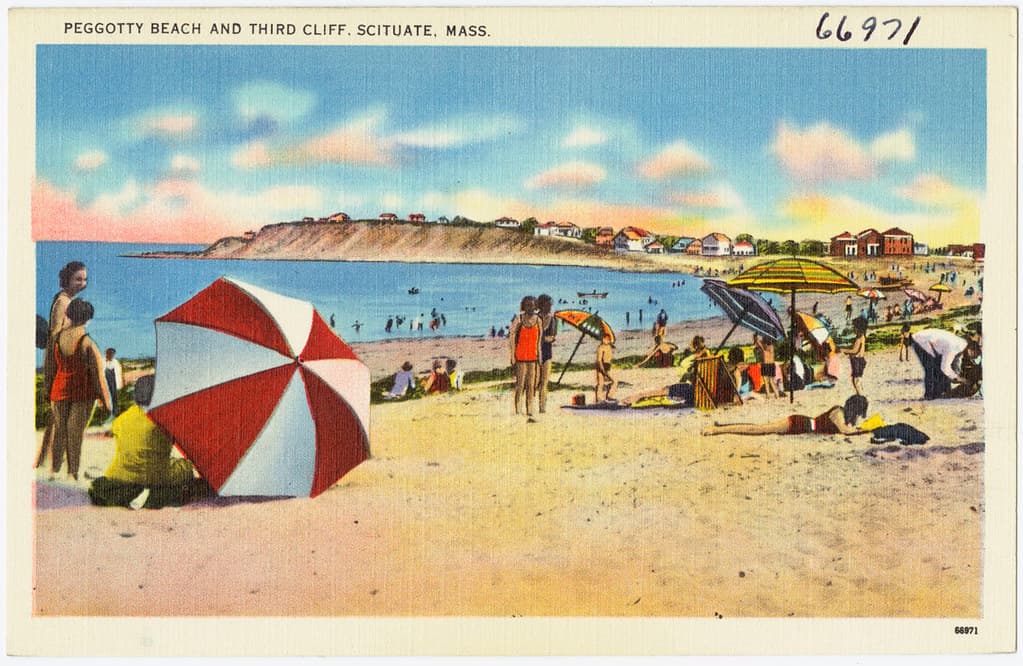
You reach Peggotty Beach by threading through a neighborhood of clapboard cottages where beach roses tangle over split-rail fences and flip-flops dry on porches. The beach itself is modest—a crescent of coarse sand bordered by dark, barnacle-encrusted rocks that emerge at low tide like sleeping whales. Children wade into water so gentle it barely ripples, their shrieks echoing off the seawall as they discover periwinkles clinging to stones.
“This South Shore beach remains defiantly small-scale, managed for neighborhood families rather than summer crowds.”
 Credit: Flickr
Peggotty beach and third cliff, Scituate, Mass.
This is not a beach for long, solitary walks. You come here to claim your square of sand early, to spread blankets beside the same families you recognize from last July, to watch toddlers fill plastic buckets while older kids leap from the jetty into water that stays shallow enough for parents to relax. The town manages the beach with care—lifeguards stationed, restrooms clean, parking limited to preserve the neighborhood's quiet charm.
Winter transforms Peggotty into something else entirely. Storm waves crash over the seawall, coating the sand with kelp and driftwood. Dog walkers appear at dawn, their footprints erased by afternoon tides. The summer cottages shutter their windows, and you have the shoreline to yourself—just you, the gulls, and the rhythmic sound of waves reshaping stones that have tumbled here for centuries.


