
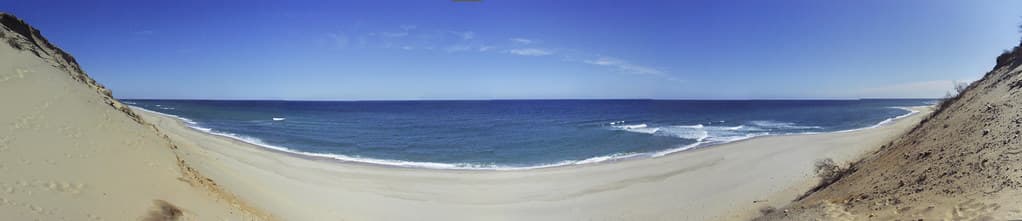
The wooden staircase drops you onto a beach that feels like a kept secret, even in high summer. Longnook stretches beneath ochre and sienna bluffs that rise nearly a hundred feet, their striated faces revealing centuries of glacial deposit. The sand here is coarser than the bay side, studded with small shells and the occasional smoothed brick fragment from shipwrecks long forgotten.
“The towering rust-hued bluffs create an amphitheater effect that amplifies the sound of the surf into a constant, meditative roar.”
 Credit: Flickr
Longnook Beach, Cape Cod National Seashore, Truro, MA
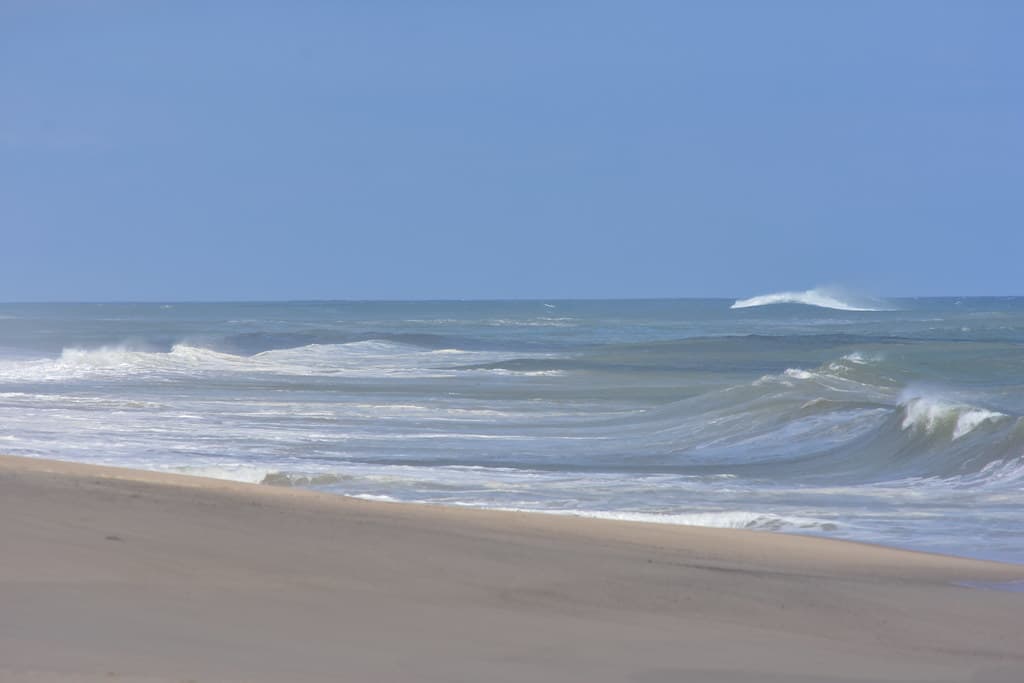
Waves roll in with a steady, purposeful rhythm, their white foam tracing temporary borders before retreating. The beach curves gently northward, disappearing into haze where the National Seashore continues its unbroken run toward Provincetown. Mid-morning, you might spot harbor seals bobbing beyond the breakers, their dark heads appearing and vanishing like punctuation marks on the horizon.
The bluffs shelter the strand from westerly winds, creating a microclimate where the air feels a few degrees warmer and the sand holds the sun's heat well into evening. At low tide, the beach widens to reveal tidal pools in the rocky outcrops, and you can walk for half an hour without retracing your steps. There are no vendors, no umbrellas for rent—just the Atlantic, the cliffs, and whoever else made the descent.


