
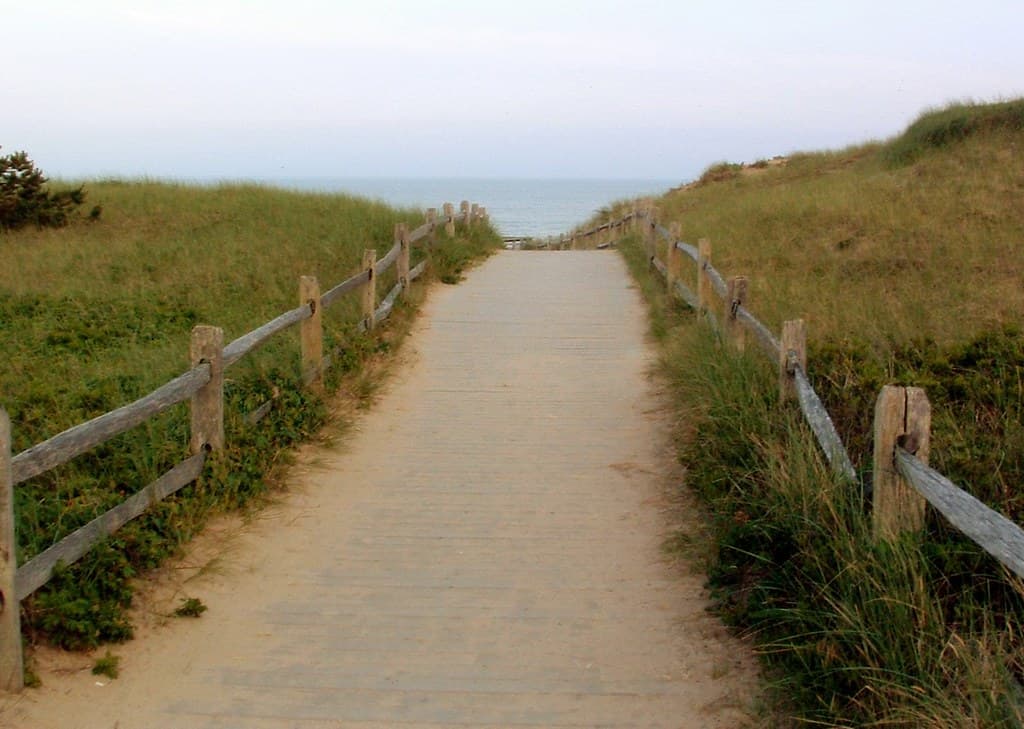
The staircase groans beneath your feet as you make your way down the bluff, salt wind pushing at your back. Below, Marconi Beach unfolds in a wide crescent of beige sand flanked by clay cliffs that tower sixty feet above the waterline. These bluffs glow amber in late afternoon light, their eroded faces revealing bands of sediment deposited when glaciers retreated from Cape Cod ten thousand years ago.
“This is where human voice first crossed an ocean wirelessly, launched from cliffs that continue their ancient retreat into the sea.”
 Credit: Flickr
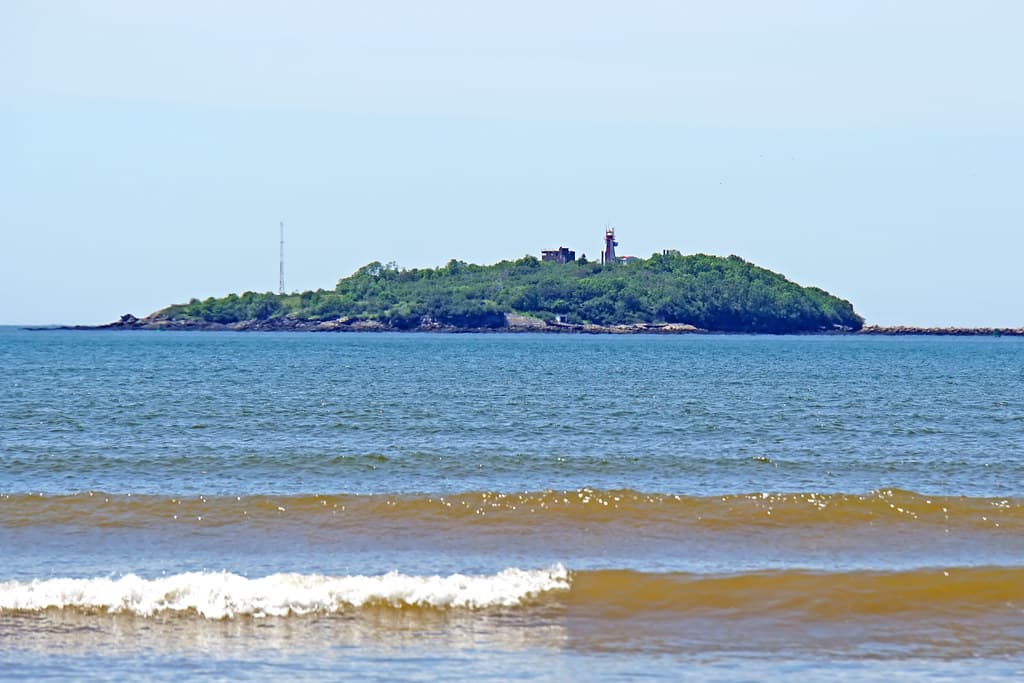
NB-00235 - First View of Partridge Island Lighthouse
The Atlantic here is untamed—no jetties or breakwaters soften its approach. Waves arrive in sets that rearrange the beach geometry weekly, carving steep drop-offs one month and gentle slopes the next. In summer, families stake out territory near the lifeguard stand while surfers paddle out beyond the break. Come September, you might share the entire beach with a handful of beachcombers and the shorebirds reclaiming their nesting grounds.
Above the beach, where Guglielmo Marconi erected his wireless station in 1901, interpretive plaques mark the spot where three dots sailed across the Atlantic to Cornwall. The station is long gone—a victim of the very cliff erosion you witness below—but the beach still hums with a certain historic resonance, a reminder that this remote spit of sand once connected continents.


