
The shoreline here refuses to behave like a typical beach. Instead of sand, billions of water-smoothed stones click and shift under your boots, their surfaces scrubbed white and grey by centuries of November gales. Superior's water hovers around fifty degrees even in July, numbing your ankles in seconds. The lighthouse—Michigan's oldest active beacon—stands sentinel at the point where Whitefish Bay funnels into open water, a place mariners have feared since the fur-trade era.
“This is where Superior's shipwreck coast meets sky, the exact turning point sailors have navigated—and failed to navigate—for two centuries.”
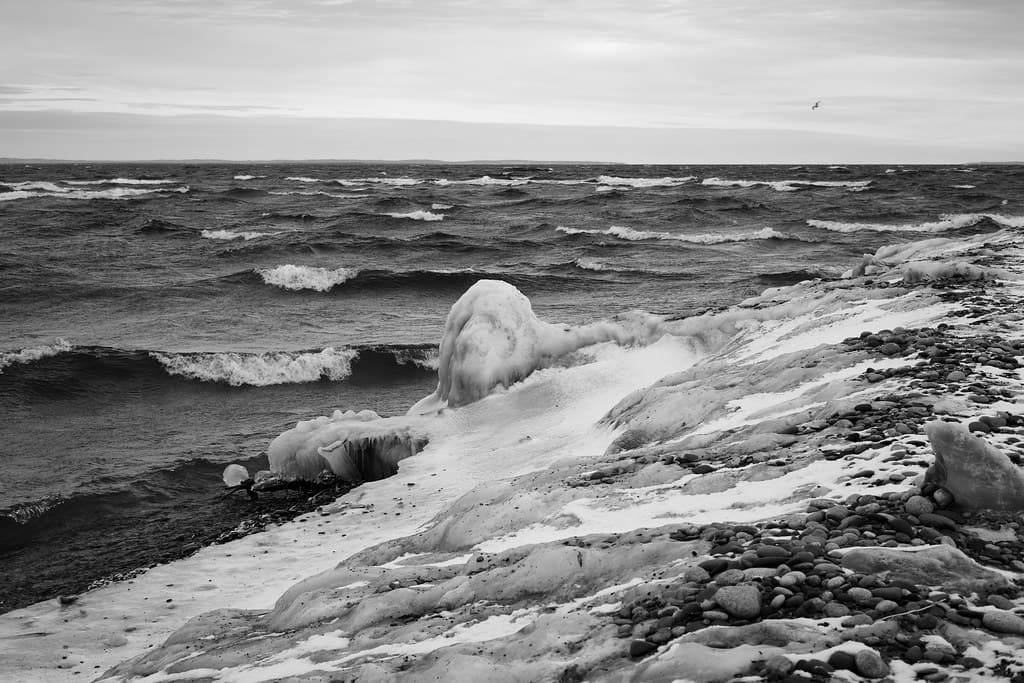 Credit: Flickr
Waves
You've come to the graveyard of the Great Lakes, where more than two hundred ships rest on the lake bottom. The adjacent Great Lakes Shipwreck Museum pulls you into that maritime history with recovered artifacts and the actual bell from the Fitzgerald, raised in 1995. But step back outside and the beach reveals a different character: this is prime birding territory during spring migration, when thousands of raptors and songbirds funnel through the point.
The Upper Peninsula cold follows you everywhere here—wind off the lake, mist rising at dawn, the perpetual sense that winter never fully retreats. Yet that severity is precisely what draws you back. You'll scan the horizon for ore carriers, pocket a few choice stones, and understand why sailors both loved and dreaded this unforgiving coast.


