
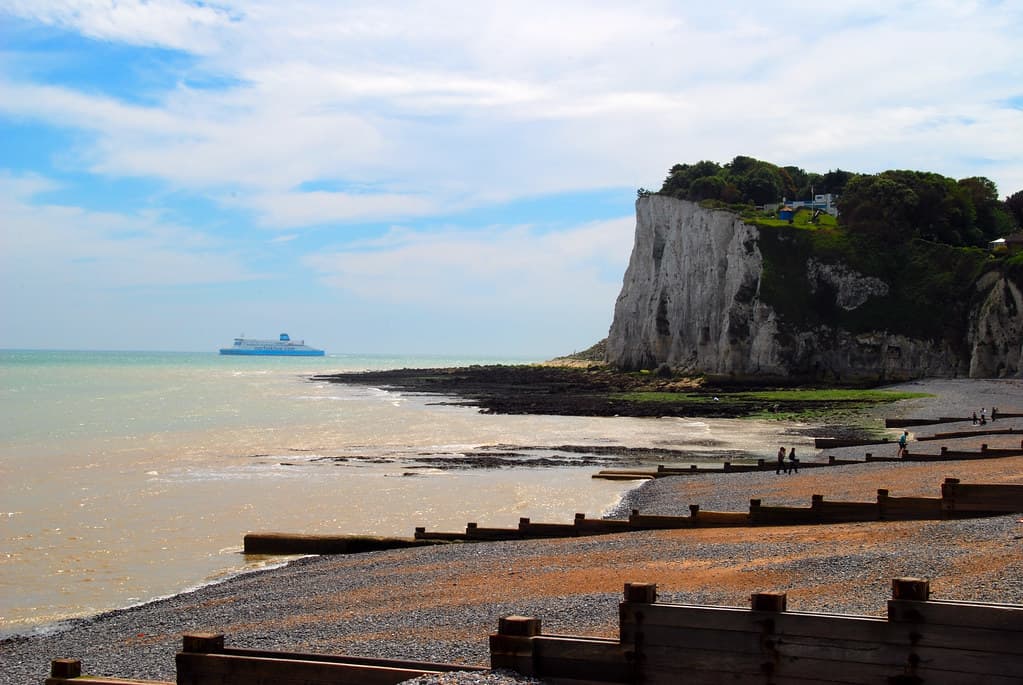
The cobblestone shoreline crunches beneath your boots—a mix of limestone, basalt, and the occasional honeycomb-patterned Petoskey stone worn smooth by centuries of wave action. Forty Mile Point Lighthouse rises white against the sky, its tower closed but its grounds open, offering a rare Great Lakes combination: maritime history without the crowds that swarm Mackinac Island an hour north.
“One of the few Great Lakes beaches where you can hunt 350-million-year-old Hexagonaria coral fossils beneath an operational lighthouse.”
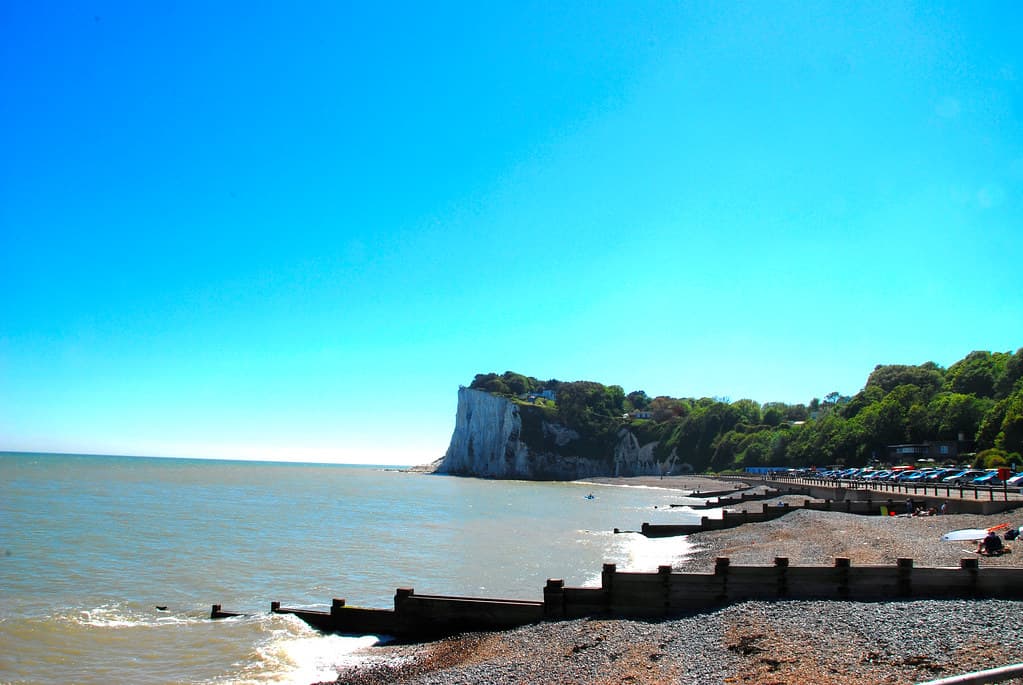 Credit: Flickr
Looking Out to Sea at St Margaret-at-Cliffe
Lake Huron here is temperamental. Morning may bring glassy water the color of slate, afternoon a chop that sends spray over the rocks. You'll watch freighters inch across the horizon, bound for the Straits of Mackinac or the limestone quarries that still operate in Rogers City. The water temperature rarely climbs above sixty degrees, even in August, but that keeps the tour buses away.
The old keeper's dwelling now houses a small museum—antique maritime equipment, shipwreck photographs, a Fresnel lens fragment. But the real draw is the shoreline itself: two miles of undeveloped beach where you can spend an hour scanning for fossils embedded in the rocks, the only sound the rhythmic clatter of stones reshaping themselves with each retreating wave. Come at dawn and you'll have the entire crescent to yourself, fog rolling in thick enough to muffle even the gulls.


