

You reach Castle Rock Shore Beach down a short path that winds past weathered cedars, emerging onto a shoreline where rounded stones click underfoot with each wave. The beach sits tucked beneath dramatic limestone bluffs that rise vertically along the Straits of Mackinac, their cream-and-rust-streaked faces pocked with fossil impressions and carved by centuries of ice and wind. Across the water, Mackinac Island's eastern shore forms a hazy silhouette, while thousand-foot lake freighters slide past close enough that you can hear the thrum of their engines.
“One of the few Straits of Mackinac beaches sheltered beneath dramatic fossil-rich limestone cliffs with front-row views of passing Great Lakes freighters.”
 Credit: Flickr
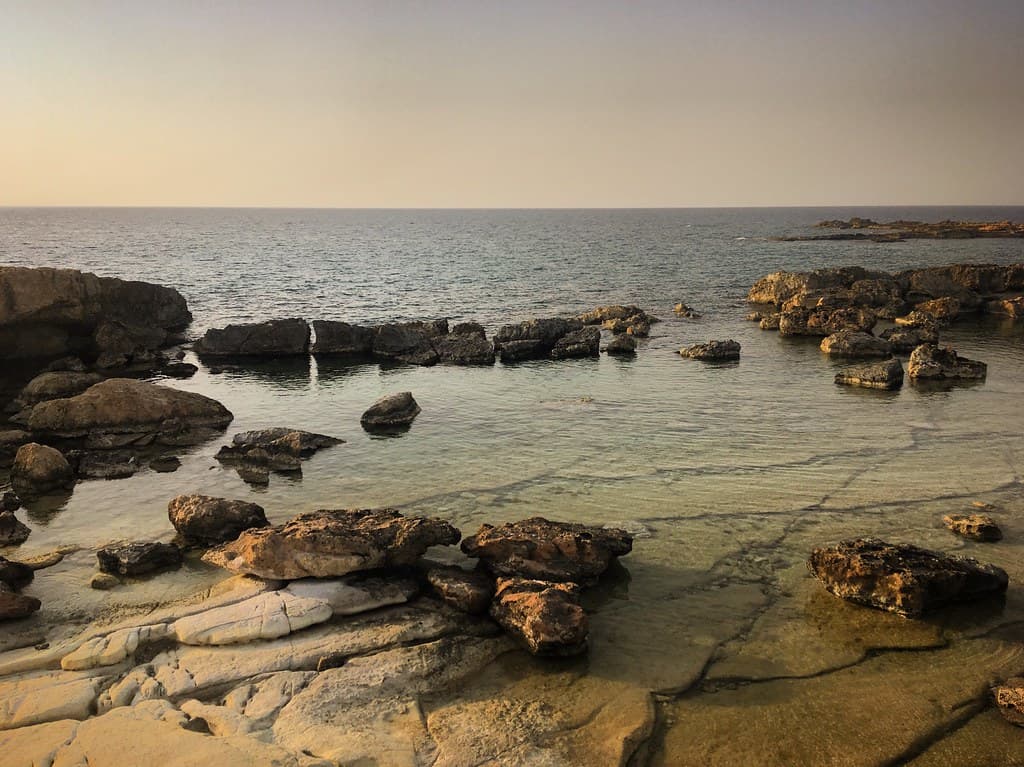
Serene rocky coastline at dusk near Pégeia, Paphos, Cyprus, November 2018
The stones here range from thumbnail-sized to fist-sized, smoothed into ovals by the relentless churn of two Great Lakes meeting. Driftwood tangles at the high-water mark, bleached silver by sun and scoured by winter ice. The water temperature rarely climbs above sixty-five degrees even in August, but wading along the shallows reveals smallmouth bass darting between rocks and the occasional crayfish scuttling for cover.
Castle Rock itself looms just inland, accessible via wooden stairs that climb to a platform offering sweeping views of the straits, the Mackinac Bridge arcing across the horizon five miles west. But the beach below remains the quieter reward: a place where you can skip stones across water that's traveled from Superior, listen to waves sort pebbles by size, and watch the light change as weather systems blow in across hundreds of miles of open lake.


