
The beach lies tucked beneath Gros Cap Bluff, a forty-foot limestone shelf that rises abruptly from Lake Huron's northern shore. You'll hear the crunch of rounded stones beneath your feet—no sand here, just millennia of wave action that's polished dolomite into smooth, palm-sized discs in shades of gray, rust, and bone-white. Above, the Mackinac Bridge spans the strait with an elegance that somehow doesn't diminish the wildness below.
“You're standing at the geological junction where two Great Lakes meet, beneath one of the world's longest suspension bridges.”
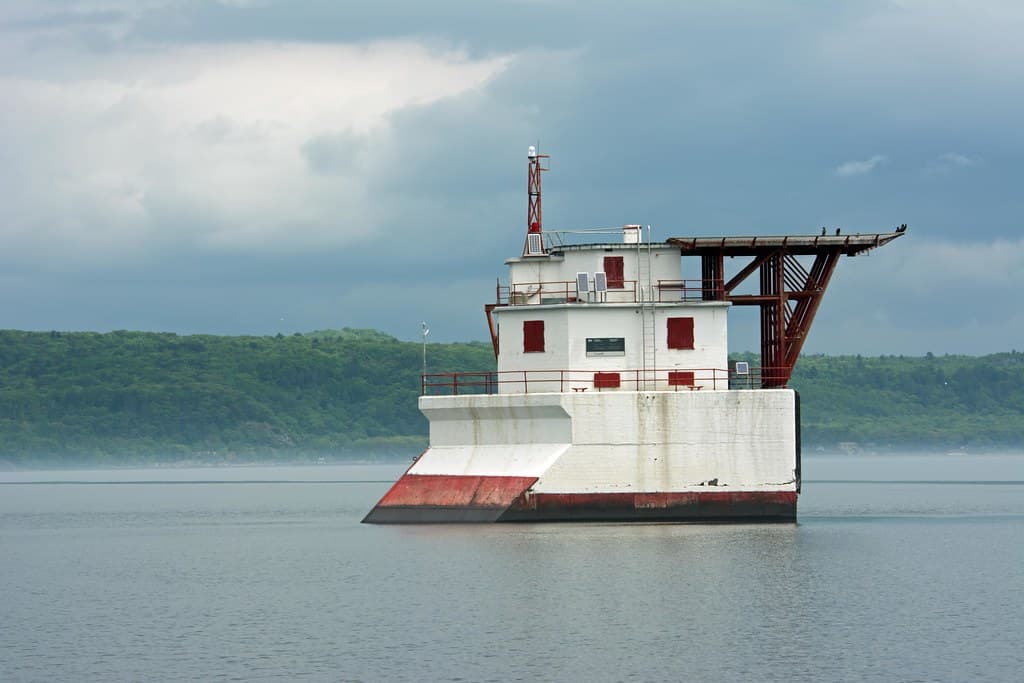 Credit: Flickr
Gros Cap Reef Lighthouse, ON
The water stays bracingly cold even in August, rarely climbing past sixty degrees, but that doesn't stop locals from wading in during summer afternoons. Shallow pools form between the larger cobbles at low water, trapping minnows and the occasional crayfish. The real draw is the vantage point: you're standing at the convergence of Lakes Huron and Michigan, where currents meet and freighters navigate the narrow passage between Michigan's two peninsulas.
A trail loops up the bluff through fragrant cedar groves, emerging at a clearing where the entire Straits of Mackinac unfold before you. From this height, you can trace the bridge's suspension cables, count the whitecaps marching eastward, and understand why the Ojibwe considered this shoreline sacred ground. The wind rarely stops, carrying the scent of pine resin and cold lake water.


