
The beach at Buccaneer State Park curves along Mississippi Sound in a gentle crescent where Hancock County meets the Gulf. You'll park beneath towering pines and walk a short path to find a shoreline that feels more lived-in than postcard-perfect—driftwood tangles among the grasses, fiddler crabs dart across tidal flats, and brown pelicans dive just beyond the sandbar. The water here is the amber-green of sweet tea, warm as bathwater by June, calm enough that toddlers splash unsupervised while their parents unload coolers at the pavilion.
“One of the few Gulf Coast beaches where centuries-old live oak canopy meets swimmable shoreline, offering shade and scenic depth no manicured resort can replicate.”
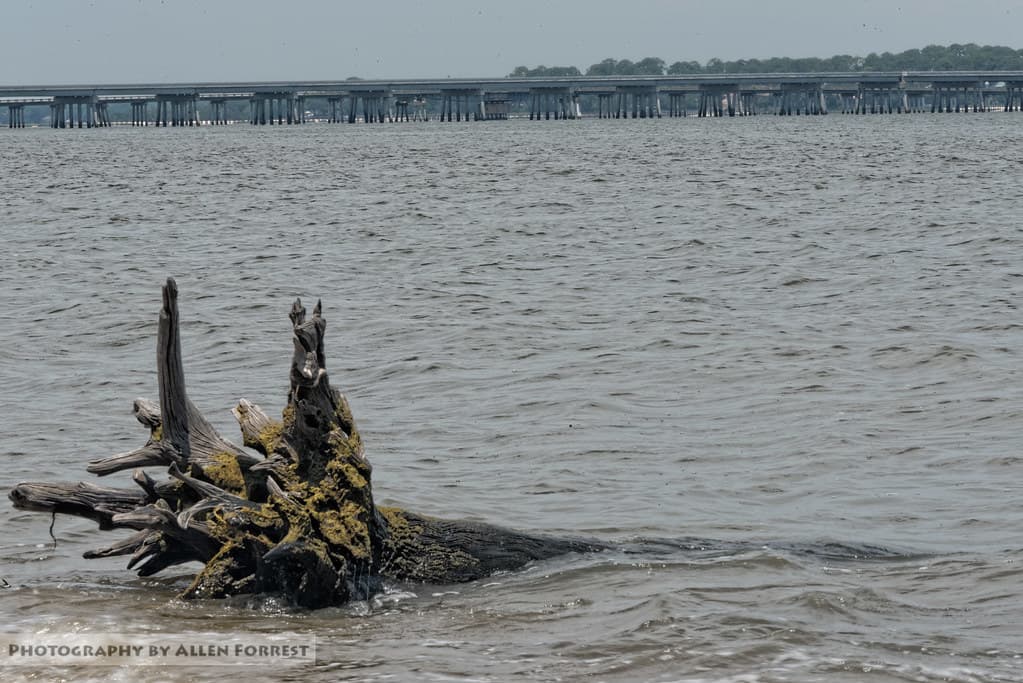 Credit: Flickr
Driftwood on Big Talbot Island
This is the beach where Mississippi families have been coming since 1968, when the park opened on former plantation land. The live oaks that shade your picnic were here long before that, their limbs reaching so far horizontally they seem to defy physics. On weekend mornings, you'll smell someone's charcoal grill firing up by 10 a.m., watch teenagers toss footballs in knee-deep water, hear the distant whir of a jet ski cutting across the sound toward the barrier islands.
The sunsets here don't ignite the sky so much as soften it—the low Mississippi coastline means you watch the sun sink behind mainland marsh and pine forest rather than open ocean. Come late afternoon and the light turns everything golden: the sand, the water, even the Spanish moss takes on a honeyed glow that makes you understand why people return here year after year.


