
Jones Park Beach sits tucked along Gulfport's working waterfront, a slice of public shoreline where the city's residential blocks give way to Mississippi Sound. You park beneath the canopy of century-old live oaks, their branches dripping Spanish moss, and walk twenty paces to sand the color of wet cardboard. The water here is bathwater warm from May through October, clouded with tannins and sediment that turns the gulf a greenish-brown—honest, unfiltered, nothing like the postcards.
“One of the few Gulf Coast urban beaches where live oak shade and fishing pier culture matter as much as the waterline itself.”
 Credit: Flickr
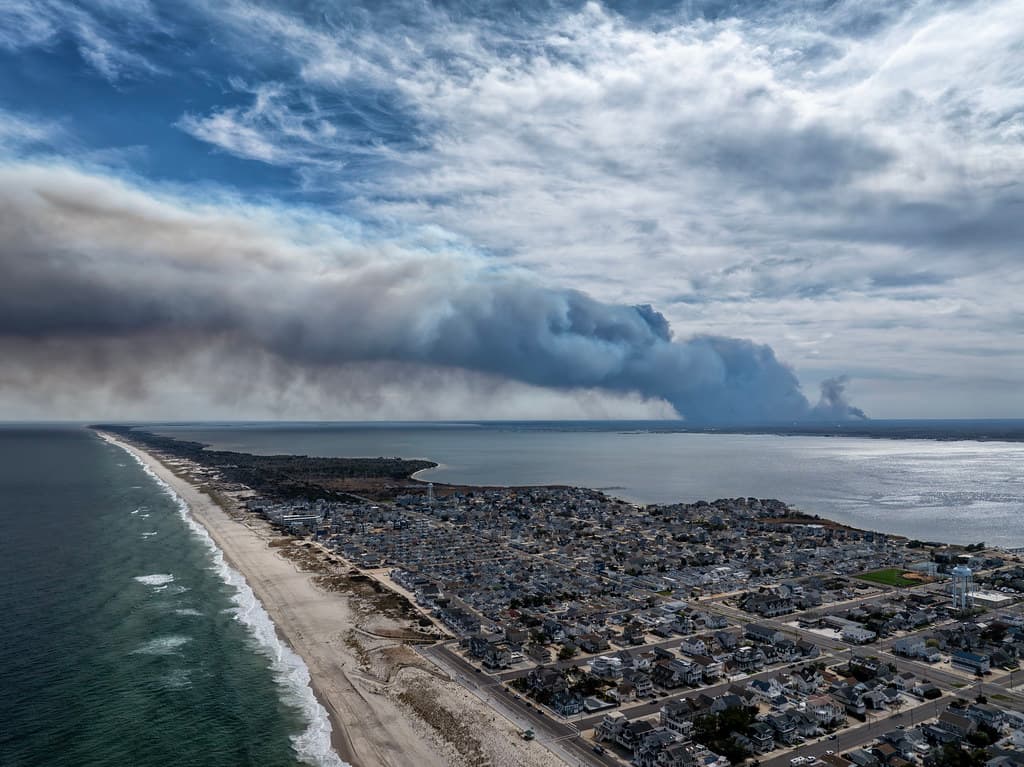
Yesterday's Mavic Pro 3 drone view of the Jones Road Fire, in the New Jersey Pinelands about 15 miles SW, from above 8th Ave beach in Seaside Park.
The park itself sprawls behind the beach: brick pavilions with ceiling fans, concrete picnic tables scarred by decades of family reunions, playground equipment that hums with the voices of toddlers. A wooden fishing pier extends into the sound, its planks worn smooth by coolers dragged to the end at sunrise. You'll see mullet jumping, brown pelicans diving, shrimp boats heading out past the barrier islands on the horizon.
This is where Gulfport comes to be local—no beach clubs, no cabana boys, just open access and the particular ease of a place that doesn't pretend to be anything but itself. You bring your own umbrella, your own cooler, and you stake out a spot under the pines when the July sun gets mean. The sand may not gleam, but it belongs to everyone.


