

Scenic Drive Beach unfolds along a two-lane road where antebellum homes and their modern successors sit behind wrought-iron fences, their lawns sloping toward a beach that feels more like a neighborhood secret than a destination. The sand here is firm and gray-brown, packed tight by tides that retreat far enough at low water to expose oyster shells and the occasional horseshoe crab. Live oaks lean over the seawall in places, their gnarled branches creating pockets of shade where you can watch sailboats drift past Cat Island on the horizon.
“Live oak canopy creates rare beach shade while antebellum architecture frames every view of the Gulf.”
 Credit: Pexels
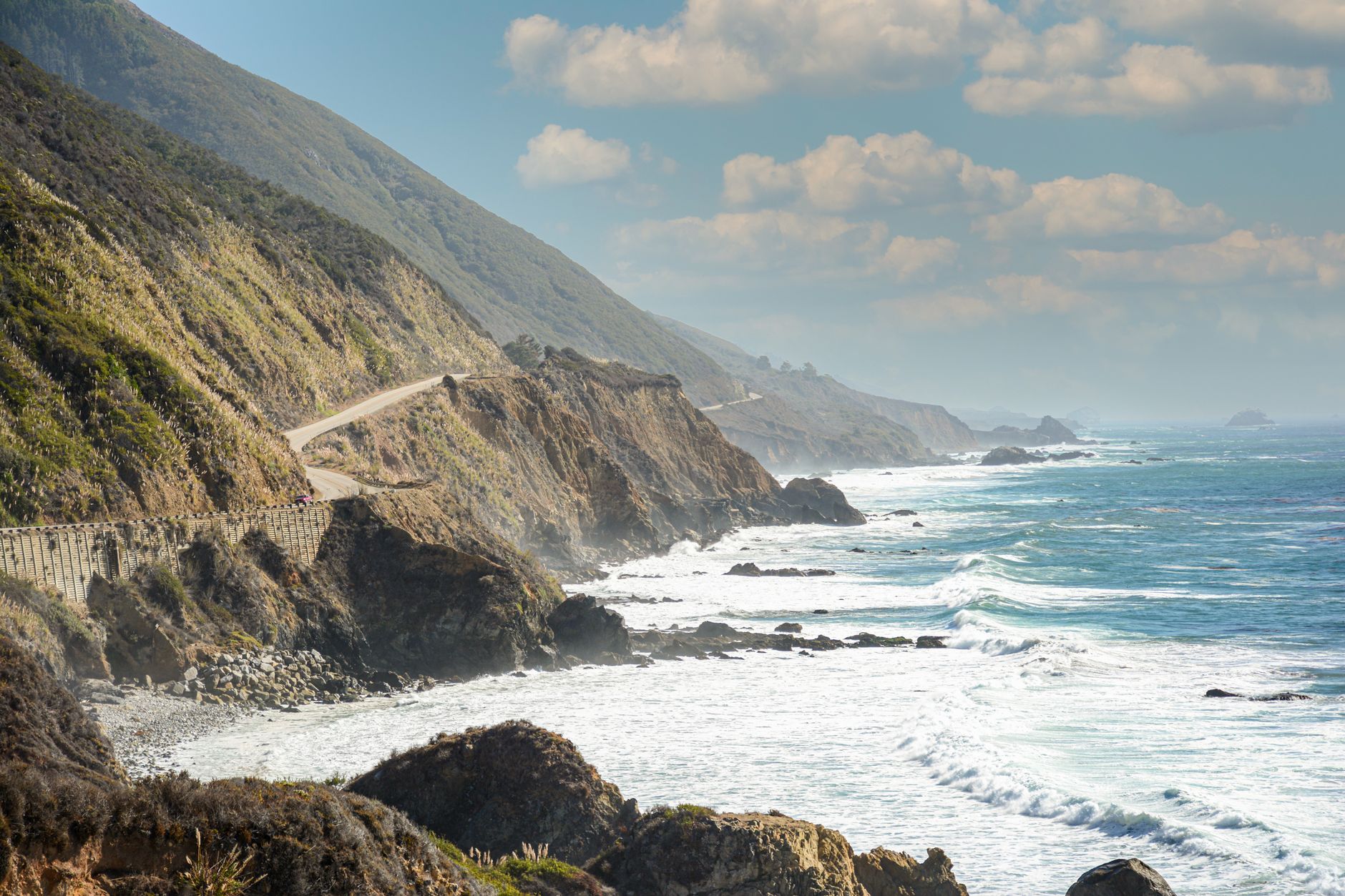
Captivating view of California's coastal highway along the rocky shore with ocean waves crashing.
The Gulf of Mexico along this stretch is shallow and tepid, more lake than ocean in temperament. You'll wade out fifty feet and still touch bottom. Families arrive with folding chairs and coolers, claiming spots beneath the trees while children hunt for sand dollars in the shallows. The lack of waves makes it ideal for floating on your back, eyes closed, feeling the sun on your face and the gentle tug of current against your skin.
Pass Christian rebuilt itself after Katrina with quiet determination, and this beach reflects that resilience—unpretentious, accessible, stubbornly resistant to the kind of development that has transformed other Gulf towns. You park along the road, step over the low seawall, and you're there. No entrance fee, no attendant, no tiki bars. Just sand, water, and the slow rhythm of a coast that has learned to take its time.


