
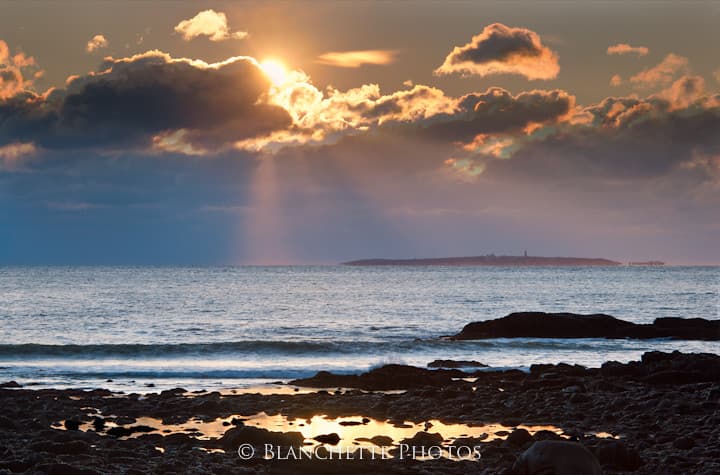
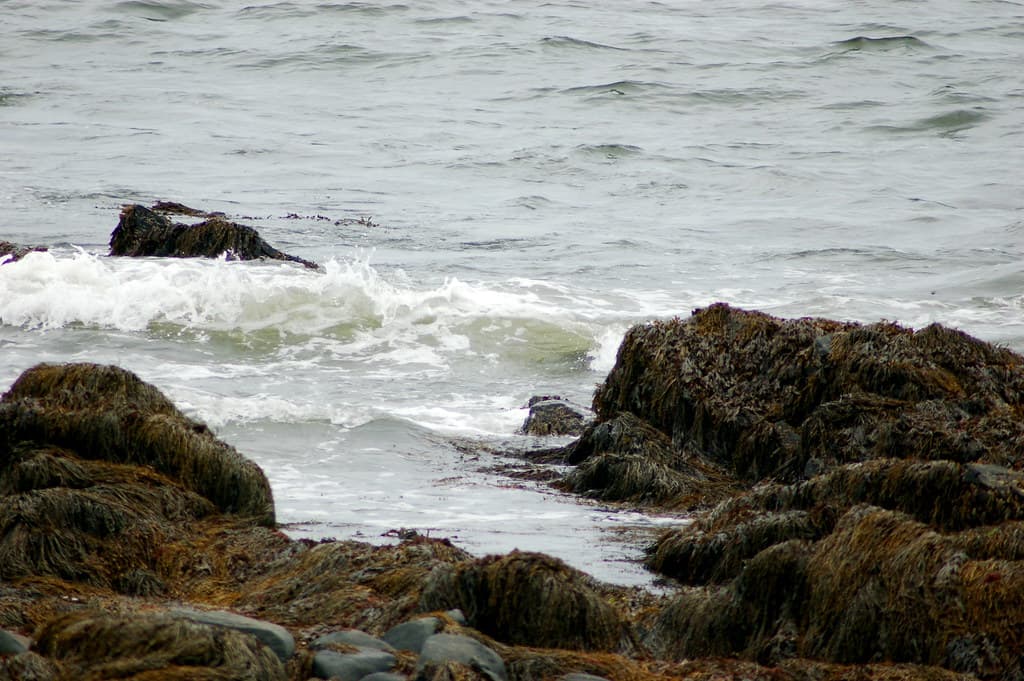
Odiorne Point sprawls along New Hampshire's largest undeveloped stretch of shore, where the Seacoast Science Center anchors 330 acres of state park. You'll walk past concrete bunkers—relics of World War II coastal defense—now softened by lichen and framed by beach roses. The shoreline here isn't what most people picture when they think "beach": it's a tumble of granite and schist left behind by retreating glaciers, interspersed with small crescents of coarse sand and mussel shells ground smooth by the Atlantic.
“New Hampshire's only coastal state park pairs World War II fortifications with New England's most accessible tide pool ecosystem.”
 Credit: Flickr
Rocky Shore at Odiorne State Park
Low tide reveals an entire world in miniature. You'll crouch beside pools trapped in the rocks, watching hermit crabs scuttle beneath bladderwrack and sea stars cling to the undersides of stones. Harbor seals bob offshore, their dark heads disappearing and reappearing in the swells. The beach faces southeast toward the Isles of Shoals, those distant humps visible on clear days, with lobster buoys dotting the water in bright reds and yellows.
The park's trails wind through maritime forest—gnarled oaks and sumac that give way to salt marsh, where great blue herons stalk the shallows. You'll picnic at tables overlooking Little Harbor, watching sailboats tack toward Portsmouth. In winter, when snow dusts the bunkers and ice forms in the tide pools' edges, you'll have the frozen shoreline nearly to yourself, the only sound the tide's patient work against stone.


