
The beach earned its name not from scarcity but from a 19th-century wreck—the ship *Fortuna*—that washed ashore near this western edge of Cape May, leaving survivors with nothing. Today the only poverty here is of crowds. You'll park along residential streets where Victorian homes give way to low dunes and a shoreline that feels borrowed from a quieter decade.
“It's the only Cape May beach where silence competes with surf, entirely free of the Victorian resort clamor just blocks away.”
 Credit: Flickr
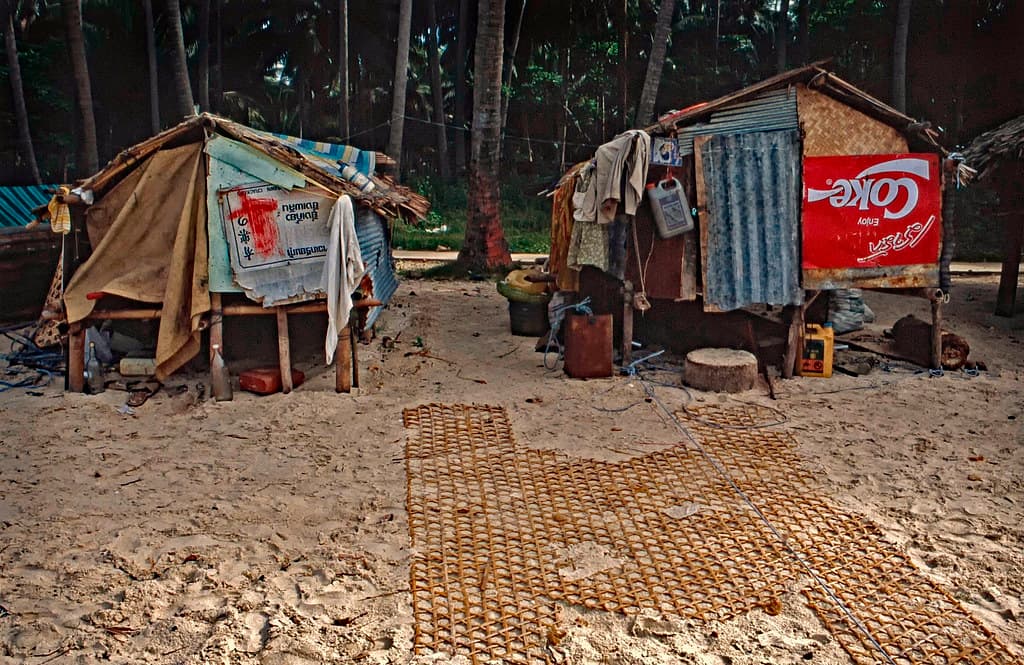
Sea Gypsies huts on a beach in Ko Phi Phi in 1988
The sand runs coarse underfoot, speckled with shell fragments and the occasional tumbled brick from century-old shipwrecks. Waves arrive in steady, unhurried sets, their foam lacing the tideline where sanderlings sprint and pivot. There's no snack bar, no umbrella rental—just a narrow beach that widens at low tide, revealing tidal pools where hermit crabs navigate their miniature labyrinths.
Families arrive with folding chairs and paperbacks, settling into the kind of afternoon where the only agenda is watching the sun angle change. The Cape May Point Lighthouse blinks faintly to the west. By late afternoon, the beach empties further, leaving you with the salt-thickened air and the satisfaction of a stretch of Atlantic coast that asks nothing of you but presence.


