
Lucy Beach occupies a three-block stretch along Margate City's southern shoreline, where the Atlantic meets a patchwork of single-family homes and low-rise apartment buildings. Unlike the casino glare visible just up the coast, this section of beach operates on a quieter rhythm—lifeguard whistles, the slap of boogie boards against shorebreak, and the distant hum of small planes trailing advertisement banners overhead. The sand slopes gently toward the water, compacted enough for morning joggers but soft where the dunes begin their modest rise.
“Lucy Beach offers the Atlantic City skyline as a backdrop without the boardwalk crowds that come with it.”
 Credit: Flickr
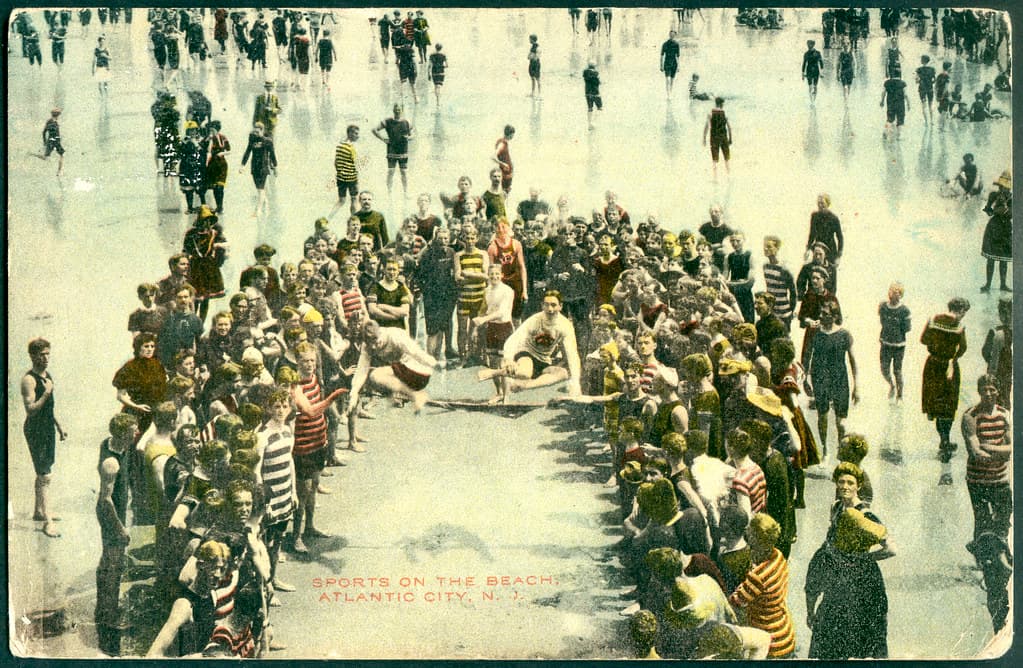
ArchivTappen25(5A)verbessert254 Sport, Strand (front), Atlantic City, USA, N.J. 1910er
Families return here season after season, claiming the same stretches near the wooden crossovers that bridge the dune grass. You'll recognize the regulars by their wagon loads of gear: collapsible chairs, insulated coolers, and umbrellas striped in fading primary colors. The water temperature hovers around sixty-eight degrees in July and August, cold enough to make you gasp on entry but warm enough to keep you in for a few sets of waves.
Margate requires beach tags from mid-June through Labor Day, sold at the beach patrol headquarters on Ventnor Avenue. The town enforces them with the polite persistence typical of Shore communities that rely on seasonal revenue but value their year-round residents. Outside those summer months, access is free, and the beach empties to reveal a coastline shaped more by nor'easters than by tourism.


