
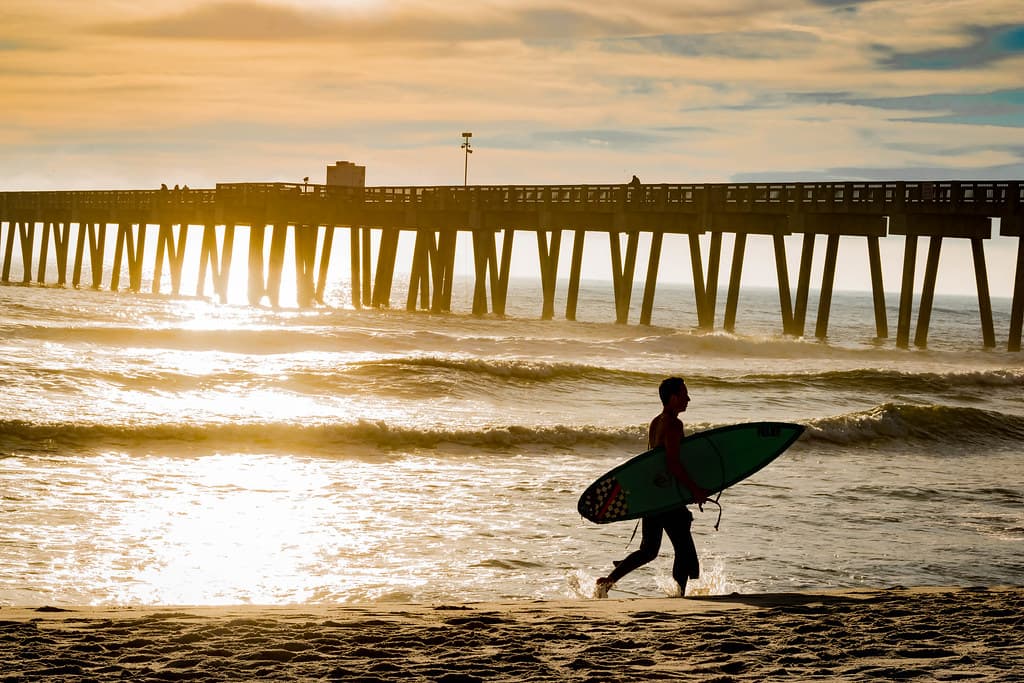
Surf City sits squarely in the middle of Long Beach Island's eighteen-mile stretch, a deliberate contrast to the estate-lined shores of neighboring towns. You park along Central Avenue, buy your beach badge from the same booth your parents probably did, and cross onto sand that slopes gently toward the Atlantic. Lifeguards whistle from wooden stands painted the color of buoys. Families stake out territories with rainbow umbrellas and coolers packed with submarine sandwiches from the deli two blocks back.
“Surf City preserves the middle-class Jersey Shore summer—ungentrified, badge-required, and defiantly familiar across generations.”
 Credit: Flickr
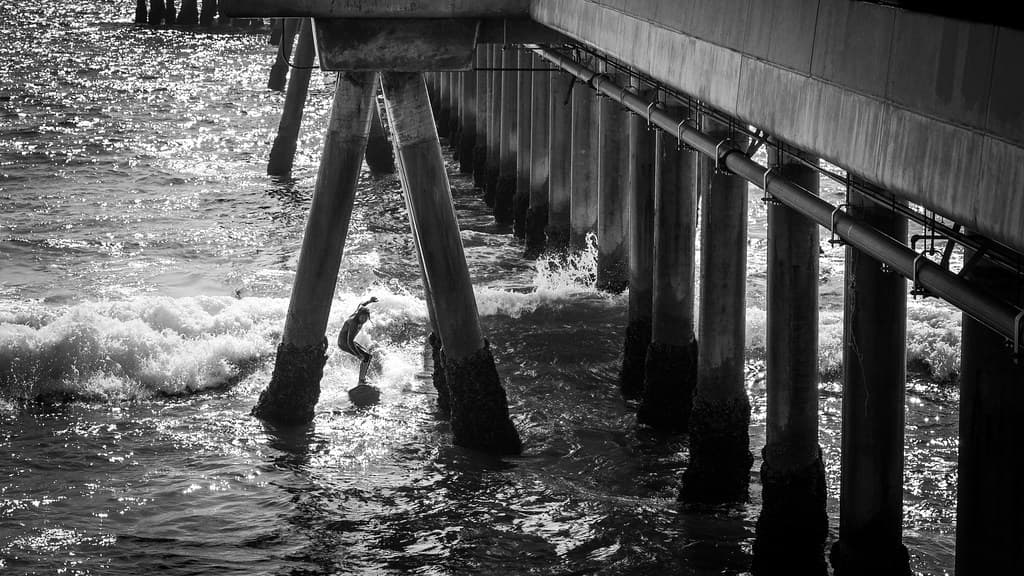
Surfer in Venice Beach - Los Angeles, United States - Sport photography
The waves here roll in with dependable rhythm—not the crashing drama of North Shore swells, but steady enough to keep boogie boarders entertained and toddlers squealing at the foam line. Sandbars shift with the seasons, creating shallow pools at low tide where hermit crabs scuttle across ribbed sand. By late afternoon, the wind picks up, sending beach grass hissing and kite strings taut against the sky.
When hunger strikes, you walk barefoot to the pizza counter or the ice cream window, your feet leaving prints that vanish with the next high tide. There's no pretense here—just the fundamental exchange between people and shoreline, repeated every summer since the island's first cottages went up. The dunes smell like rosa rugosa and sunscreen, and the gulls argue over dropped french fries with the same intensity they have for decades.


