
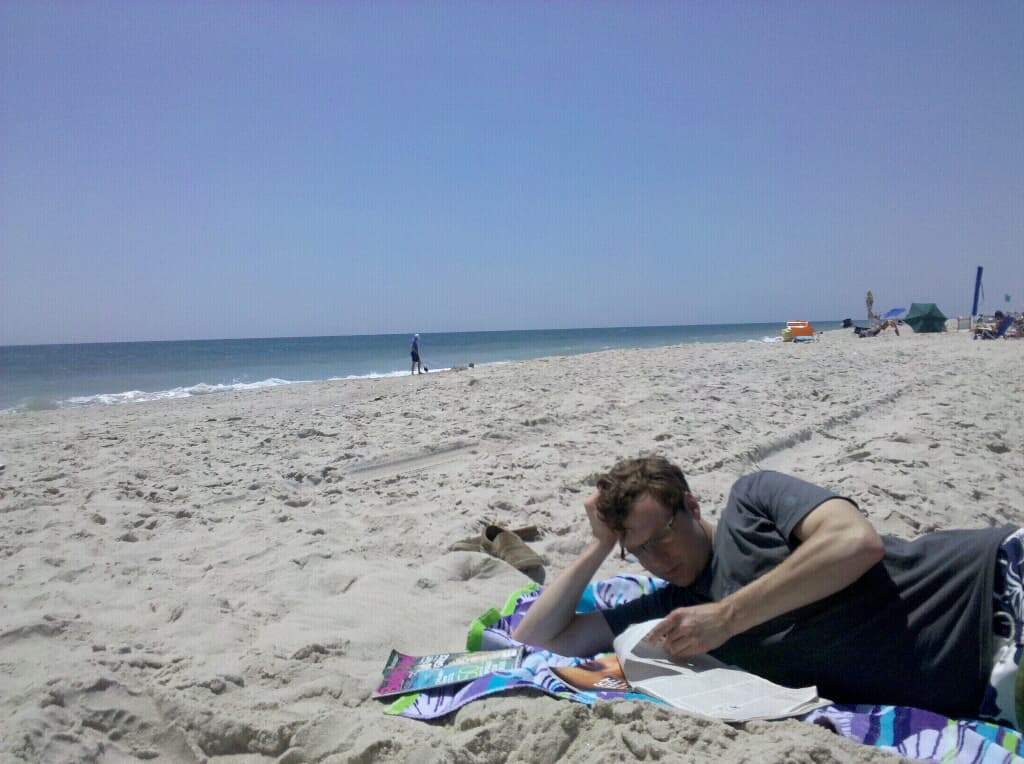
The ferry from Sayville deposits you in a village frozen somewhere around 1975, in the best possible way. No cars hum past, only the occasional clatter of a Radio Flyer over boardwalk slats. You navigate by cottage names—"Driftwood," "Second Wind"—threading through maritime forest until the path opens onto a strand where families stake out the same spots their grandparents claimed decades ago.
“One of the last car-free beach communities on the Eastern Seaboard where wooden boardwalks remain the only roads.”
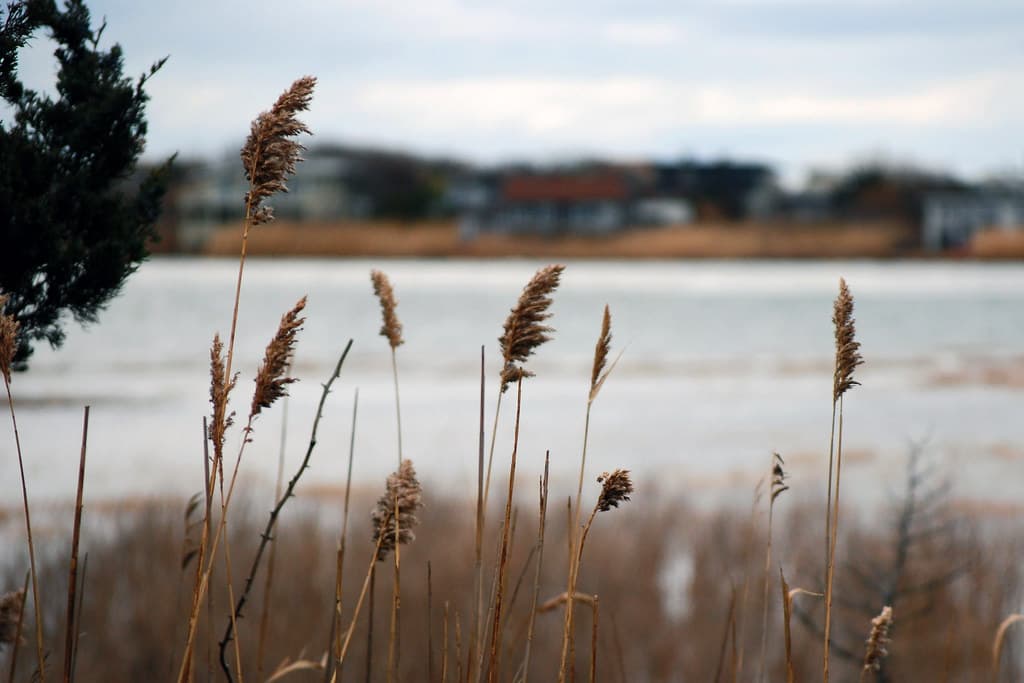 Credit: Flickr
Fire Island_2010 01 18_1084
The beach itself runs narrow but generous, hemmed by dunes thick with beach plum and rosa rugosa. Waves arrive in dependable sets, loud enough to drown out conversation but gentle enough for children testing their courage against the shorebreak. By late afternoon, the western sky ignites behind the bay, and you'll find yourself turning away from the ocean to watch sailboats silhouette against tangerine light.
Saltaire operates on island time—groceries come by wagon, cocktails taste better in plastic cups, and the loudest sound after dark is the Atlantic's endless metronome. You won't find jet skis or beach clubs here, just towels pegged down with sneakers, paperbacks swollen with salt air, and the particular contentment of a place that refuses to perform for anyone.


