
The sand here runs beige and fine, softer underfoot than the stone beaches that dominate much of Ontario's southern shore. You'll park steps from the water in a village so compact you can walk its entire grid in fifteen minutes, past clapboard ice cream shops and a harbor where charter boats idle between fishing runs. The beach curves gently, protected by a stone breakwater that keeps the fetch manageable even when August winds gust out of the northwest.
“The rare Lake Ontario beach where you can see your toes in waist-deep water, backed by a walkable Victorian village.”
 Credit: Flickr
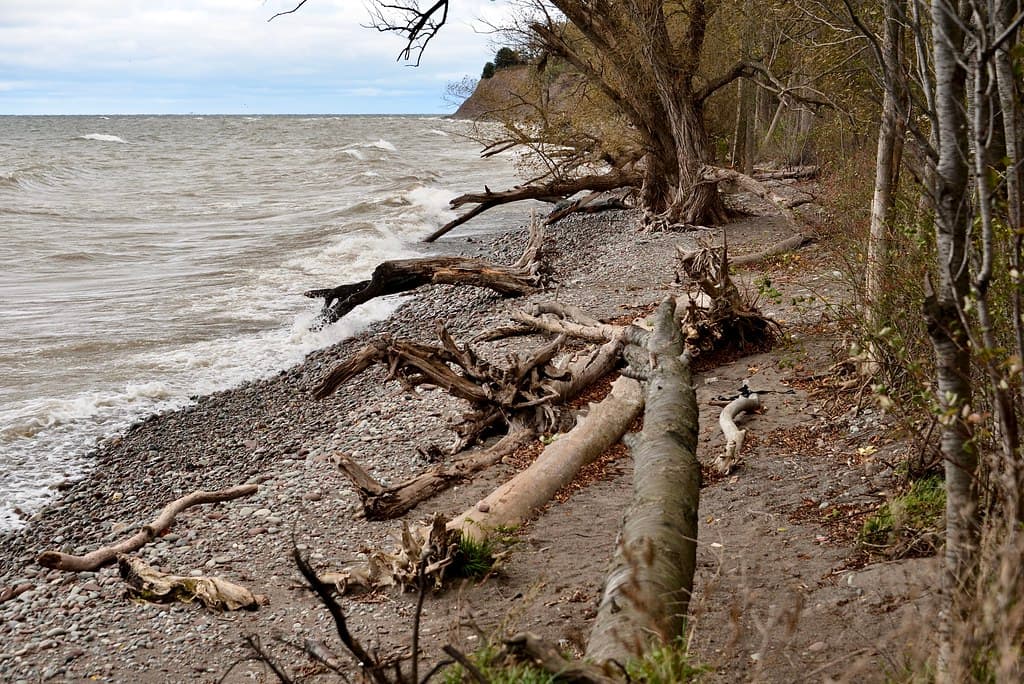
Winter shore
Wade out and the lake bottom stays visible—unusual clarity for Ontario's often-turbulent waters. Locals credit the offshore currents and lack of river silt. Children build castles near the playground while you stretch out on a towel, the lighthouse at your back, watching pontoon boats motor toward the bay. The water stays bracingly cold through July, rarely topping seventy degrees, but by mid-afternoon the shallows warm enough for extended swimming.
Stay past six and you'll understand why sunset draws the village out to the benches that line the shore. The sun drops behind the breakwater, painting the lighthouse keeper's house in amber light, then salmon, then violet. Gulls wheel overhead. Someone always brings a cooler. You'll hear the faint carnival music from the nearby amusement park, smell charcoal from backyard grills, feel the temperature drop ten degrees as dusk settles over the point.


