
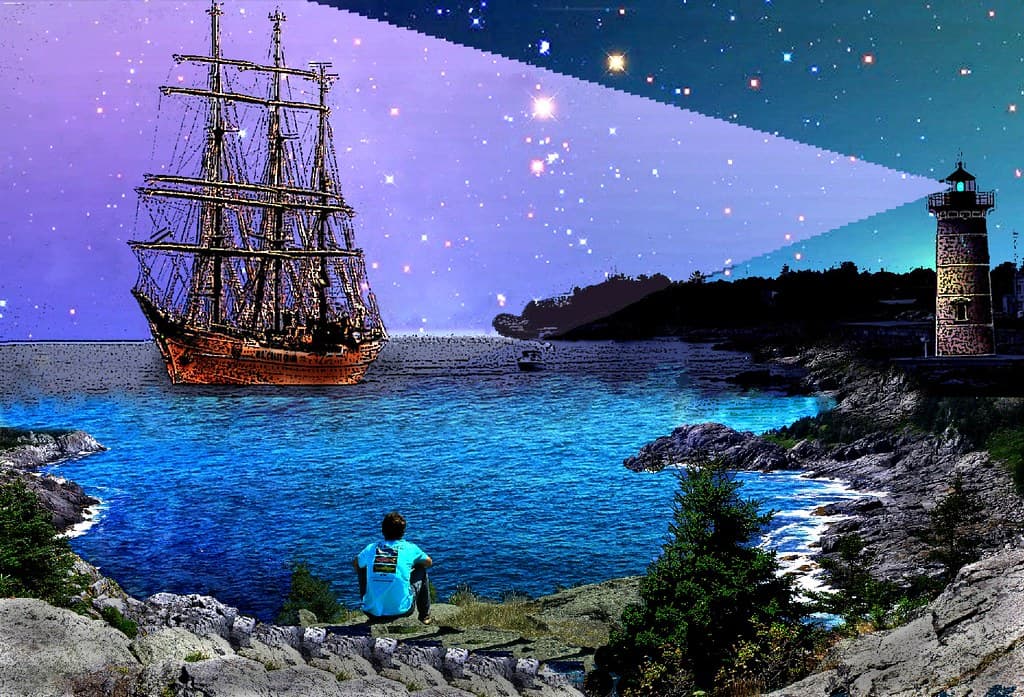
Great Island Beach sits on the southern end of the Core Banks, a slender thread of sand accessible only by private vessel or passenger ferry from Atlantic or Davis. You step off the boat onto shoreline that has refused development, where the maritime forest thins to dune grass and the beach extends in both directions with no lifeguard stands, no snack bars, no evidence of the twentieth century. The sand is coarse beneath your feet, packed firm near the waterline where ghost crabs scatter at your approach.
“One of the last genuinely roadless stretches of the North Carolina coast, accessible only by water and maintained by neglect rather than preservation.”
 Credit: Flickr
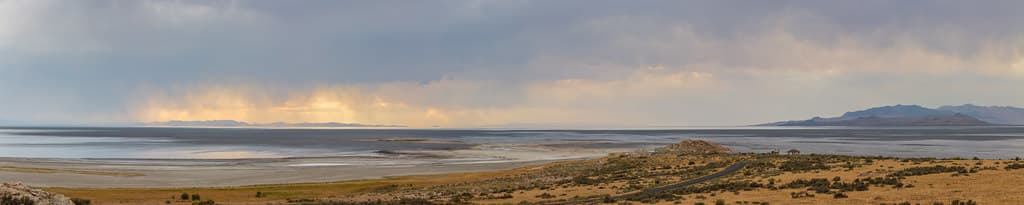
Antelope Island Panorama
The island earned its name from size, not grandeur, but the scale still impresses: miles of undeveloped coastline where the only structures are the occasional fishing shack and the silhouette of Cape Lookout Lighthouse to the south. Wading birds work the tidal pools at dawn. Portuguese man-of-wars sometimes wash ashore after strong easterlies, their blue sacs bright against the tan sand. The water here runs cool even in July, pushed by the Labrador Current.
You'll carry everything in—water, lunch, sun shelter—and carry everything out. There are no facilities, no trash cans, no cell signal. The ferry schedule dictates your day, which means you learn to move with the tides rather than against them. This is the kind of beach that asks something of you, and in return offers a shoreline largely unchanged since the Banker ponies first walked it.


