
The beach unfurls north and south in an unbroken ribbon of tawny sand, backed by dune grass that hisses in the perpetual breeze. You'll notice families spreading blankets near the public access points, coolers anchored against the wind, toddlers shrieking as foam rushes over their toes. The water temperature hovers around seventy-two degrees by late June, and the gradual slope means you can wade out fifty yards before the Atlantic reaches your chest.
“This is the shoreline that gave the Wright Brothers the wind conditions they needed to change human history forever.”
 Credit: Flickr
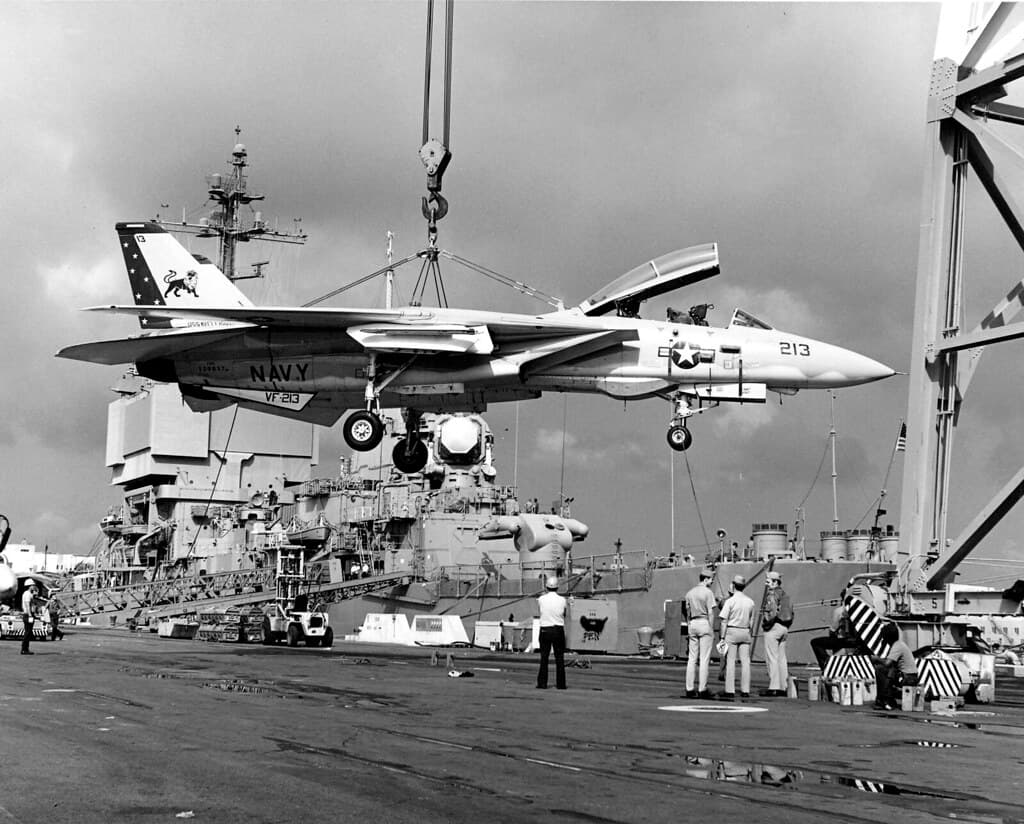
A Grumman F-14A "Tomcat" (BuNo 159857) of VF-213 on crane at NAS North Island 1977
Mid-morning brings kiteboarders who harness the northeaster gusts, their sails snapping like laundry on a line. By afternoon, the scent of sunscreen mingles with the briny tang of seaweed drying in the sun. You'll share the strand with surf fishers casting into the troughs and joggers whose footprints vanish behind them with each incoming tide.
The beach empties at dusk, save for a handful of couples walking the firm sand near the waterline. Overhead, gulls wheel and cry, silhouetted against a sky that fades from salmon to violet. It's the same expanse the Wright Brothers studied more than a century ago, and the wind hasn't changed—still steady, still relentless, still shaping everything it touches.


