
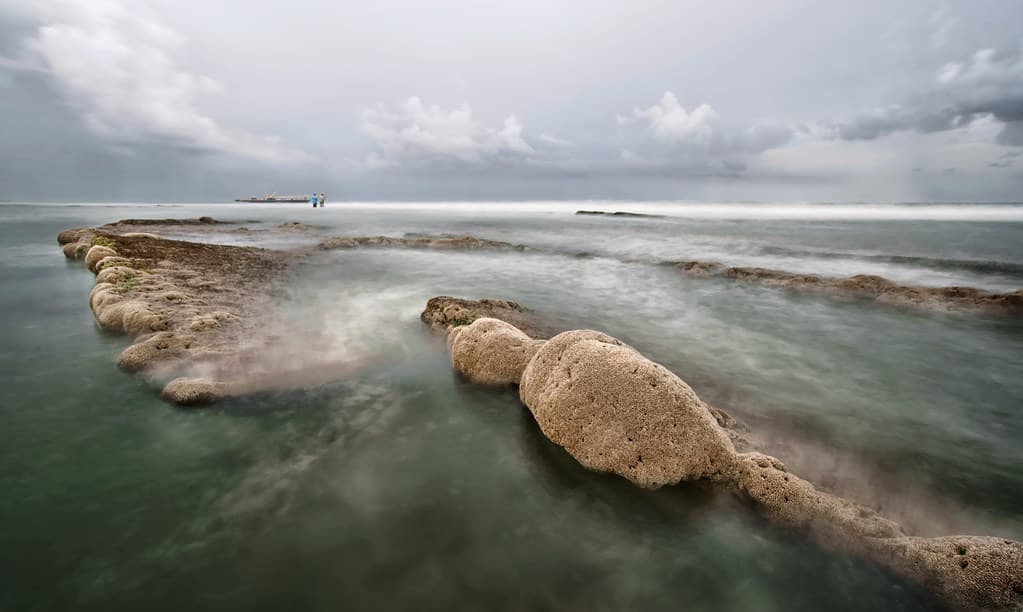
The ghost of the *Laura Barnes* rises from the sand like a ribcage—her weathered timbers a reminder that this shoreline has claimed plenty of ships since the age of sail. You walk barefoot around the wreck, feeling the splintered wood edges softened by decades of wind and tide, while sanderlings dart between your footprints. Nearby, families spread blankets beneath the green canvas of a vintage bathhouse pavilion, its 1950s architecture offering pockets of shade that smell faintly of sunscreen and damp towels.
“One of the few Outer Banks beaches where you can touch a century-old shipwreck without a boat or a low-tide hike.”
 Credit: Flickr
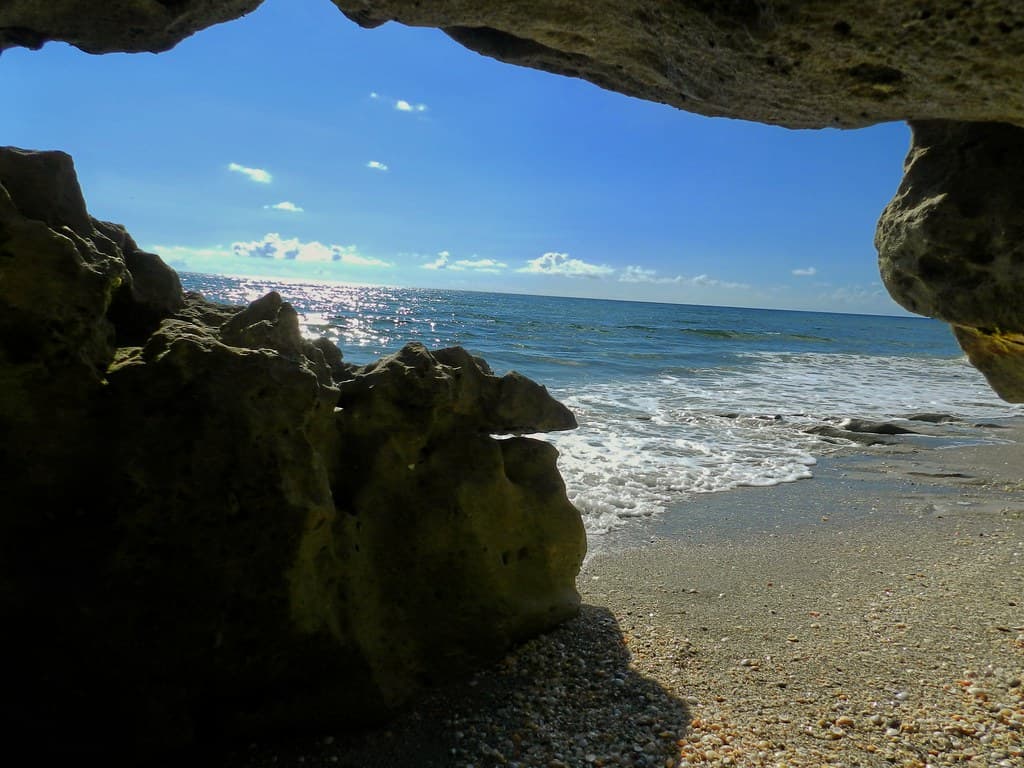
Jupiter Island Sea Cave
The beach itself stretches wide and forgiving, with enough elbow room that you never feel penned in by neighboring umbrellas. Kids wade into gentle shorebreak while parents claim picnic tables bolted to concrete pads—unglamorous but blissfully practical when thunderheads roll in from the west. Showers rinse salt from sunburned shoulders, and the ample parking lot means you won't circle endlessly with a trunk full of bodyboards.
What makes Coquina exceptional is its refusal to choose between raw Atlantic beauty and creature comforts. You get the wreck, the waves, the wide horizon—and also flush toilets, a snack bar, and rangers who know which riptide channels to avoid. It's the Outer Banks at its most democratic: thrilling enough for surfers, gentle enough for toddlers, historic enough to make you pause and wonder how many sailors saw this same stretch of sand as their last.


