
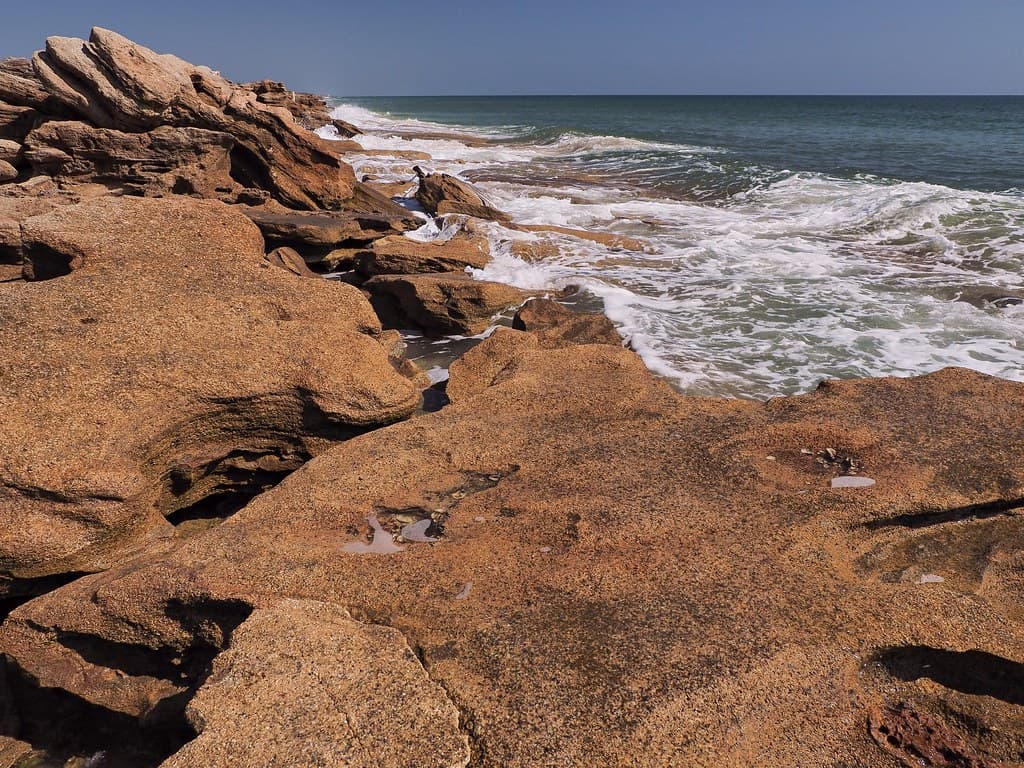
Long Beach occupies the eastern two-thirds of Oak Island, a barrier spit where the Cape Fear River meets the Atlantic and where development never climbed past three stories. You park near one of the numbered beach access paths—some paved, most just weathered boardwalks threading through saw palmetto and live oak—and step onto sand the color of wet concrete at low tide, brightening to taupe when dry. The beach slopes gently, and at ebb you can walk a hundred yards before the water reaches your knees.
“Fourteen miles of unbroken shoreline where the tallest structure is a fishing pier and the backdrop stays resolutely low-country.”
 Credit: Flickr
Oak Beach, Long Island - Atlantic Ocean
The Intracoastal Waterway runs parallel just a few blocks north, so the island feels narrow, almost fragile. Shrimpers and pontoon boats chug past while you body-surf the modest shore break. Beachcombing yields whelk shells, sand dollars, and the occasional starfish stranded by the outgoing tide. The Oak Island Pier juts eight hundred feet into the Atlantic near the midpoint, its wooden pilings barnacled and home to sheepshead that locals chase with live fiddler crabs.
Sunsets here lack drama—the sun drops behind mainland pines, not open ocean—but the diffused evening light turns the wet sand reflective, and wading birds work the tidal margin in silhouette. You'll share the strand with retirees walking retrievers, families dragging coolers, and the odd surf-caster hauling in spot and bluefish. No one hurries.


