
The beach ends abruptly at Shallotte Inlet, where Shallotte River empties into the sea through a channel that rewrites itself with every storm. You'll see the current racing past—strong enough to notice, strong enough to carry flounder and redfish within casting distance of shore. The sand here is coarser than the groomed stretches east, littered with whelk shells and the occasional horseshoe crab, and the shore bends sharply where tidal flow meets wave action.
“The dynamic inlet channel creates exceptional fishing structure and constantly shifting sandbars that redraw the coastline with each season.”
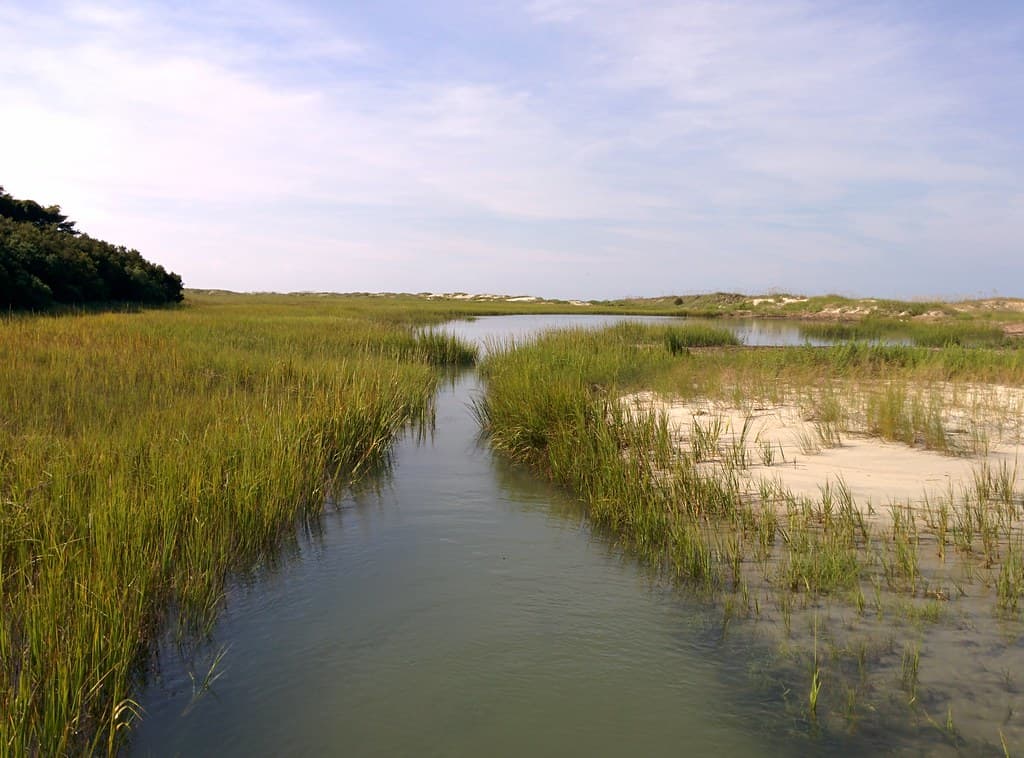 Credit: Flickr
Monk's Island
Anglers stake out spots along the inlet's edge at first light, chest waders darkening as they step into the outflow. You'll watch them read the water—scanning for baitfish dimples, waiting for that telltale swirl—then fire casts toward the jetty rocks on the opposite bank. The rhythm of this place follows the tide chart, not the beach umbrella crowd. By midmorning, when the current slackens, families arrive to collect shells or wade the shallows where sandbars emerge like temporary islands.
The walk from public parking takes ten minutes down unmarked sand paths between beach houses. You won't find lifeguard stands or snack bars here. What you will find: pelicans diving in formation, the distant silhouette of Holden Beach across the inlet, and the kind of wide-open beach morning where the only footprints ahead of you belong to shorebirds working the wrack line.


