
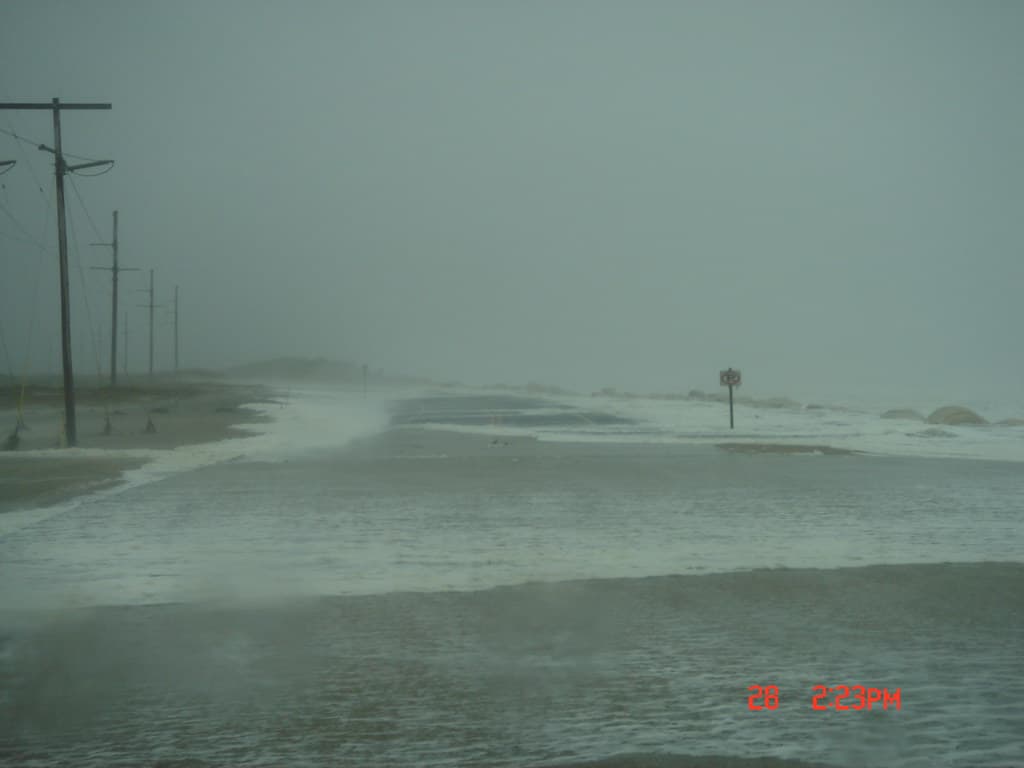
Mirlo Beach unfolds along a stretch of Cape Hatteras National Seashore where the Outer Banks narrows to a ribbon of sand barely wide enough to hold the road. You park beside weathered beach access ramps, their wood silvered by salt air, and walk over dunes studded with American beach grass that hisses in the constant breeze. The ocean here doesn't ask permission—it advances and retreats on its own schedule, carving the shoreline new each season.
“This is the Outer Banks stripped to its elemental self—no concessions, no buffer between you and the Atlantic's raw edge.”
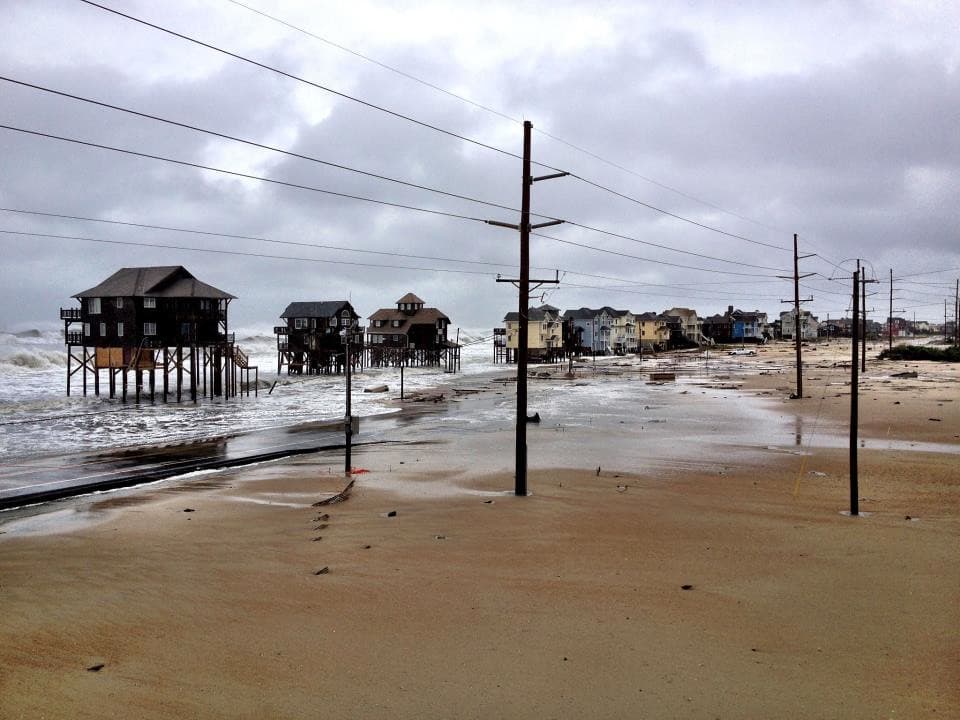 Credit: Flickr
Hurricane Sandy - Mirlo Beach
The water runs cold most of the year, even in summer, fed by the Labrador Current that sweeps south along the coast. Shorebirds work the tidal wrack—sanderlings darting between waves, gulls riding thermals above the surf. In autumn and spring, you might spot a commercial fishing boat working just beyond the breakers, or a pod of dolphins arcing through the swells. The beach itself is wide and flat at low tide, scattered with shell fragments and the occasional piece of driftwood polished smooth by months at sea.
Rodanthe wears its isolation plainly. There are no boardwalks or beach bars here, just a handful of rental houses on stilts and a general store that closes early. The town made its way into pop culture as a filming location, but the Hollywood gloss never stuck. What remains is honest: a place where nor'easters rearrange the landscape overnight and the ocean does exactly as it pleases.


