
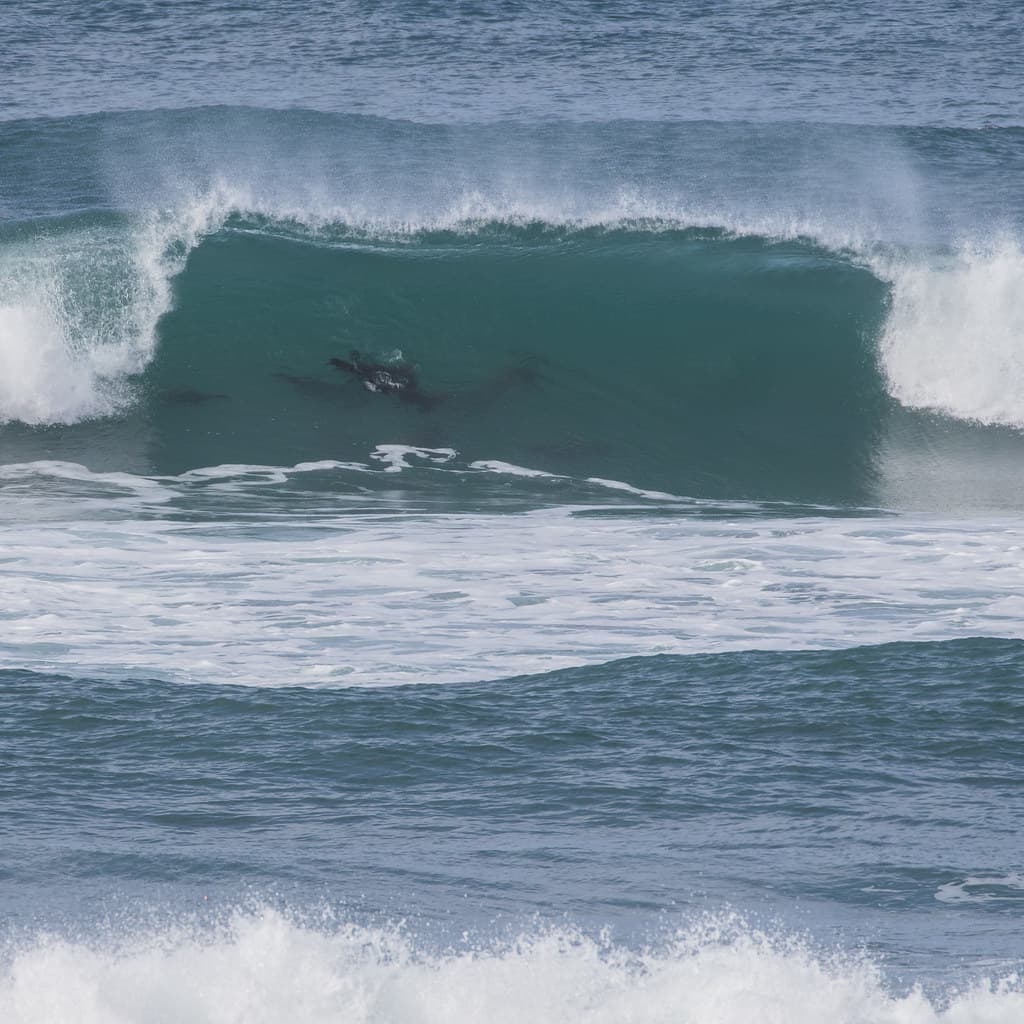
The descent to Hobbit Beach drops sharply through coastal scrub—salal branches slick with mist, roots exposed like knotted rope. At the bottom, you emerge onto a crescent of sand no wider than a city block, hemmed in by cliffs streaked rust and charcoal from centuries of rain. Driftwood lies stacked in chaotic lattices, bleached silver by salt and sun, some pieces thick as telephone poles.
“Its name-sake intimacy and fortresses of weathered driftwood create a sheltered, almost storybook enclave rare on Oregon's exposed coast.”
 Credit: Flickr
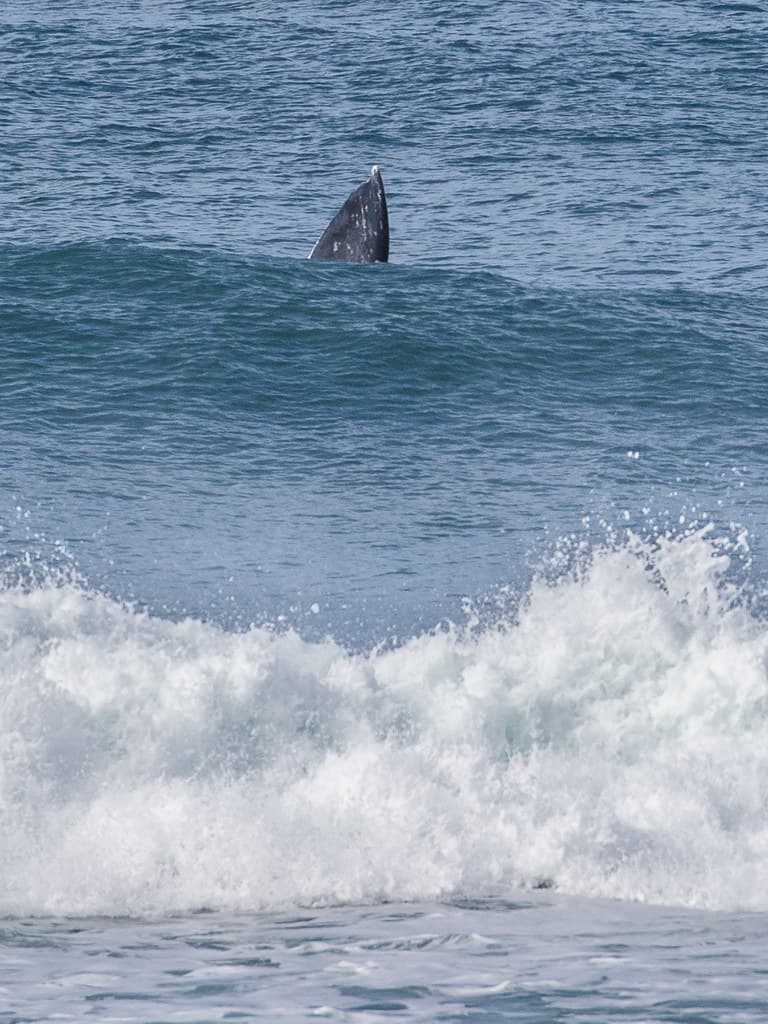
Gray whale (Eschrichtius robustus) feeding near shore
Tide pools dimple the rocky shelves at either end, their surfaces mirror-still between waves. Ochre sea stars cling to basalt; hermit crabs tick across pebbled floors. The stacks offshore wear crowns of guano and tufted grass, and when swells push through the gaps, spray leaps twenty feet into the air with a percussive thud you feel in your sternum.
The beach earned its name from the cozy, enclosed feeling—part hideaway, part hobbit-hole tucked into the coastline. Morning fog often lingers past noon, wrapping the cove in gauze that muffles everything but the rhythm of breakers. By late afternoon, when the marine layer finally burns off, low sun ignites the wet sand into bronze, and the cliffs glow like embers. You'll likely share the space with no more than a handful of beachcombers, each moving slowly, heads down, hunting agates.


