
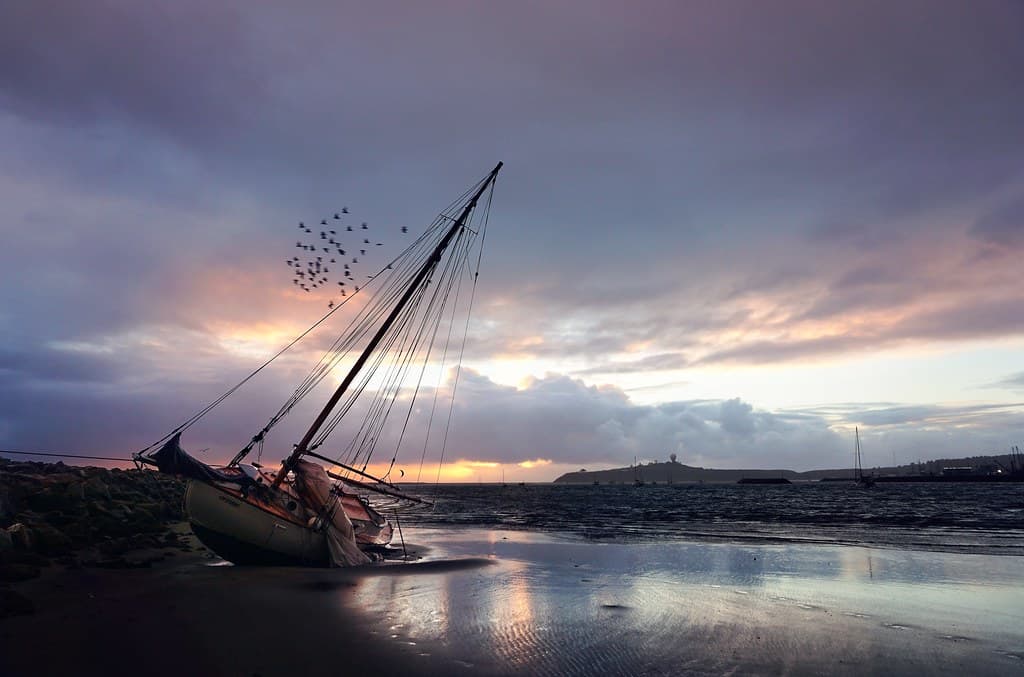
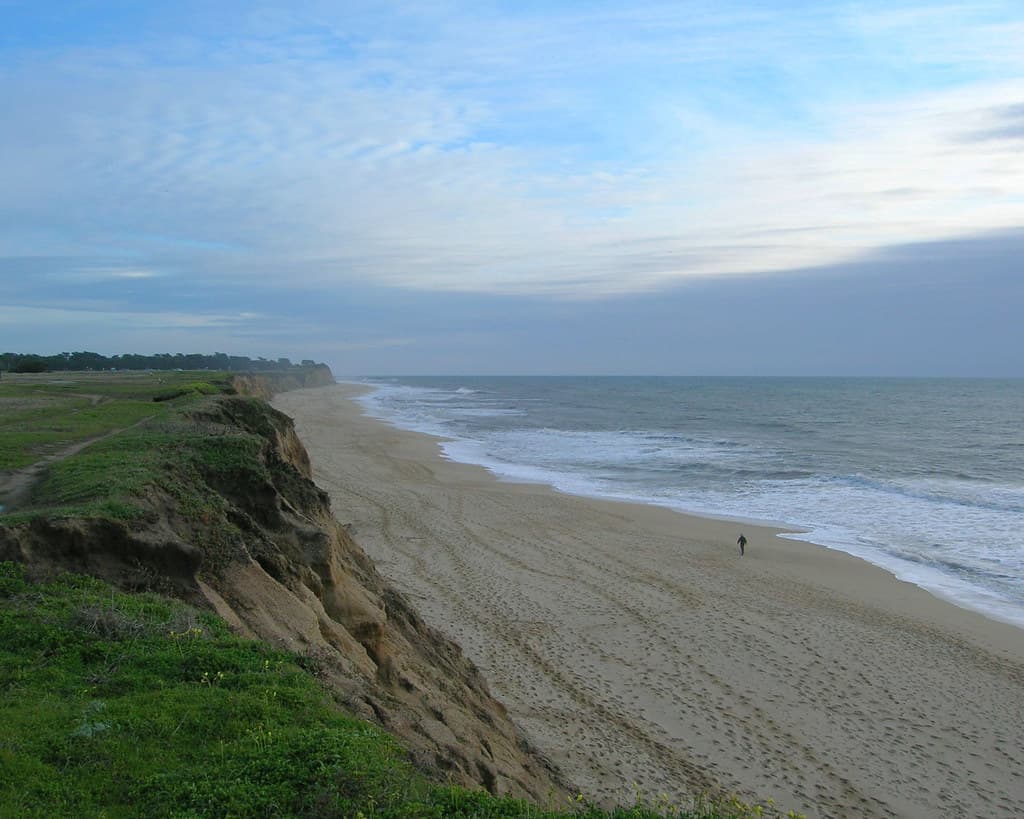
Half Moon Bay Beach curves like a parenthesis between two dark headlands, sheltering a strip of sand that Oregon's relentless winter storms rarely punish. You reach it via a short path from the parking area, descending through shore pine and salal until the cove opens before you—a pocket of relative calm where the Umpqua River meets the Pacific. The water here runs cooler than you'd hope for swimming, hovering in the low fifties even in August, but that doesn't stop wetsuited kids from braving the shorebreak.
“A tide-pool classroom wrapped in basalt where families explore undisturbed, protected from Pacific fury by ancient volcanic shoulders.”
 Credit: Flickr
Shore Walker
The real theater unfolds at low tide, when the retreating ocean exposes a labyrinth of tide pools stippled with ochre sea stars, purple urchins, and barnacles that click shut as your shadow passes. Families camp here for entire afternoons, thermoses of coffee propped against driftwood logs, while children shuttle between sand construction projects and tidal investigations. The beach collects agates after winter storms—smooth ovals of banded chalcedony that glow amber when you hold them to the light.
Come prepared for wind. The Douglas firs behind the beach grow flagged and stunted, their branches streaming eastward like weathervanes. Even on bluebird days, you'll want an extra fleece and a windbreak for your picnic. The reward for these minor discomforts: a beach that rarely sees more than a dozen parties at once, even on holiday weekends when Cannon Beach turns into a parking lot.


