
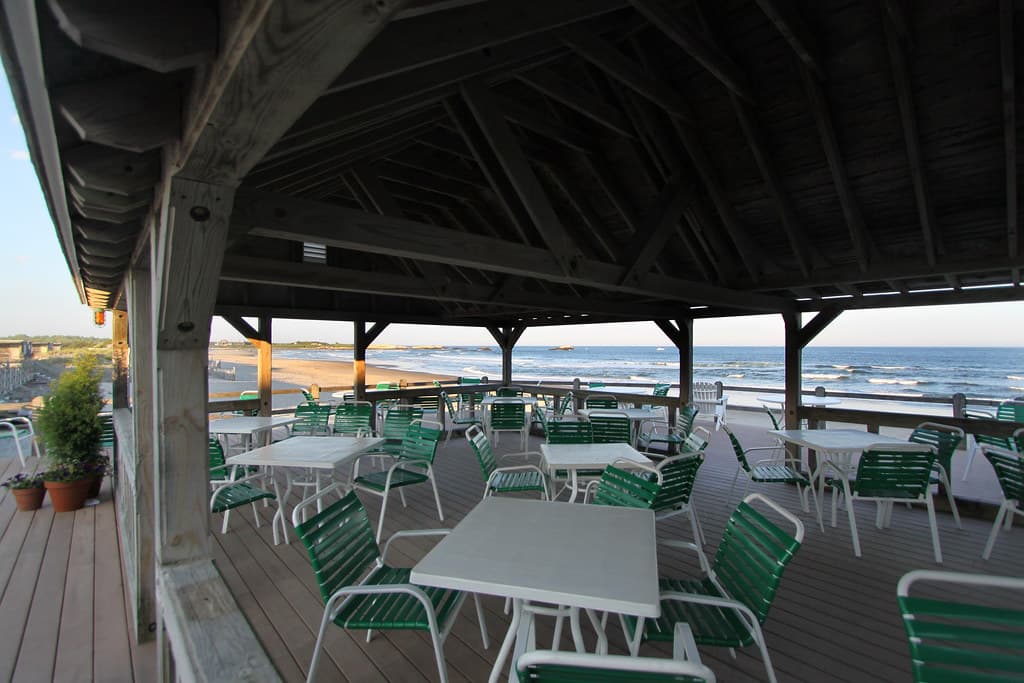
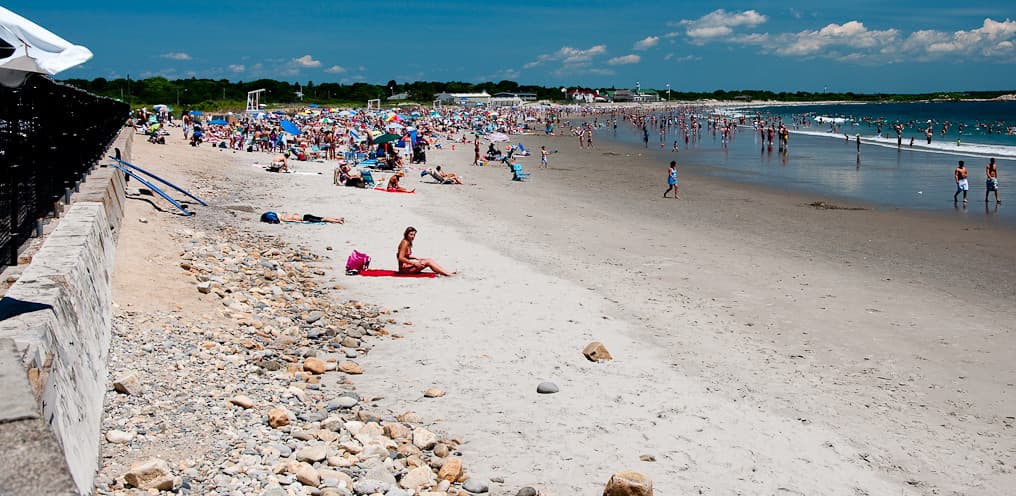
The Beach Pavilion towers stand sentry at the edge of the sand, their stone arches rebuilt after the 1938 hurricane left only their silhouette. You'll spread your towel on sand that shifts from fine beige near the waterline to coarser grains where dune grasses take hold, watching longboarders carve lines across waist-high swells that roll in from the southeast. The water numbs your ankles even in August—this is the Atlantic, after all, hovering around 68 degrees at its warmest.
“This is the beach where East Coast surfing took root in the 1960s, still drawing wetsuit-clad wave riders twelve months a year.”
 Credit: Flickr
Narragansett Town Beach, Narragansett, Rhode Island
Local families arrive early, staking claim to the spots they've occupied for decades, while surfers congregate near the Pier, where the jetty creates a reliable left break. You'll notice the rhythm: beach tags checked by attendants who know regulars by name, lifeguard whistles punctuating the afternoon, the 4 p.m. shift when day-trippers yield to those staying for sunset. The Towers themselves house a modest aquarium where kids press noses against tanks between beach sessions.
Beyond the sand, Ocean Road unfurls with weathered shingled cottages painted in nautical blues and grays, their porches draped with drying wetsuits and sandy beach chairs. The town wears its surf heritage without pretension—no boardwalk glitz, just a honest stretch of New England coast where the waves never stop and neither do the people who've built their lives around them.


