
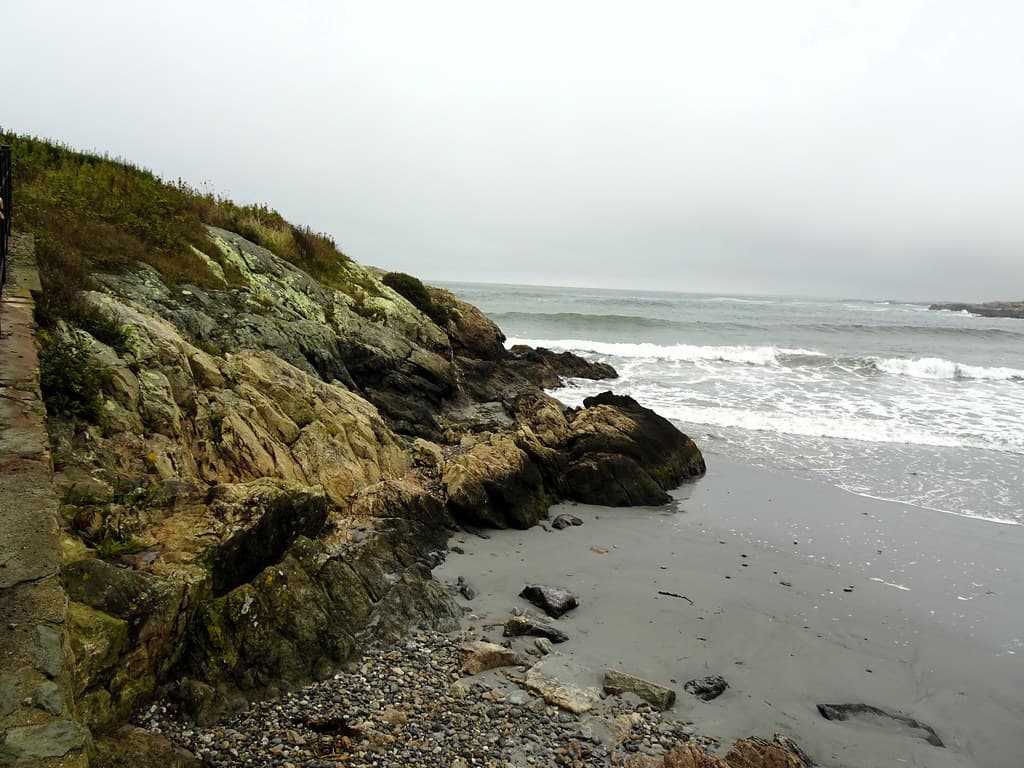
The Spouting Rock Beach Association has guarded this quarter-mile stretch since 1897, and the waiting list for membership remains as famously opaque as the privet hedges screening Ocean Avenue. You'll find no public parking, no day passes, no exceptions—just the descendants of Astors and Vanderbilts sharing the same shoreline their great-grandparents claimed when Newport defined American summer.
“America's most exclusive beach club remains stubbornly analog: no website, no applications, just whispered invitations and bloodlines.”
 Credit: Flickr
Bailey's Beach, Newport, Rhode Island (USA)
The beach itself curves gently between rocky outcroppings, its sand a pale beige that darkens where the tide has just retreated. Waves arrive in measured sets, their foam hissing across pebbles smoothed by a century of the same rhythms. The cabanas—each a miniature clapboard cottage with striped awnings—stand in perfect alignment, their interiors fitted with wicker chairs and faded cushions that have never seen a department store.
What makes Baileys remarkable isn't the Atlantic itself but the deliberate removal of everything public beaches have become. No music competes with the gulls. No vendors interrupt the afternoon. The only commerce is the quiet exchange of nods between families who've summered together for generations, their routines as fixed as the tides—morning swims before eleven, lunch at the club, children's sailing lessons when the wind cooperates.


