
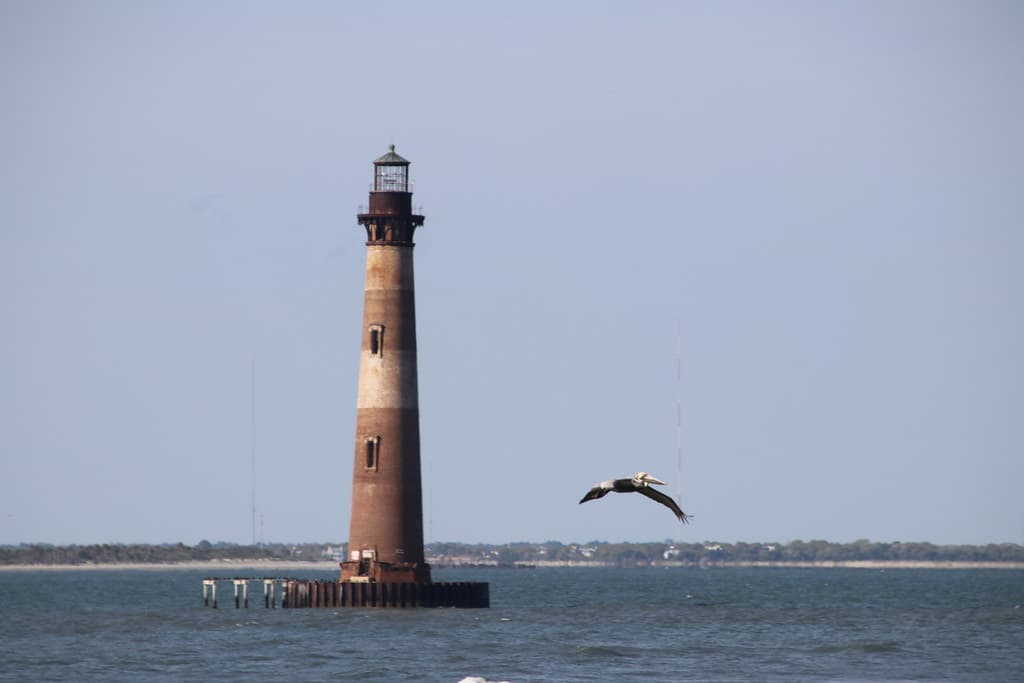
The asphalt ends where Ashley Avenue meets the eastern tip of Folly Beach, and a narrow boardwalk ushers you into Lighthouse Inlet Heritage Preserve. This isn't the crowded tourist strand a mile west; it's a tidal estuary where sandbars shift with the moon and oystercatchers probe the mud. The Morris Island Lighthouse rises 161 feet offshore, marooned by decades of erosion, its brick tower striped black-and-white against cumulus skies. Depending on the tide, you'll wade ankle-deep or walk dry sand to reach the surf line.
“The only South Carolina beach where a historic offshore lighthouse frames a protected nesting ground for federally threatened shorebirds.”
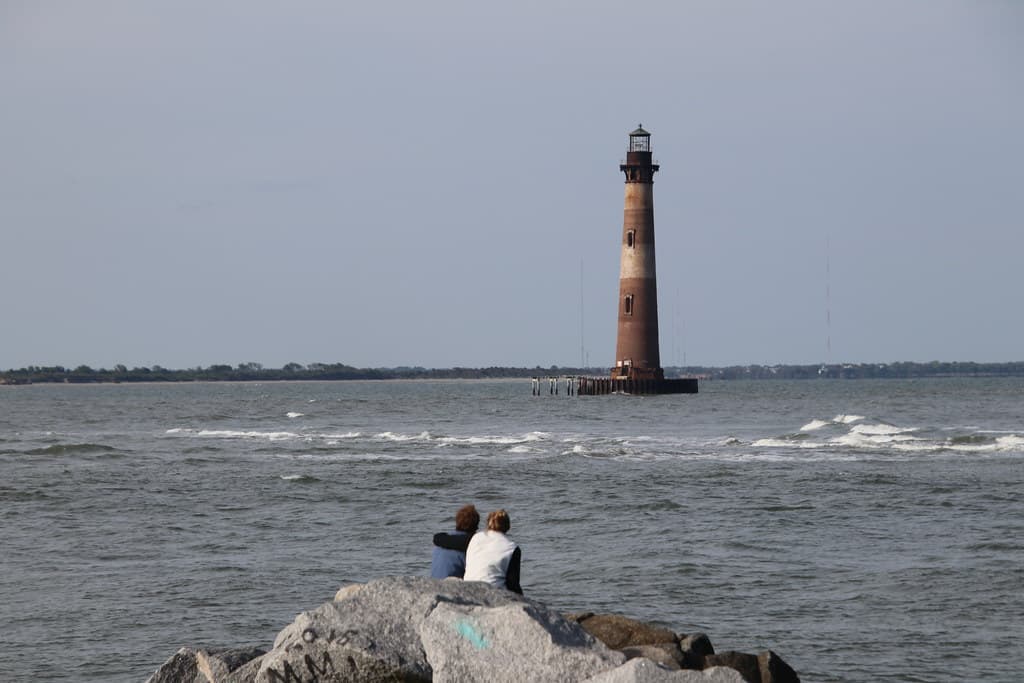 Credit: Flickr
Morris Island Lighthouse (Morris Island, Charleston, South Carolina) - April 8th, 2018
Shorebirds own this place—willets, red knots, and piping plovers work the wrack line during spring and fall migrations. Dolphin fins slice the inlet where Folly River meets the Atlantic, and pelicans dive-bomb schools of mullet in the shallows. The beach itself is narrow, edged by dunes and sea oats that rustle in the onshore breeze. Driftwood logs the size of dock pilings litter the high-tide mark, bleached gray by sun and salt.
You won't find umbrella rentals or beach bars here. The preserve exists to protect nesting habitat and tidal ecology, so the only amenities are a small parking area and the boardwalk. Bring water, leave before dusk, and time your visit around low tide if you want to explore the sandbars without swimming. The lighthouse, though unreachable on foot, anchors every photograph—a sentinel reminding you that not every Carolina beach bends to convenience.


