
You reach Freshwater Lake Beach by threading through coastal scrub and live oak thickets, emerging onto a narrow strip of sand where the lake's tea-colored water laps one shore and the Atlantic thunders just beyond a low dune ridge. The unusual geography—a freshwater body separated from the ocean by a thin ribbon of beach—creates a microclimate that attracts wading birds, painted turtles basking on half-submerged logs, and precious few beachgoers who know it exists.
“The rare juxtaposition of a tannin-rich freshwater lake and the Atlantic Ocean separated by a single narrow beach creates dual swimming experiences within fifty yards.”
 Credit: Flickr
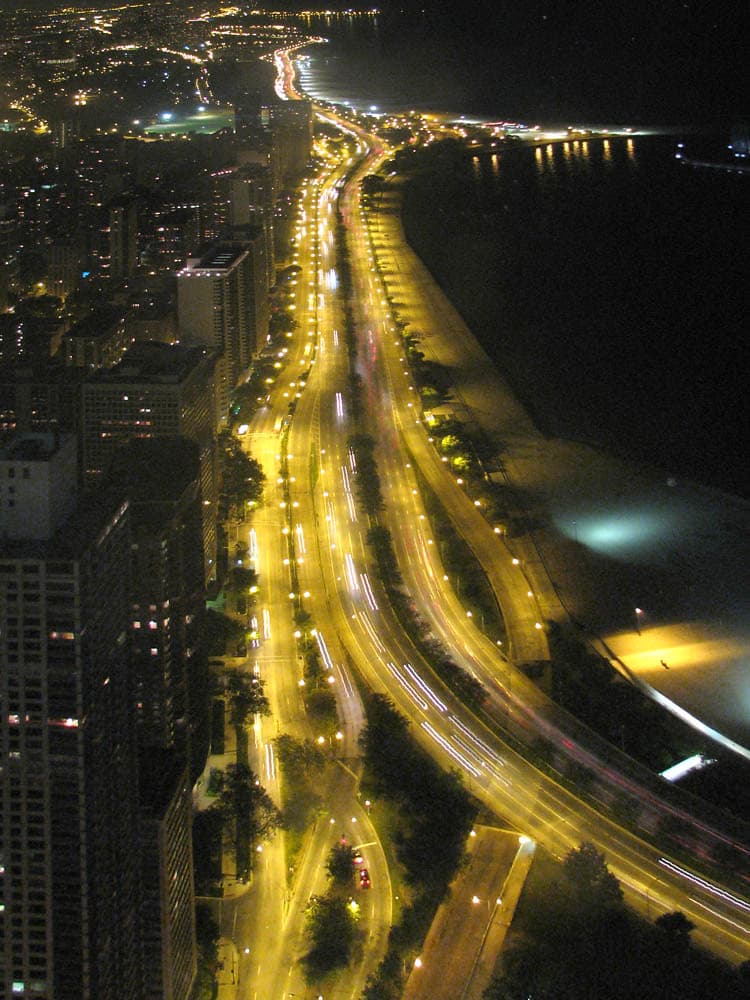
The Lights of Lake Shore Drive
The lake side offers bathwater-warm swimming in shallow depths stained mahogany by dissolving vegetation, while a short walk over the dunes delivers proper waves and sea breeze. Bring binoculars: great blue herons stalk the shallows at dawn, and during spring migration you might spot wood ducks or pied-billed grebes gliding across the glassy surface. The surrounding wetlands hum with dragonflies in summer, their metallic bodies catching light as they patrol the water's edge.
This is Georgetown's least publicized strand, a place where you're more likely to share the sand with fiddler crabs than families with coolers. The lake's warmth extends the swimming season well into October, when the ocean has turned brisk. Pack insect repellent for the forest approach and a kayak if you have one—the lake's protected waters make ideal paddling territory, with channels winding into marshland where the only sounds are wind through sawgrass and the occasional splash of a jumping mullet.


