
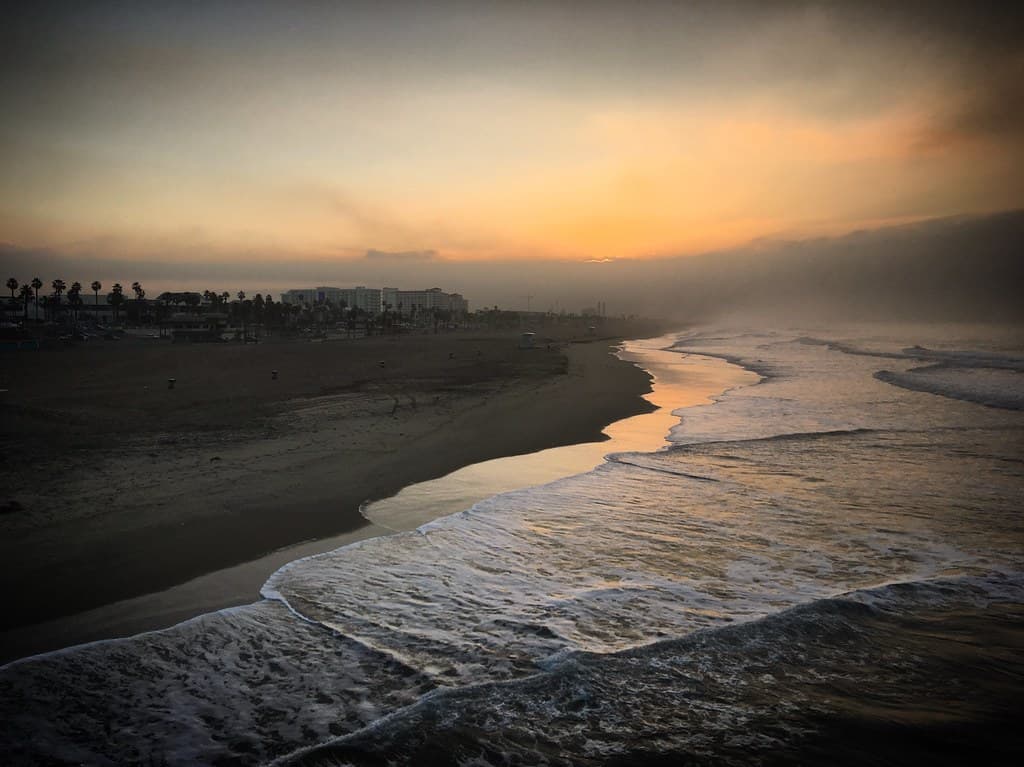
Huntington Beach unfolds along a stretch of South Carolina coastline where Georgetown County's salt marshes give way to open Atlantic swells. The sand here runs firm and caramel-colored, wide enough that even on summer weekends you'll find space between beach umbrellas. Behind the dune line, gnarled live oaks lean landward, their branches hung with Spanish moss that sways in the onshore breeze. The beach takes its name from the adjacent Huntington Beach State Park, though locals have been walking this sand long before any formal designation.
“One of the few South Carolina beaches where salt marsh, maritime forest, and open ocean converge in a single uninterrupted stretch.”
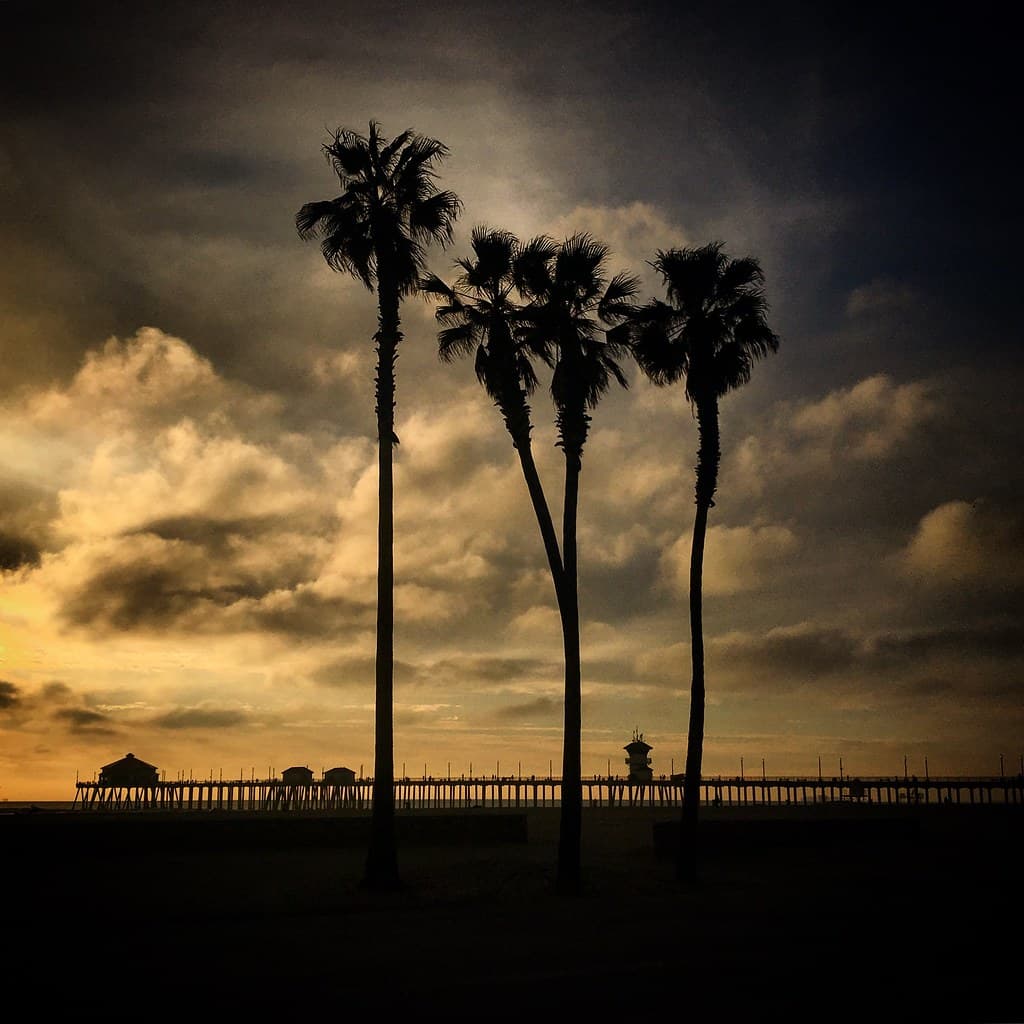 Credit: Flickr
Sunset over the palm trees and the pier in Huntington Beach, California, USA, January 2019
You'll notice the rhythm here differs from the manicured resort towns farther south. Shorebirds—willets, sanderlings, occasional roseate spoonbills—work the wrack line at low tide. The waves roll in with a steady, unrushed cadence, breaking close to shore in frothy white lines that kids chase with boogie boards. Families return year after year, parking in the same shaded spots beneath the pines, hauling coolers packed with Duke's mayo sandwiches and sweet tea.
The water stays swimmable nearly twelve months a year, warming to bathtub temperatures by June and holding heat through October. You'll wade in over a gradual slope, feeling the give of packed sand under your toes, the salt stinging any sunburned shoulders. By late afternoon, the light turns amber, casting long shadows from the jetty rocks where anglers cast for spot and flounder.


