
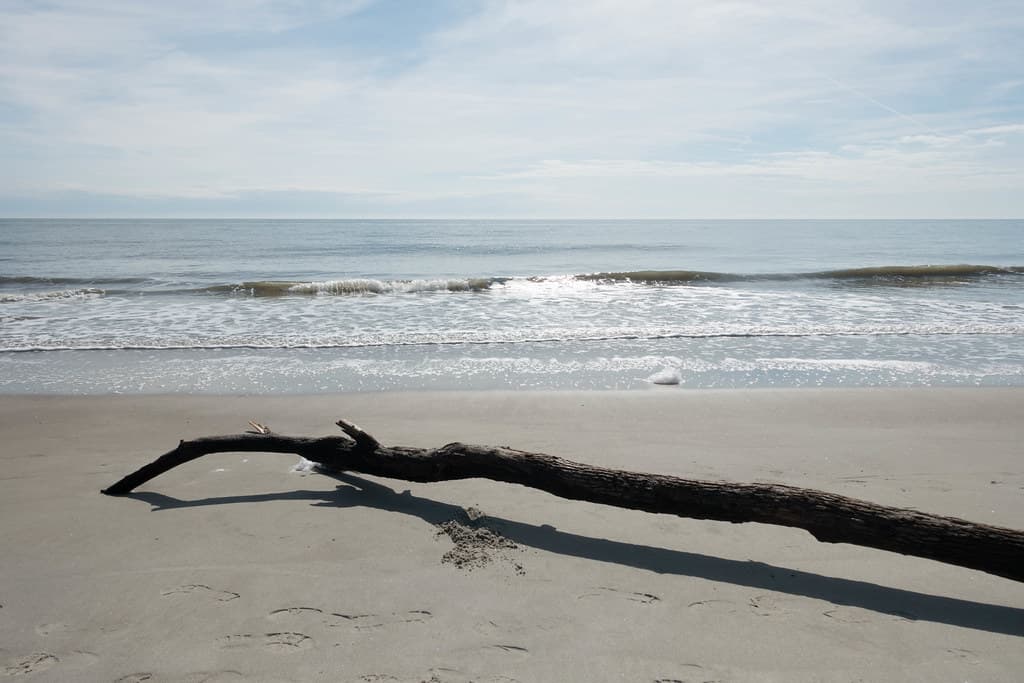
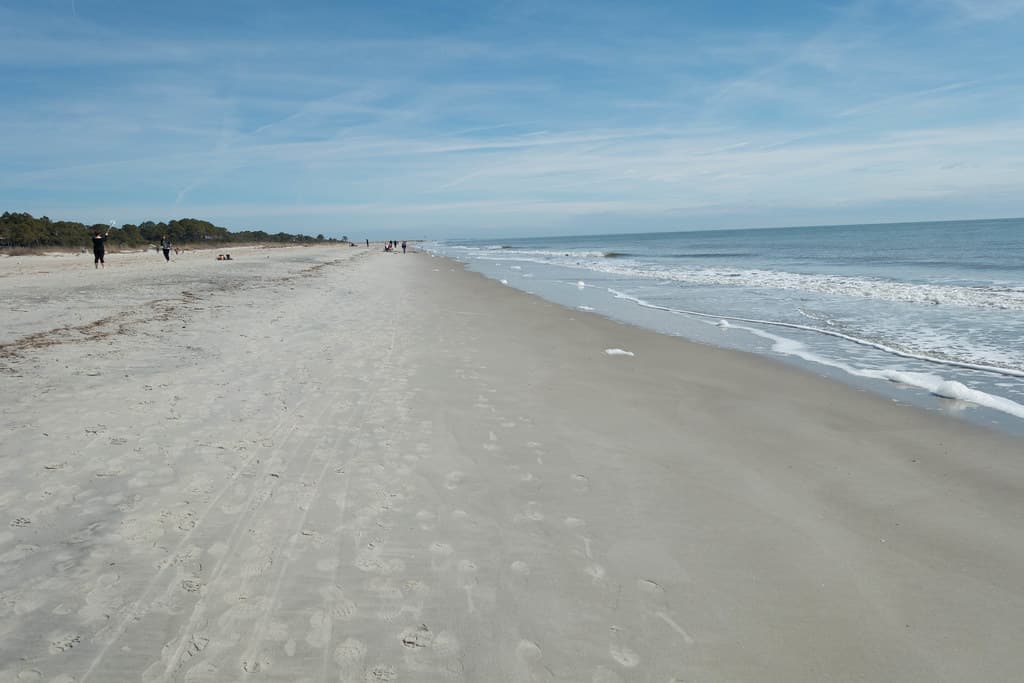
The beach here refuses to conform to a single character. On the island's northern reach, the sand curves wide and blonde beneath the shade of spreading live oaks, while the southern stretches narrow into ribbons where tidal creeks carve chocolate-brown channels through the beige expanse. You'll notice the trademark hard-pack surface—a cyclist's dream, a jogger's reprieve—that distinguishes Hilton Head from its softer Carolina cousins.
“The island's uncommonly firm sand creates a natural highway where you can bike or jog for miles at the water's edge.”
 Credit: Flickr
Hilton Head Island Beach
Tide dictates everything. At low water, the beach doubles in width, revealing tide pools where fiddler crabs scuttle and sanderlings sprint. The Atlantic here rolls in with a patient rhythm, lacking the drama of northern surf but offering instead a democratic accessibility: toddlers splash in ankle-deep shallows while their parents float beyond the break. March through October, wooden stakes and yellow tape cordon off loggerhead nesting sites, silent monuments to the island's oldest residents.
You'll share these twelve miles with everyone—resort guests wheeling coolers from beachfront towers, retirees power-walking at dawn, teenagers tossing footballs in the surf. Yet the island's scale absorbs the crowds. Walk north from any beach access, and within ten minutes the voices fade to gull cries and the percussive slap of small waves on forgiving sand.


