
South Beach unfurls along Hilton Head's southern tip where the Atlantic meets Calibogue Sound, and the absence of high-rises feels almost rebellious. You reach it through Sea Pines Forest Preserve, where palmetto palms and Spanish moss create a canopy so dense the temperature drops ten degrees. The beach itself stretches wide and flat at low tide, revealing sandbars that pool into warm, knee-deep lagoons where small children wade and herons stalk minnows.
“The maritime forest approach creates a rare threshold between wilderness and coast that most barrier-island resorts bulldozed decades ago.”
 Credit: Flickr
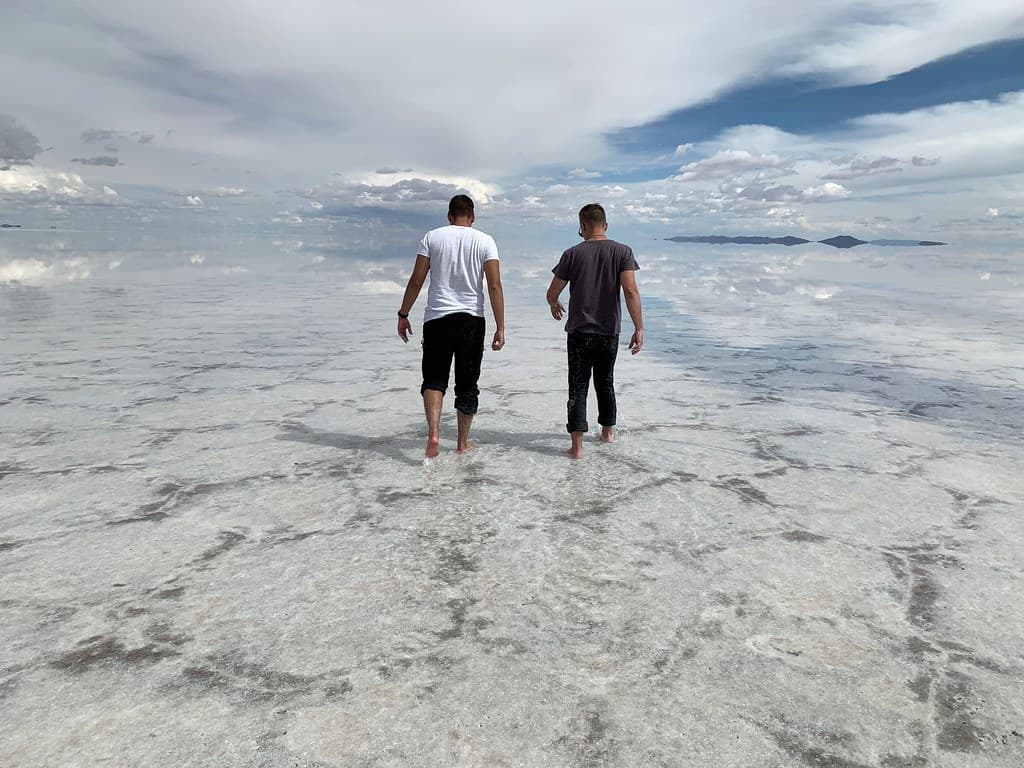
The Salar de Uyuni at 3,656 meters (11,995 ft) above sea level, Oruro & Potosí, Bolivia.
The lighthouse—a candy-striped sentinel built in 1970 but designed to look centuries older—anchors the northern end, but most visitors spread south where the beach bends and narrows. You'll notice the sand here is coarser than the island's northern shores, packed firm enough for cycling. Shelling is best after spring tides, when lightning whelks and Atlantic cockles collect in the wrack line.
What South Beach lacks in amenities it returns in breathing room. Even on summer Saturdays, you can walk a hundred yards without passing another towel. The maritime forest buffers the beach from resort noise, and the tidal creeks that finger inland attract kayakers who glide past spartina marshes at golden hour. It's the kind of beach where you remember what the Lowcountry looked like before the golf courses arrived.


