

The road to Eddings Point winds past weathered clapboard churches and roadside stands selling sweetgrass baskets, ending where asphalt gives way to packed sand and oyster-shell paths. This isn't a beach for bodysurfing or beach volleyball—the shoreline here belongs to egrets and fiddler crabs, to the tidal creeks that carve silver channels through the cordgrass at high water. You'll walk along a narrow strand littered with whelk shells and driftwood, the kind of beach that rewards slow mornings and binoculars.
“One of the few public access points along the ecologically vital ACE Basin, where three rivers meet the Atlantic in North America's largest undeveloped estuary.”
 Credit: Pexels
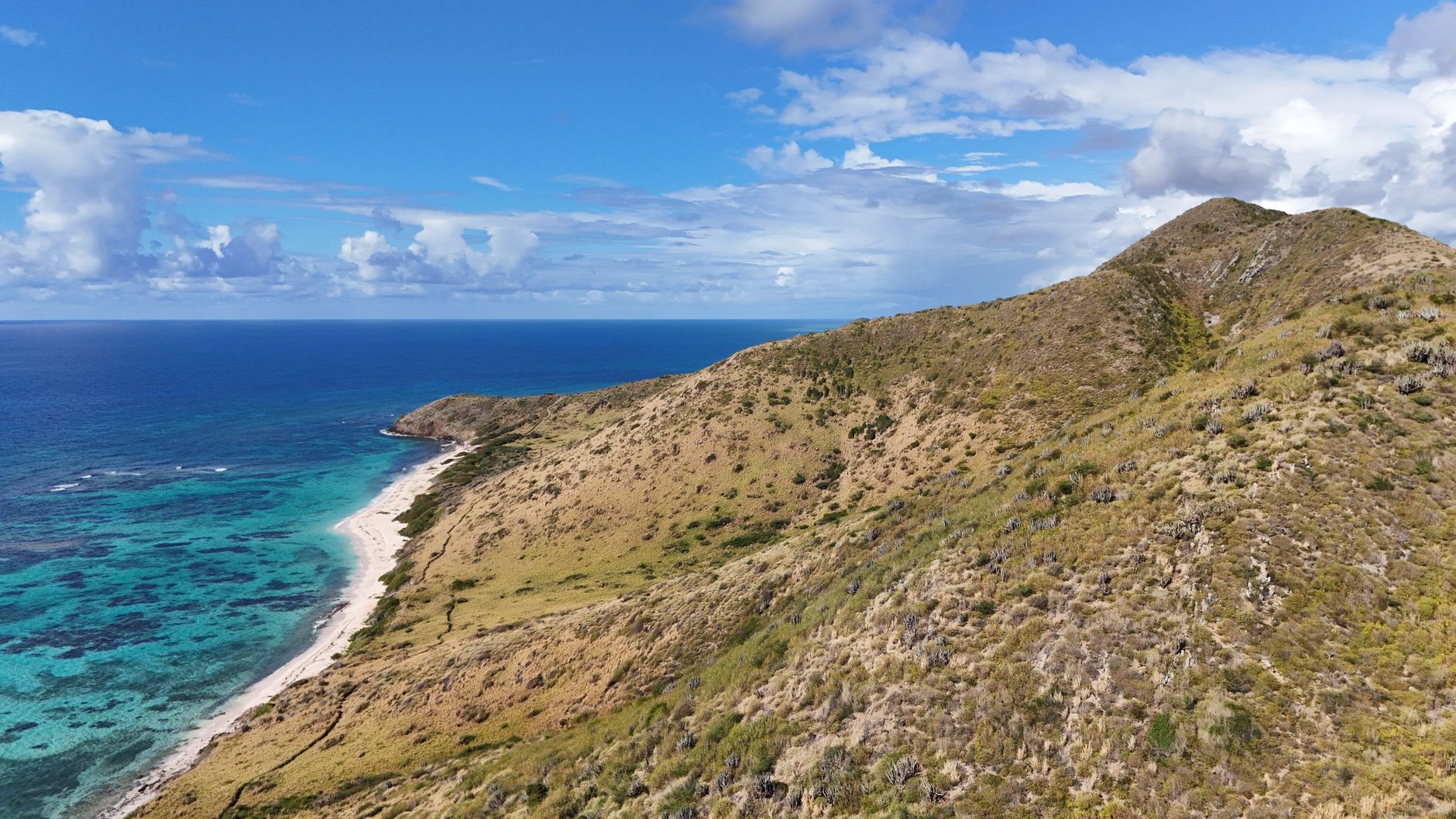
Vivid aerial shot of St. Croix's rugged coastline and clear blue waters under a bright sky.
The water runs murky with tannins from upstream cypress swamps, staining the shallows the color of sweet tea. Wade in carefully—the bottom is soft pluff mud that releases the sulfurous perfume of decomposing marsh matter, a smell locals know as the scent of the Lowcountry itself. Across the sound, you can make out the dark line of Pritchards Island, uninhabited and roadless, a reminder of what these Sea Islands looked like before the bridges came.
Bring a folding chair and a thermos. The appeal here isn't Instagram-ready turquoise but the hypnotic pulse of an estuary doing its ancient work—filtering, feeding, sheltering. By late afternoon, the light turns everything golden: the spartina, the water, even the mud.


