
Counting the waves…
Counting the waves…
A refined fusion of water purity, environmental stability, and communal vibrancy for Padre Island National Seashore Beach.
View MethodologyAnalyzed via live sensors and environmental data.
Wave height, wind, and atmospheric stability.
Live footfall and crowd balance metrics.
Community reviews and curated sentiment.
“Your tires crunch over crushed shell as you drive south on compacted sand, the engine the only sound for miles. Salt spray mists your windshield. Kemp's ridley sea turtles nest in the dunes, and the horizon stretches…”
Limited recent visitor reports — live OBI telemetry is your best guide for current conditions.
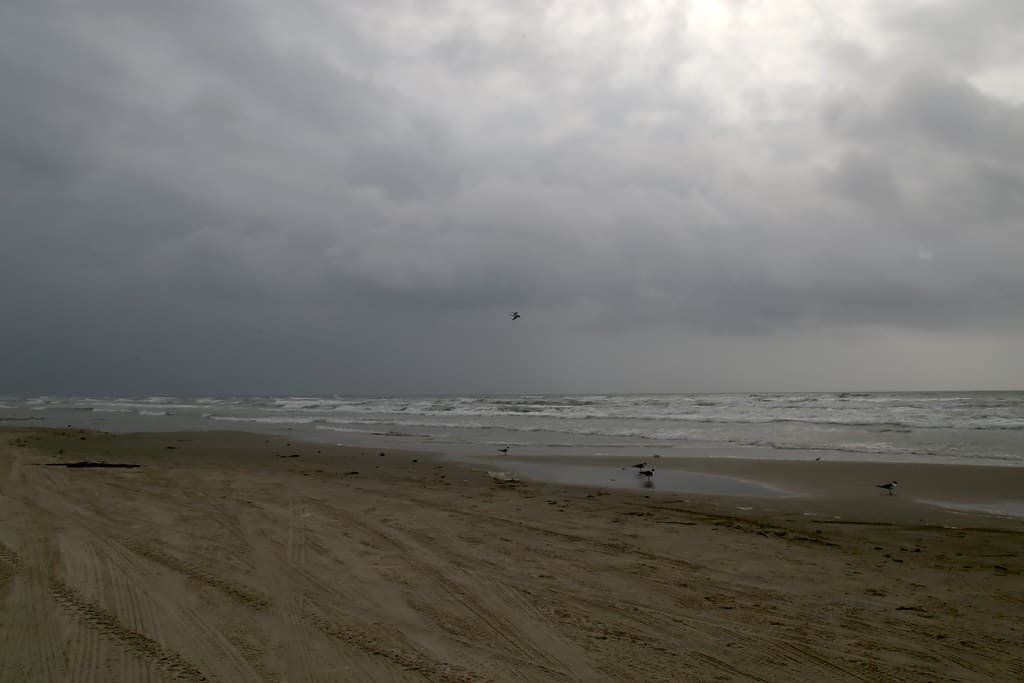
You leave Corpus Christi behind and cross the JFK Causeway onto Padre Island, where the asphalt ends and the real beach begins. This is the longest stretch of undeveloped barrier island in the world, a seventy-mile ribbon of dune grass and tide line where development never arrived. You park near Malaquite Beach or push farther south in a four-wheel drive, sand hissing beneath your chassis, until the crowds thin to nothing and you claim a mile of shoreline all your own.
The Gulf here runs brown-green with sediment stirred up by wind and waves—no postcard turquoise, but honest working water. Shorebirds dart between the foam. Ghost crabs scuttle into burrows. Portuguese man o' war sometimes wash ashore in jellied heaps, so you watch where you step. The wind is constant, warm and briny, tugging at your hat and filling your lungs with the scent of seaweed and baked sand.
Credit: FlickrRide Gulf swells
Best breaks near Bob Hall Pier
Nesting May through August season
Sixty miles south on sand
Where it is
Padre Island National Seashore Beach
Corpus Christi, Texas, USA
27.450800°, -97.294600°
Weather
Loading…
Swell
—
Temp
Warm · Restorative
UV Index
Moderate
Wind
—
Tidal State
Last known
Max Sunlight
—
Ideal Shade
—
May - Sep (Peak)
Jan - Dec (Off-season)
Historical data suggests peak visibility and stable sea temperatures occur during the prime visitation window.
Select a category to load nearby places.
Unlock restaurants, luxury stays and curated maritime experiences within 2km
Swimming is allowed, but conditions can be challenging. Strong currents, undertows, and rip currents are common, especially after storms. No lifeguards patrol most of the 70-mile beach. Check surf forecasts before entering the water and swim parallel to shore if caught in a current. Portuguese man-of-war jellyfish appear seasonally. The water is generally calmer in summer, but always exercise caution. Wade near your vehicle access point and never swim alone in this remote area.
Spring (March-May) and fall (September-November) offer the most comfortable weather with temperatures in the 70s-80s°F and fewer crowds. Summer (June-August) brings heat, humidity, and peak visitation but warmest water. Winter is mild but can be windy with occasional cold fronts. Hurricane season runs June through November. Year-round access means you can visit anytime, though spring break (March) sees heavy traffic. Weekdays are quieter than weekends regardless of season.
From Corpus Christi, take South Padre Island Drive (Park Road 22) about 15 miles southeast to the park entrance. A paved road leads 5 miles to the Malaquite Visitor Center with standard parking. Beyond that, only 4WD vehicles can continue on the beach itself for 60+ miles. Two-wheel-drive vehicles must stay in designated lots. Entry fee is $10 per vehicle (valid 7 days). No public transportation serves the park.
The park itself has minimal amenities: restrooms, showers, and a visitor center with a small snack bar at Malaquite Beach, plus primitive beach camping. No hotels or full-service restaurants exist within park boundaries. For lodging and dining, stay in nearby Corpus Christi (20 miles) or the town of Padre Island just outside the park entrance, which has hotels, vacation rentals, grocery stores, and restaurants. Bring your own food and water for day visits.
Padre Island is one of the most important Kemp's ridley sea turtle nesting sites in the United States. The park hosts public hatchling releases typically between June and August, though exact dates aren't announced in advance to protect the turtles. Check the park's social media or call ahead during nesting season for possible release times. The visitor center also features exhibits about the decades-long conservation program. Witnessing a release is memorable but never guaranteed.
Photos