
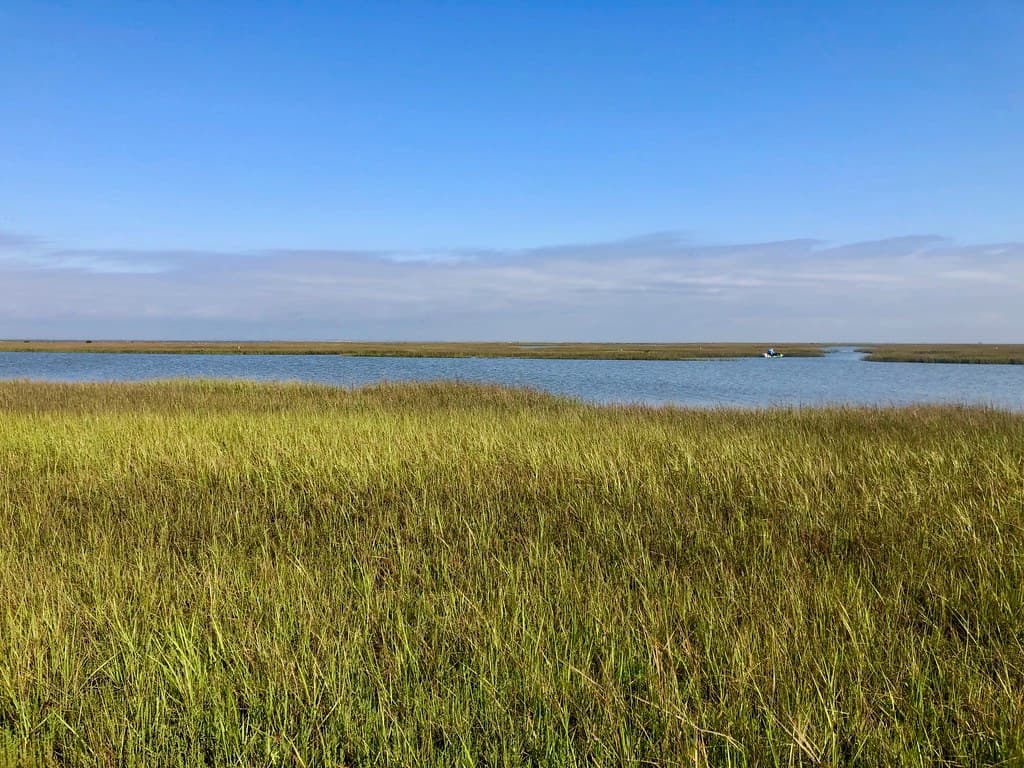
Galveston Island State Park Beach occupies the less-trampled western end of the island, where 2,000 acres of dune field, coastal prairie, and tidal marsh meet the Gulf in a sweep of sand that feels worlds away from the high-rise waterfront. You park amid scrubby vegetation and wooden boardwalks, then step onto a beach where the only skyline is the one nature drew. Great blue herons stalk the shallows, and at low tide, tidal pools reveal hermit crabs and tiny shrimp darting over oyster-shell rubble.
“It's the only state-protected beach on Galveston Island, safeguarding marshes, dunes, and wildlife corridors that have vanished elsewhere along the developed coast.”
 Credit: Flickr
Foundations of Sand, April 27, 2012
The sand here is tan and firm underfoot, the water a murky jade-green—characteristic of the Gulf's silt-laden currents—but the lack of crystalline clarity is more than compensated by the abundance of life. Shorebirds trace the tide line, dolphins surface offshore, and during spring and fall migrations, warblers and tanagers flit through the live oaks edging the campgrounds. You can wade into gentle rollers, cast a line from the jetty, or simply spread a blanket and watch the sun sink into the bay side, painting the spartina gold.
Beyond the beach, trails thread through the marsh, offering close encounters with roseate spoonbills and alligators. The park's dual-sided geography—Gulf beach on one edge, Galveston Bay wetlands on the other—creates a microcosm of the Texas coast's ecological wealth, all within a short drive from Houston.


