
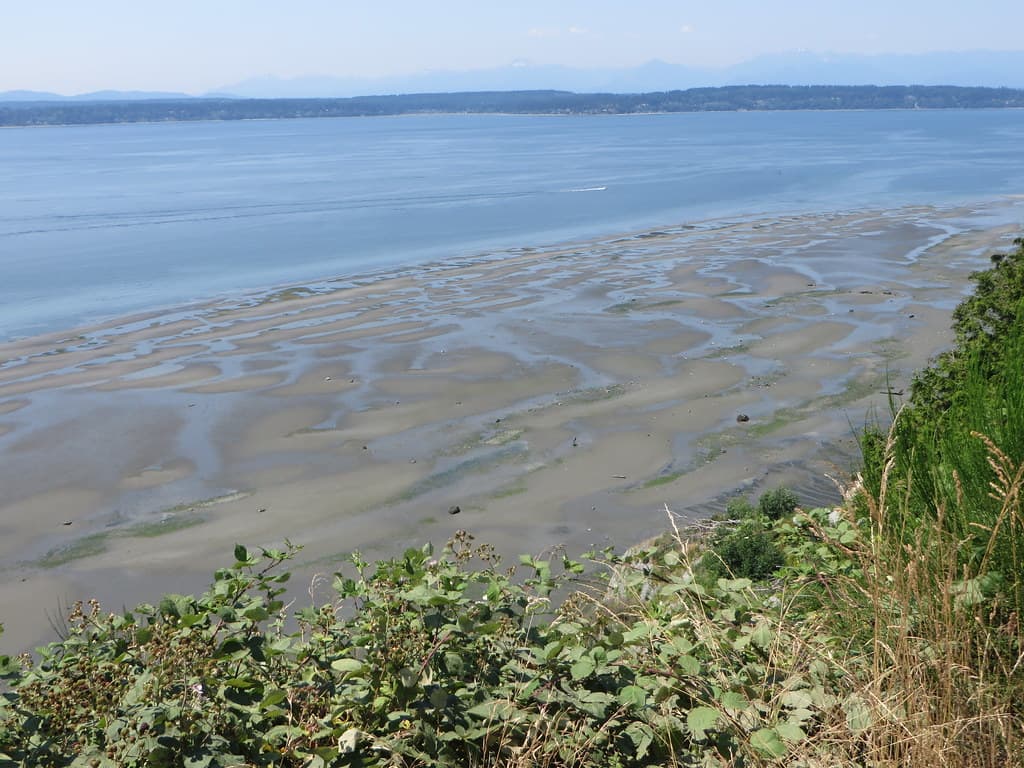
Magnolia Beach doesn't pretend to be anything but itself: a utilitarian stretch of Texas coastline where families back their trucks onto the sand, unload coolers under salt-faded awnings, and wade into bathwater-warm shallows that never deepen much past your knees for a hundred yards out. The 1,500-foot fishing pier draws serious anglers pulling in redfish and flounder, their lines slicing through air thick with the calls of laughing gulls and the distant clang of industrial Port Lavaca.
“One of the few Texas beaches where industrial skyline and family tradition coexist without apology, the working waterfront lending authenticity rather than detracting from it.”
 Credit: Flickr
Discovery Park
The beach runs wide and flat, fringed by scrubby dunes and the occasional live oak bent horizontal by prevailing southeasterlies. You'll share the sand with multi-generational gatherings—grandmothers beneath pop-up tents, children chasing ghost crabs with plastic buckets, teenagers tossing footballs in the surf line. The shoreline disappears into haze where Lavaca Bay meets the wider Gulf, while behind you, storage tanks and cranes punctuate the skyline with an honesty rare among coastal Texas towns.
Come for the sunset and you'll understand why locals return: the sky fractures into tangerine and magenta, silhouetting the pier's skeletal frame while the bay surface turns to hammered copper. It's not dramatic in the postcard sense—no cliffs, no crashing surf—but there's a particular grace in watching the working coast exhale at day's end, shrimpers motoring home, the refinery flare stacks blinking to life against the darkening east.


