

The southern terminus of Isla Blanca Park delivers what the island's party reputation rarely promises: elbow room. You park near the jetty, kick off your sandals, and walk south along a beach that widens as the crowds thin. The sand here runs coarse underfoot, studded with broken shell fragments that glint pink and violet when wet. Families stake out spots near the dunes, their coolers anchored in the sand, while anglers work the jetty rocks where the Brazos Santiago Pass funnels baitfish and redfish into casting range.
“The last quiet stretch of sand before the Brazos Santiago Pass, where the Gulf meets the ship channel and the island runs out of real estate.”
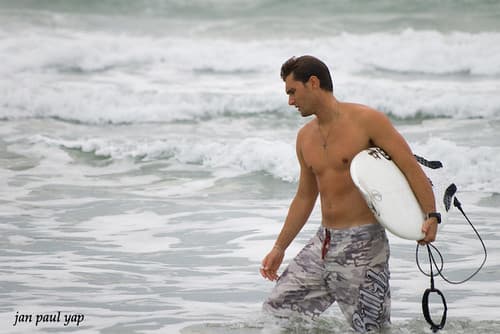 Credit: Flickr
Surfer
The Gulf here lacks drama—no thundering shore break, no towering dunes—but that simplicity is the point. Water temperature hovers in the low eighties through summer, cooling only slightly in winter, and the gradual slope makes wading safe for toddlers. By late afternoon, the western sky begins its nightly performance: tangerine bleeding into plum, the sun dropping behind the Laguna Madre's far shore while brown pelicans cruise the surf line in formation.
You'll smell salt and sunscreen, occasionally the faint diesel note from shrimp boats working offshore. This is Cameron County beach culture at its most functional—no cabanas, no cocktail service, just sand and Gulf and the understanding that sometimes the best beaches are the ones nobody bothers to Instagram.


