
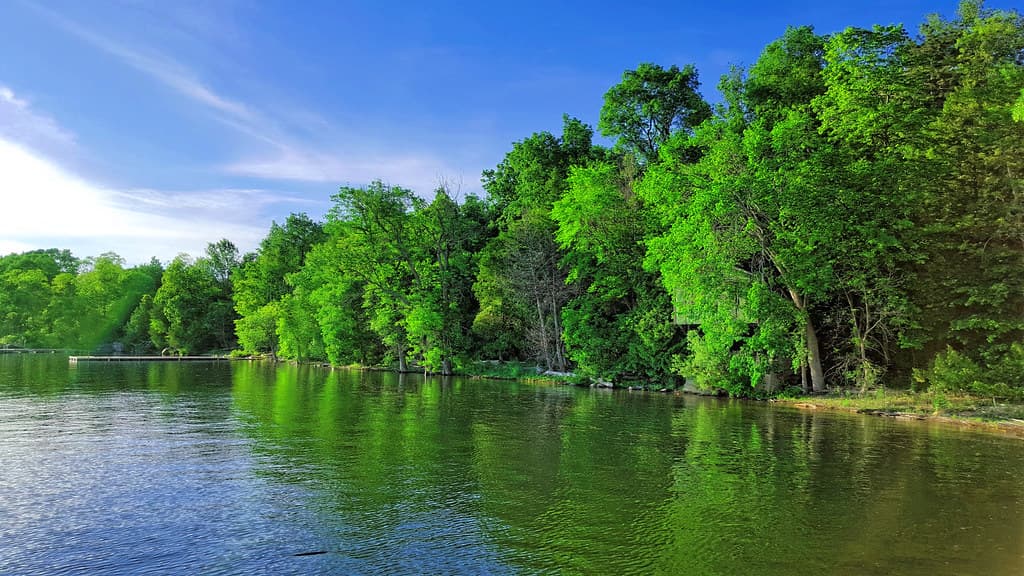
Long Point Shore stretches along a causeway road that separates Button Bay from the main body of Lake Champlain, a slender strip of public access where Ferrisburgh meets water. The beach is stone, not sand—rounded cobbles of Chazy limestone and Trenton shale that click and shift as you walk. Cattails fringe the shallows, and in summer, the scent of drying algae mixes with cut hay from neighboring dairy pastures. The Adirondacks command the western view, their blue-gray silhouettes sharp on clear mornings.
“This limestone cobble beach offers unobstructed Adirondack views across Lake Champlain's widest reach, unchanged by commercial development.”
 Credit: Pexels
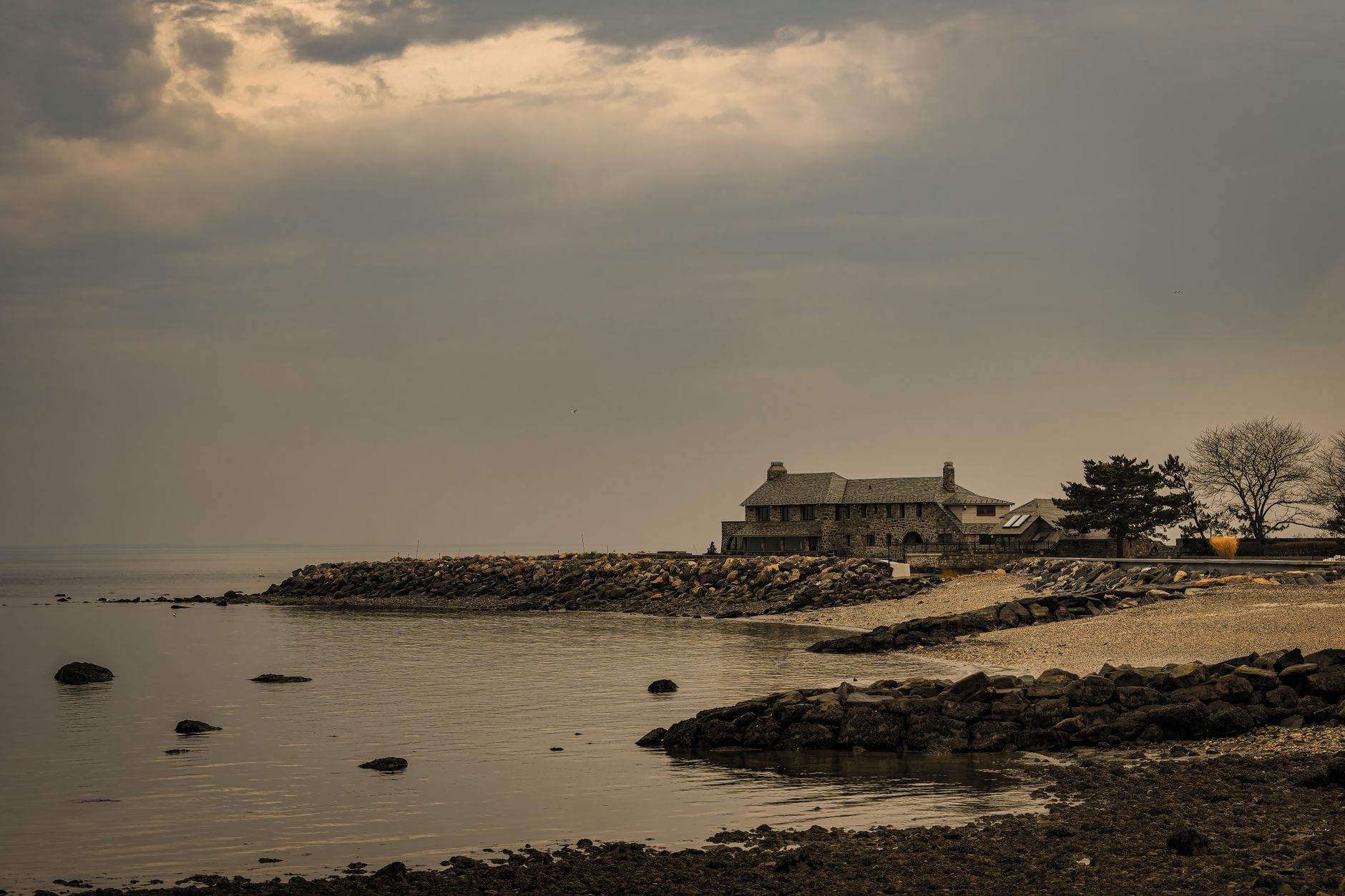
Serene view of a waterfront estate at twilight in Stamford, Connecticut.
This is a locals' beach, unmarked and unmanicured. You'll find no concession stands, no lifeguard towers, just a modest parking turnout and the lake spreading wide. In warm months, families wade into water that warms faster than the ocean but stays bracing enough to quicken your breath. Winter transforms the shore into a windswept study in ice and open water, where the lake refuses to freeze completely and the stones wear caps of rime.
Birders scan for common terns and great blue herons that stalk the shallows. Kayakers launch into the protected waters of Button Bay or venture out toward the shipping channel. The shore lacks drama—no cliffs, no surf—but its quiet persistence, its refusal to perform, makes it genuine. You come here not to be dazzled but to remember what a beach was before it became a destination.


