
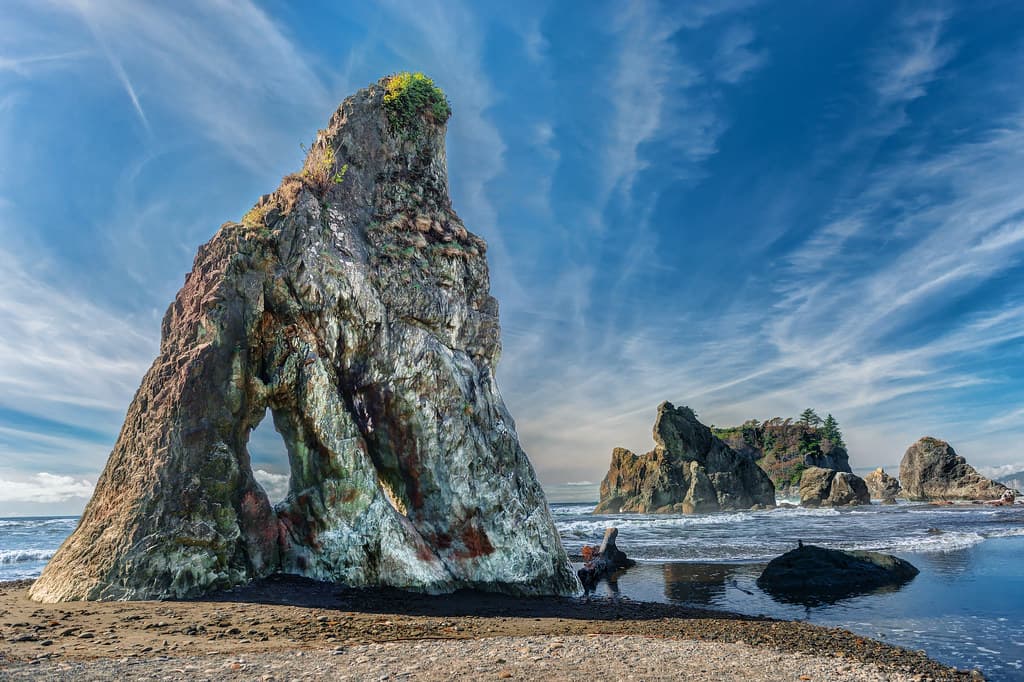
Reaching Cedar Island Beach means committing to the journey. You'll navigate narrow roads through Quinby, past workboat docks and crab shacks, until pavement ends at a sandy spit where the mainland exhales into the bay. The beach itself unfolds as a study in restraint: blonde sand ribbed by yesterday's tide, clusters of sea rocket clinging to low dunes, and the kind of quiet that makes you notice your own breathing.
“One of the Eastern Shore's last uncommercial barrier beaches, where working watermen still haul crab pots within sight of the strand.”
 Credit: Flickr
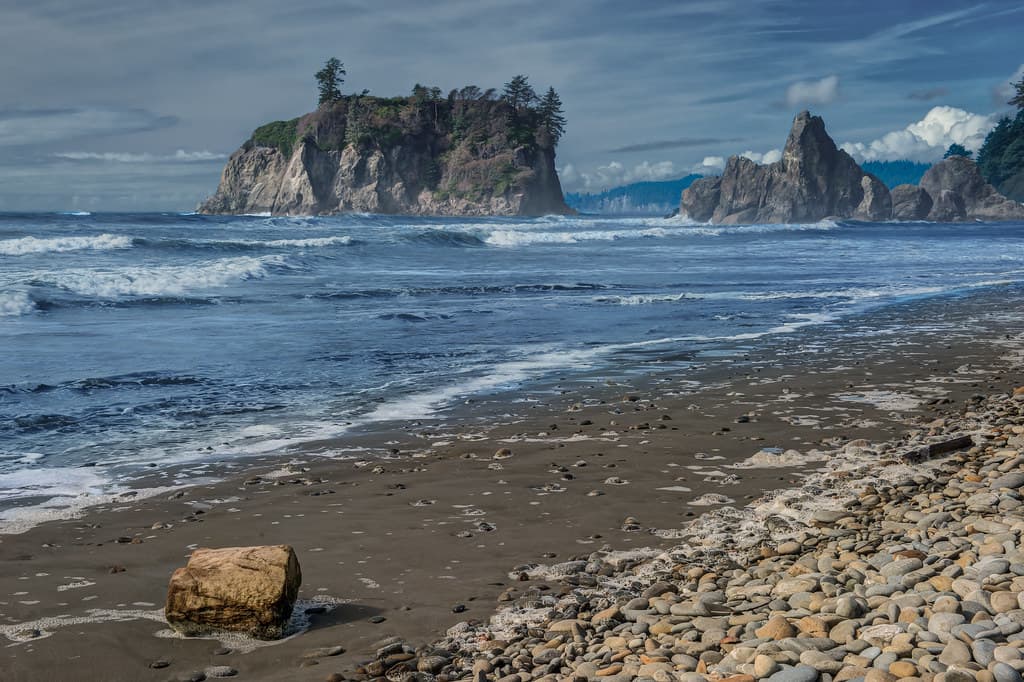
Abbey Island @ Ruby Beach (Forks, Washington)
The water here is shallow and warm, stained amber by tannic marsh runoff. Sandbars emerge at low tide, creating temporary islands where you can wade a hundred yards out and still stand knee-deep. Driftwood—gnarled cedar trunks bleached bone-white—litters the upper beach like abstract sculpture. Bring binoculars: great blue herons stalk the shallows, and bald eagles patrol the tree line behind you.
This is not a beach for lounging infrastructure. No lifeguards, no concessions, no restrooms. Pack everything in, pack everything out. The reward is a shore that feels untethered from the twenty-first century, where the only footprints in the sand might be your own and those of the shorebirds who were here first.


