
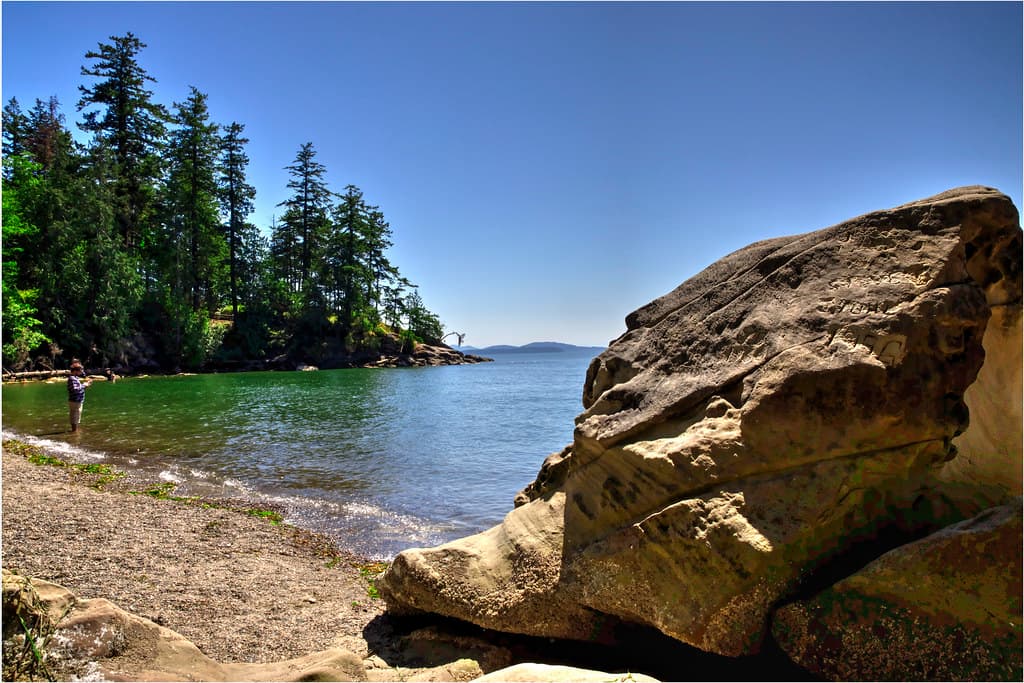
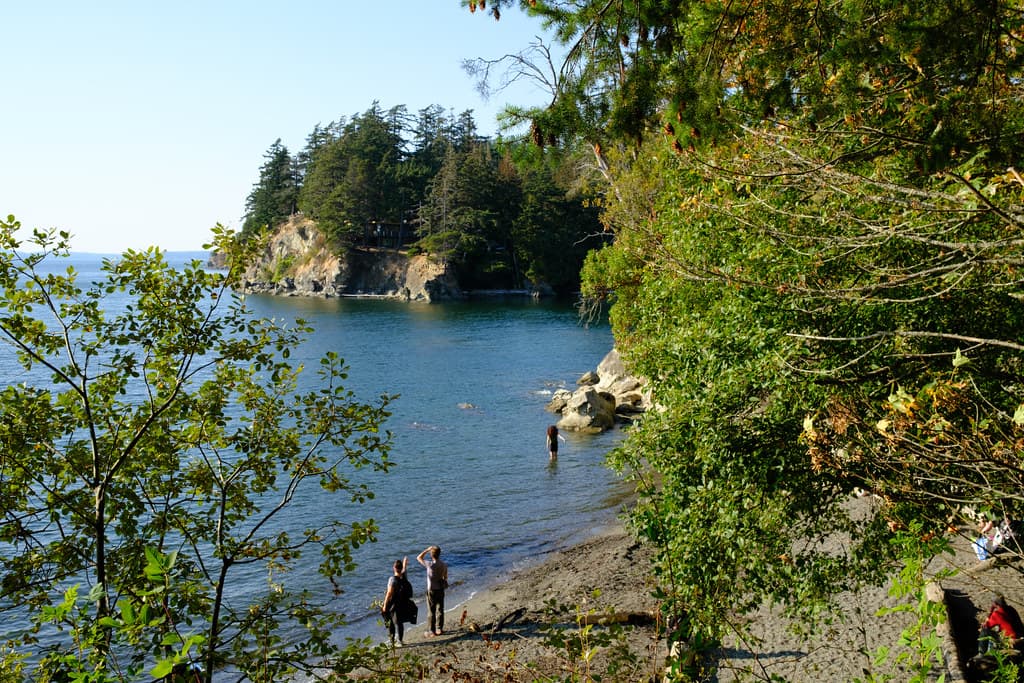
The descent through Larrabee State Park's old-growth canopy feels like entering a green tunnel, each switchback dropping you closer to the salt smell rising from Samish Bay. When you emerge onto the beach, the world narrows to a 200-yard crescent hemmed by cliffs on both sides. Sandstone ledges, sculpted smooth by centuries of tides, jut into the Salish Sea like the ribs of some ancient creature. At low tide, these platforms become your walkway to offshore sea stacks where cormorants dry their wings and harbor seals bob in the kelp beds just beyond.
“Accessible tide pools and sculptural sandstone formations sit within a protected cove that feels utterly remote despite being minutes from a state park trailhead.”
 Credit: Flickr
Larrabee State Park, Washington, Wildcat Cove,Beach
The rock here tells stories in striated layers—rust-orange, ash-gray, burnt sienna—each band marking epochs when this coastline looked nothing like today. You'll find yourself crouching over tide pools where purple sea stars cling to rock walls and hermit crabs scuttle between anemones. Driftwood logs, bleached bone-white and massive as fallen columns, lie scattered above the high-tide line, polished by storm waves and offering the only seating.
Come at any season and you'll likely share the cove with just a handful of others—photographers chasing the low winter light, naturalists with field guides, couples content to sit in silence while the rhythmic wash of waves erases the need for conversation. The Pacific Northwest doesn't do tropical ease, but what you get instead is this: solitude, wildness, and the feeling that you've slipped through a seam in the map.


