
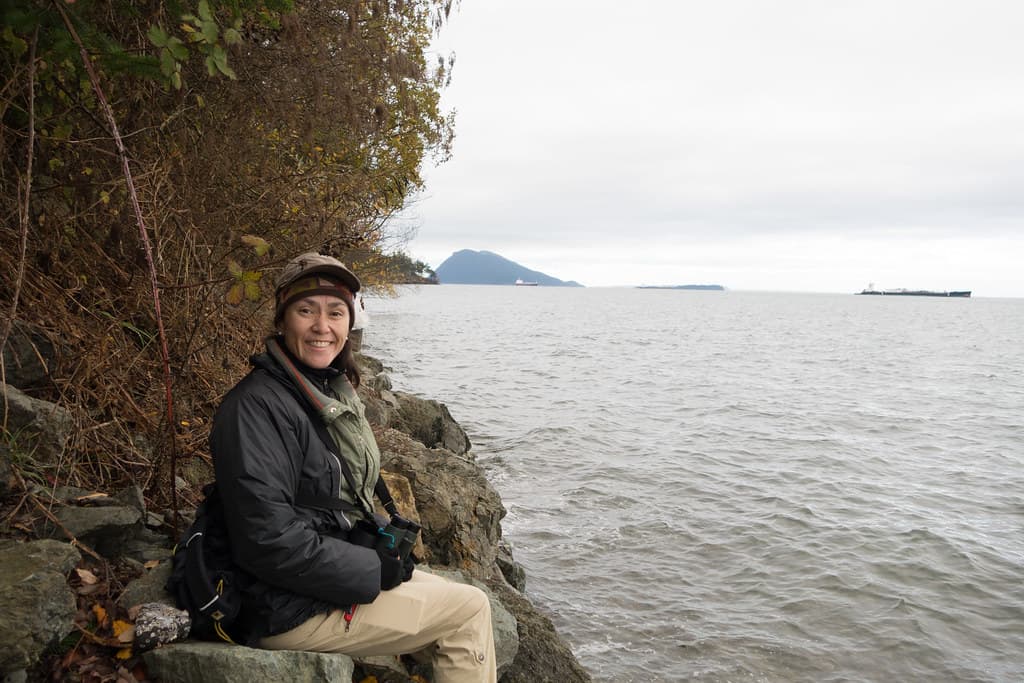
Samish Island isn't technically an island anymore—a slender road connects it to the mainland near Bow—but the place still feels detached, brackish, gloriously overlooked. You park along Samish Island Road and walk down to a beach composed more of rounded stones and oyster shells than sand, where the tide retreats a quarter-mile twice daily, leaving behind tide pools, mud channels, and shorebirds picking through the exposed flats. Mount Baker looms white and improbable to the northeast when clouds permit.
“One of the rare Salish Sea beaches where receding tides reveal working oyster beds and expansive mudflats framed by active farmland and the Cascade Range.”
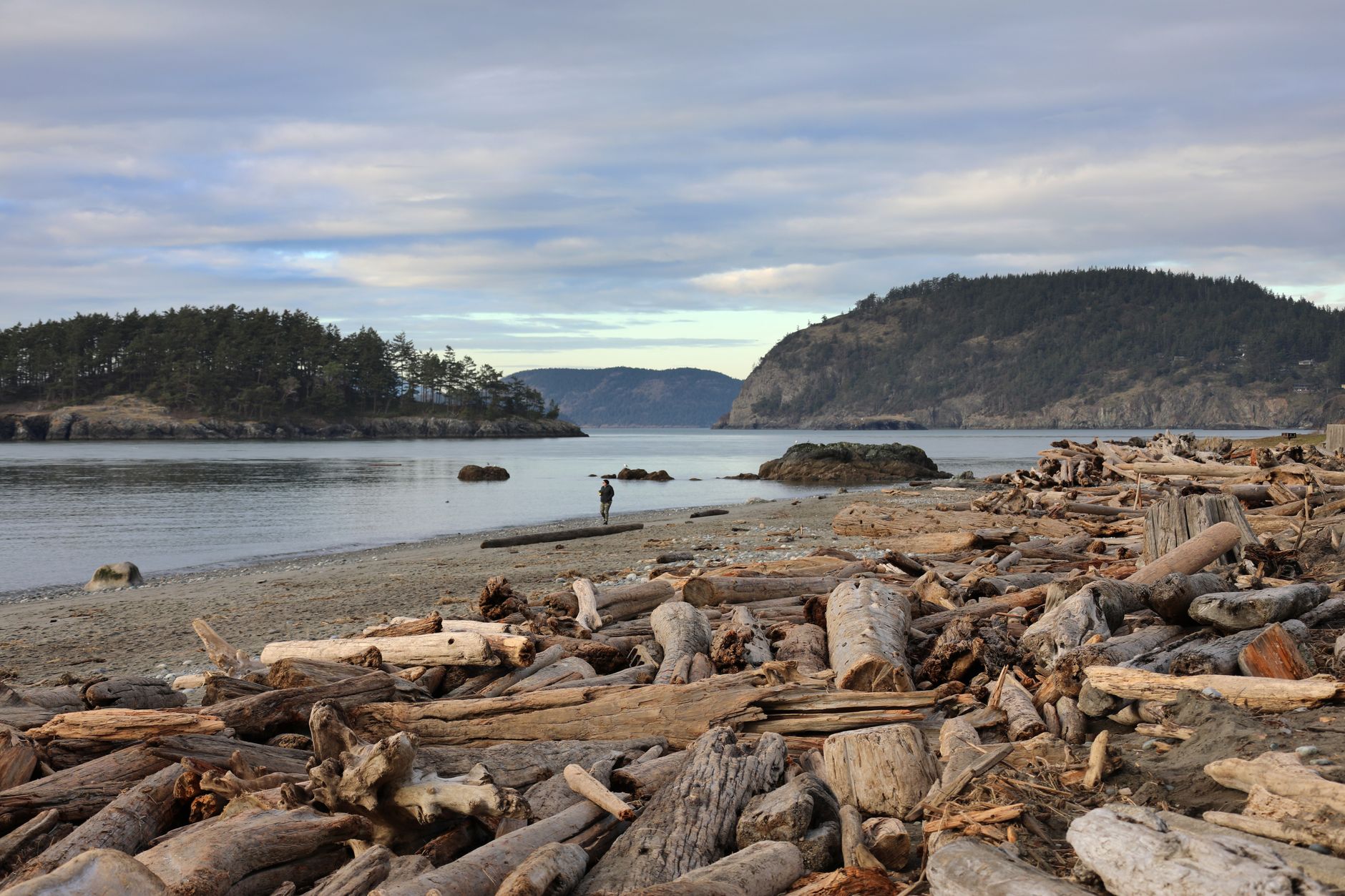 Credit: Pexels
Tranquil scene with driftwood on a rocky beach and scenic view of Seattle coastline.
The driftwood here commands attention: entire root systems twisted into sculptural tangles, silvered trunks you can sit inside, logs stacked in chaotic piles by decades of king tides. Local artists scavenge these beaches for raw material. You'll find families building driftwood forts, photographers chasing the late afternoon light that turns the bay amber, kayakers launching into the protected waters of Samish Bay and Padilla Bay to the north.
Bring boots for the mudflats if you're tidepool-curious, or simply settle onto a log with binoculars during winter months when migrating waterfowl—dunlin, wigeon, scoters—gather in rafts offshore. The beach asks nothing of you except patience with the tides and an appreciation for Washington's quieter, muddier coastlines that don't bother competing with the postcard coves down south.


