Counting the waves…
Counting the waves…
A refined fusion of water purity, environmental stability, and communal vibrancy for Fort Ebey State Park Beach.
View MethodologyAnalyzed via live sensors and environmental data.
Wave height, wind, and atmospheric stability.
Live footfall and crowd balance metrics.
Community reviews and curated sentiment.
“You'll descend through coastal forest to a beach where salt air mixes with Douglas fir, and bleached logs pile against dark pebbles like giant pick-up sticks. The Olympic Mountains rise across the water, sharp and…”
Limited recent visitor reports — live OBI telemetry is your best guide for current conditions.
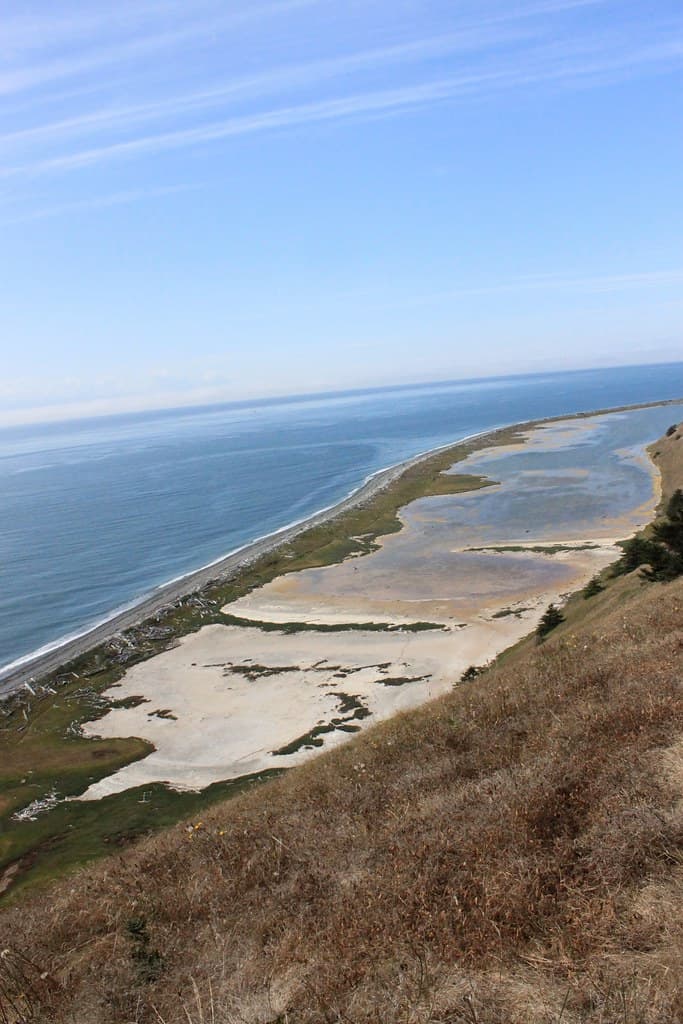
The trail down to Fort Ebey's beach cuts through a canopy of windswept fir and salal, the sound of surf building as you lose elevation. When the forest breaks, you step onto a narrow strip of rounded stones and coarse sand where driftwood—massive silvered logs polished by tide and time—creates natural seating with million-dollar views. Across the Strait of Juan de Fuca, the Olympic range cuts the horizon into white peaks and blue ridges.
This is not a beach for spreading towels and working on your tan. The water stays bracing year-round, and the wind often pushes whitecaps toward shore, but families come for the exploration—tide pools tucked among rocks at the north end, bunkers from the coastal defense system emerging from the bluff like concrete caves, and enough driftwood architecture to fuel a full afternoon of fort-building. You'll share the strand with beachcombers pocketing agates and couples walking hand-in-hand as ferries slide past in the shipping lanes.
Tropical island lagoon from above
Crashing wave at sunset on the shoreline
Gun batteries meet coastal views
Weathered logs frame Olympic peaks
Concrete history in the hillside
Where it is
Fort Ebey State Park Beach
Coupeville, Washington, USA
48.248900°, -122.763900°
Weather
Loading…
Swell
—
Temp
Warm · Restorative
UV Index
Moderate
Wind
—
Tidal State
Last known
Max Sunlight
—
Ideal Shade
—
May - Sep (Peak)
Jan - Dec (Off-season)
Historical data suggests peak visibility and stable sea temperatures occur during the prime visitation window.
Select a category to load nearby places.
Unlock restaurants, luxury stays and curated maritime experiences within 2km
Swimming at Fort Ebey State Park Beach is generally not recommended due to strong currents, cold water temperatures, and significant drift logs. The beach sits along Admiralty Inlet with unpredictable tides and undertows. There are no lifeguards on duty. The beach is better suited for wading, tide pooling, and beach combing. If you do enter the water, stay close to shore, watch children carefully, and be aware of changing tide conditions. The park focuses more on hiking, camping, and scenic enjoyment than water activities.
Fort Ebey State Park Beach is accessible year-round, with each season offering different experiences. Summer (June-September) provides the most reliable weather with temperatures in the 60s-70s°F, though mornings can be foggy. Spring and fall offer fewer crowds and dramatic storm-watching opportunities. Winter visits reward you with solitude and potential whale-watching from the bluffs. The beach faces west, making it excellent for sunset viewing any time of year. Plan visits during low tide for the best beach exploration and tide pooling opportunities.
Fort Ebey State Park is located about 8 miles southwest of Coupeville on Whidbey Island. From Seattle, take the Mukilteo-Clinton ferry (about 30 minutes), then drive north on Highway 525 and west on Libbey Road. A Discover Pass ($10 daily or $30 annual) is required for parking. The park has multiple parking areas; beach access is via a steep trail from the main parking lot. The hike down takes 10-15 minutes. Plan accordingly as the return climb is strenuous for some visitors.
Fort Ebey State Park has basic amenities including restrooms and picnic areas, but no food services. Bring your own food, water, and supplies. The park offers 50 campsites with water and restrooms but no RV hookups. For restaurants and groceries, drive to nearby Coupeville (8 miles), which has cafes, seafood restaurants, and markets. Oak Harbor (10 miles north) offers more extensive dining and shopping options. The town of Coupeville also has several bed-and-breakfasts and hotels if you're not camping at the park.
Yes, Fort Ebey preserves historic World War II gun batteries that defended Admiralty Inlet. You can explore Battery 248, which housed two 6-inch guns, via a short trail from the parking area. The concrete structures and observation posts remain intact and offer fascinating glimpses into coastal defense history. Interpretive signs explain the fort's role in protecting Puget Sound. The gun batteries also provide excellent viewpoints over the water. Bring a flashlight if you want to explore the darker interior spaces of these historic military structures.
Photos