
Counting the waves…
Counting the waves…
A refined fusion of water purity, environmental stability, and communal vibrancy for Ruby Beach.
View MethodologyAnalyzed via live sensors and environmental data.
Wave height, wind, and atmospheric stability.
Live footfall and crowd balance metrics.
Community reviews and curated sentiment.
“You'll descend a short wooden staircase to find a beach where rust-colored pebbles crunch underfoot and fog threads between monolithic rock formations. The air tastes of brine and fir resin, and tidepools brim with…”
Limited recent visitor reports — live OBI telemetry is your best guide for current conditions.
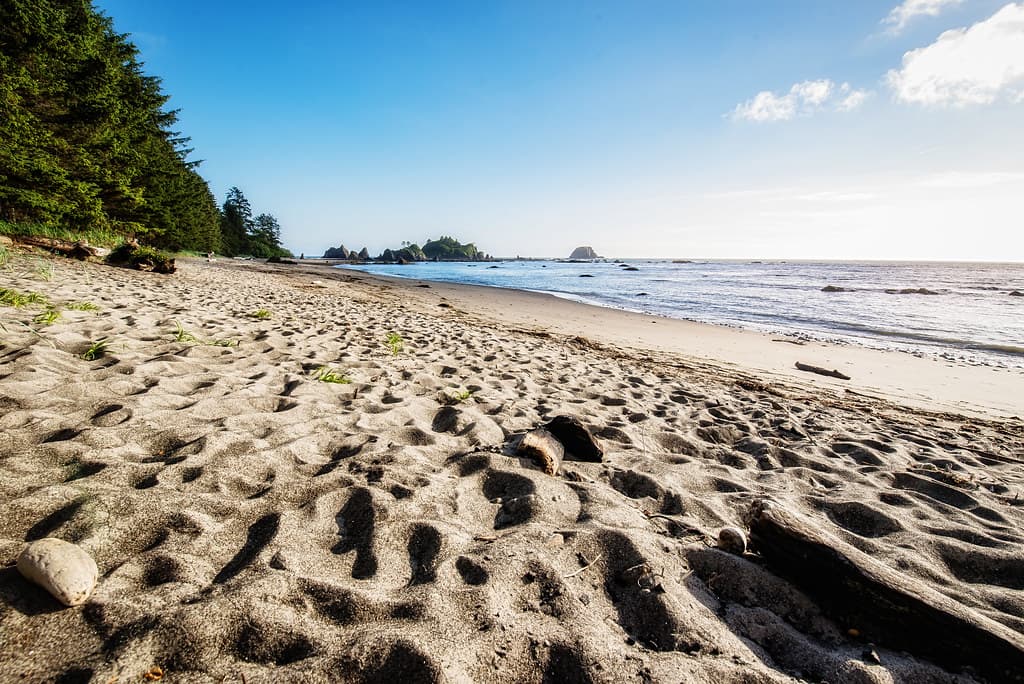
The beach earns its name not from gemstones but from garnet-flecked sand that glints burgundy when wet, a consequence of the Olympic Mountains' metamorphic bedrock grinding into the sea. You navigate a maze of driftwood logs—some as thick as your torso, stripped gray by relentless surf—while Harbor seals surface beyond the kelp line, their whiskers twitching as they track salmon runs.
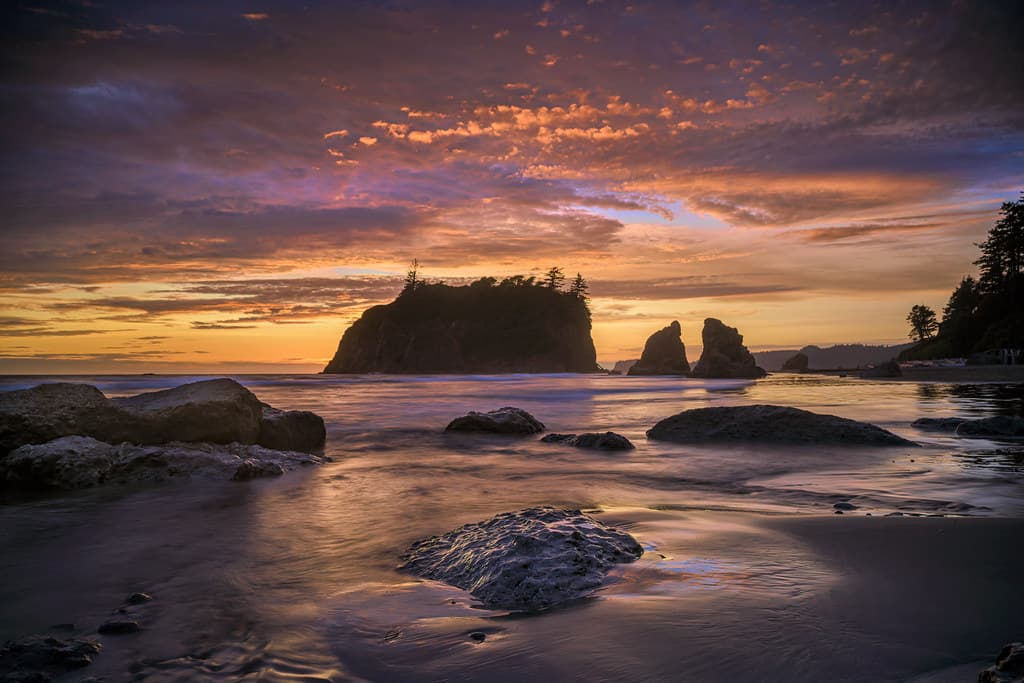
Abbey Island dominates the southern view, its forested crown severed from the mainland by centuries of wave action. At minus tides, you can walk tidepool channels where ochre stars cling to basalt and hermit crabs scuttle through forests of rockweed. The water never exceeds fifty-five degrees, even in August, and sneaker waves claim the unwary—you'll want to watch the surf rhythm before turning your back.
Shoot Abbey Island at dusk
Explore channels at minus tide
Climb bleached log sculptures
Where it is
Ruby Beach
Forks, Washington, USA
47.711300°, -124.416000°
Weather
Loading…
Swell
—
Temp
Warm · Restorative
UV Index
Moderate
Wind
—
Tidal State
Last known
Max Sunlight
—
Ideal Shade
—
May - Sep (Peak)
Jan - Dec (Off-season)
Historical data suggests peak visibility and stable sea temperatures occur during the prime visitation window.
Select a category to load nearby places.
Unlock restaurants, luxury stays and curated maritime experiences within 2km
Swimming at Ruby Beach is generally not recommended due to dangerous conditions. The Pacific Ocean here has strong currents, unpredictable waves, and extremely cold water year-round (typically 45-55°F). Sneaker waves can appear without warning and pull people into the water. There are no lifeguards on duty. The beach is better suited for tidepooling, photography, and beach walking. If you visit the shoreline, never turn your back to the ocean and stay well above the high tide line.
Ruby Beach is accessible year-round, but summer (June-September) offers the most reliable weather with less rain and temperatures in the 60s°F. However, winter and spring provide dramatic storm-watching opportunities and fewer crowds. Low tide is ideal for exploring tide pools and sea stacks. Sunset visits are particularly spectacular. Morning often brings fog, creating mystical landscapes perfect for photography. Expect rain any time of year, as this area receives over 100 inches annually. Check tide tables before visiting for the best experience.
Ruby Beach is located along Highway 101, approximately 27 miles south of Forks, Washington. The well-marked turnoff leads to a paved parking lot with space for about 30-40 vehicles. Parking is free, but the lot fills quickly during summer and weekends. There are vault toilets in the parking area. From the lot, a short 0.2-mile trail descends through coastal forest to the beach. The trail includes stairs and can be slippery when wet. No reservations are needed.
Ruby Beach has no food services or amenities beyond vault toilets. The nearest town is Forks (27 miles north), which offers restaurants, grocery stores, and various lodging options including hotels and motels. Kalaloch Lodge, about 6 miles south, provides accommodations, a restaurant, and a camp store. Several campgrounds operate nearby, including Kalaloch Campground. Plan to bring your own food and water when visiting Ruby Beach, as services are limited along this remote stretch of Olympic National Park's coastline.
Ruby Beach is famous for its dramatic sea stacks—offshore rock formations carved by ocean erosion over thousands of years. Abbey Island is the largest and most prominent. During low tide, you can walk around the base of some sea stacks and explore tide pools teeming with starfish, anemones, and other marine life. Always check tide schedules before exploring, as incoming tides can trap you. The distinctive driftwood scattered across the beach adds to the scenic beauty that makes Ruby Beach one of Washington's most photographed locations.