
The name deceives. Cape Disappointment offers anything but letdown, though British fur trader John Meares thought otherwise when storms blocked his 1788 attempt to enter the Columbia. Today you'll stand where river current wrestles ocean tide in a perpetual hydraulic drama known to mariners as the Graveyard of the Pacific. The beach extends in a two-mile arc of slate-gray sand, anchored by the cape's twin lighthouses—one dating to 1856—that blink warnings across the whitecaps.
“This is the only beach where you can watch two historic lighthouses simultaneously guard the Columbia River's treacherous bar crossing.”
 Credit: Flickr
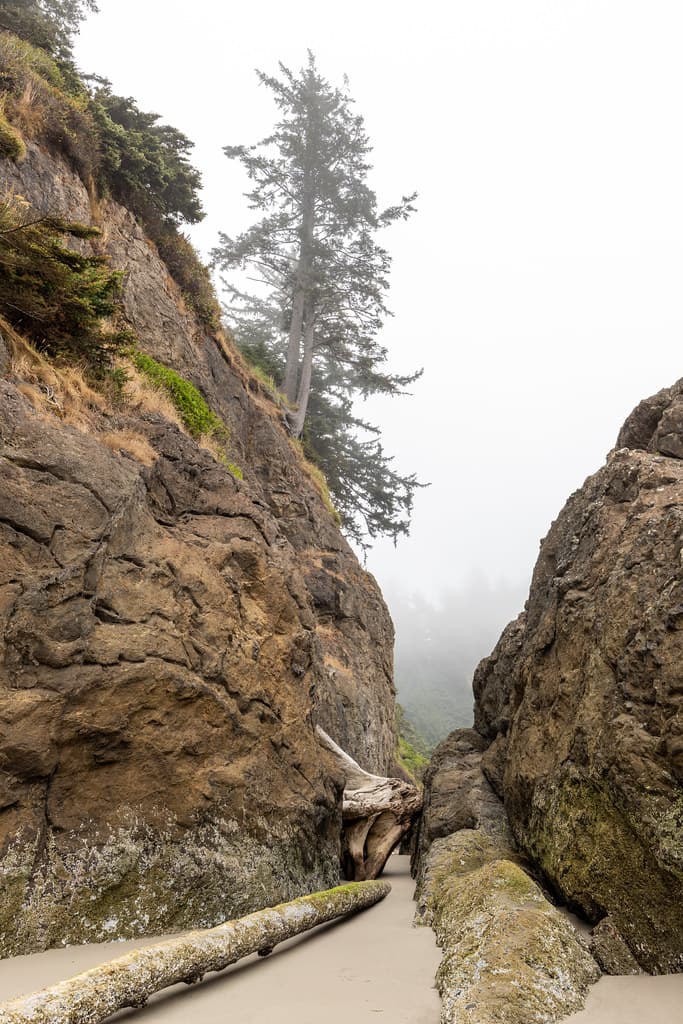
Trees along the cliff
You'll find the shoreline littered with sculptural driftwood, bleached bone-white by sun and surf. Behind you, Sitka spruce and shore pine bend eastward, permanently shaped by relentless Pacific gales. Arrive during winter and you might spot gray whales spouting offshore during their annual migration; come summer and the fog rolls in thick as wool, muffling everything except the foghorn's moan and the endless percussion of waves.
The water stays frigid year-round—rarely above 55 degrees—and rip currents make swimming treacherous. But the drama overhead compensates: bald eagles ride thermals above the cliffs, brown pelicans skim wave crests, and storm systems build on the horizon like distant mountain ranges. The lighthouse trail winds through coastal forest to jaw-dropping overlooks where you can watch container ships navigate the Columbia bar, guided by the same beacons that have marked this convergence for more than a century.


