
The beach stretches in a narrow crescent below the white clapboard lighthouse, where Mukilteo's ferry terminal dominates the northern end with the rhythmic thrum of engines and the metallic clang of car ramps. You'll spread your blanket on coarse sand mixed with crushed shells and pebbles, close enough to watch commuters queue for Whidbey Island while cormorants dive for sculpins in the ferry wake.
“One of the few beaches where you can watch working maritime traffic and wild marine mammals from the shadow of an operational lighthouse.”
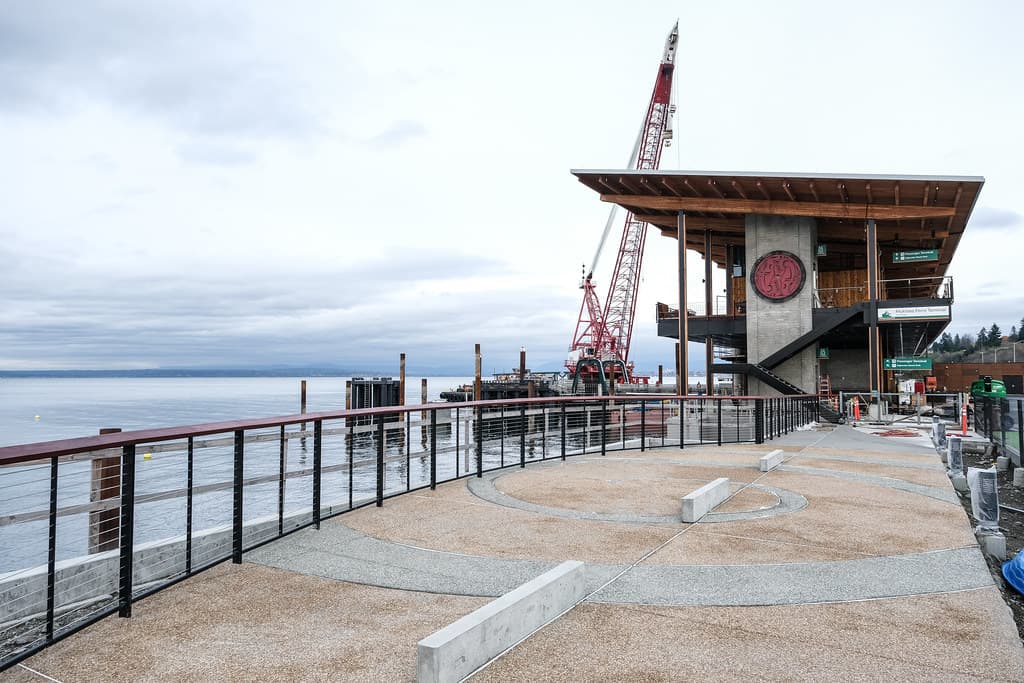 Credit: Flickr
Waterfront promenade
The lighthouse itself, compact and utilitarian in the Puget Sound style, stands on a manicured lawn that slopes to the beach. During summer weekend tours, you can climb the tower's spiral staircase and smell the old paint and machine oil that coastal stations wear like cologne. Below, families claim fire pits for evening cookouts, and the scent of grilling salmon mingles with the iodine tang of exposed kelp at low tide.
This is a beach for layering fleeces over swimsuits, for watching massive container ships glide toward Seattle while your children build castles from glacial sand. The railroad tracks behind you carry freight trains that blow their horns in conversation with ferry whistles—a soundtrack of working waterfront that never pretends to be wilderness, even when seals pop their heads up between the pilings.


