
Freshwater Bay curves into the Olympic Peninsula like a secret, its coarse sand and rounded stones hidden from Highway 112 by a curtain of Douglas fir and western hemlock. The beach faces north across the Strait of Juan de Fuca, where container ships slide past on their way to Vancouver and the San Juan Islands rise in hazy silhouette. At low tide, tide pools dimple the rocky shelves, and you can walk the entire crescent from the boat launch to the kelp-draped western point.
“You're standing at the edge of one of the deepest natural straits in North America, where Olympic rain forest meets international shipping lanes.”
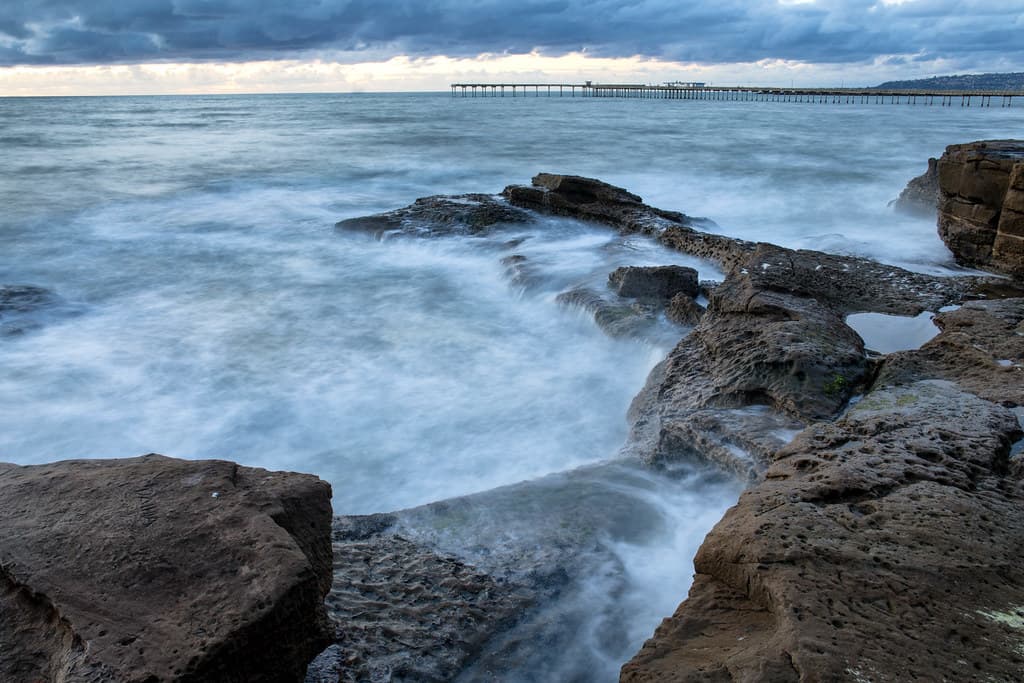 Credit: Flickr
Ocean Beach Pier, San Diego, CA
The water here stays cold year-round—mid-fifties even in August—but that doesn't stop wetsuited kayakers from launching into the protected bay or divers from exploring the rocky drop-offs where lingcod and rockfish congregate. Above the high-tide line, massive driftwood trunks create natural benches and windbreaks, their silver surfaces polished smooth by storms. The beach grass rustles in the near-constant breeze, and the air tastes of brine and wet stone.
This is Port Angeles without the ferry crowds, a place where locals walk their dogs before sunrise and photographers wait for the alpenglow to hit Mount Baker across the water. A short trail climbs through Sitka spruce to viewpoints overlooking the strait, and the nearby Salt Creek Recreation Area extends your explorations into tide pool territory and coastal forest. You won't find beachside cafés or rental umbrellas—just the rhythmic percussion of waves sorting stones and the occasional whistle of a passing freighter.


