
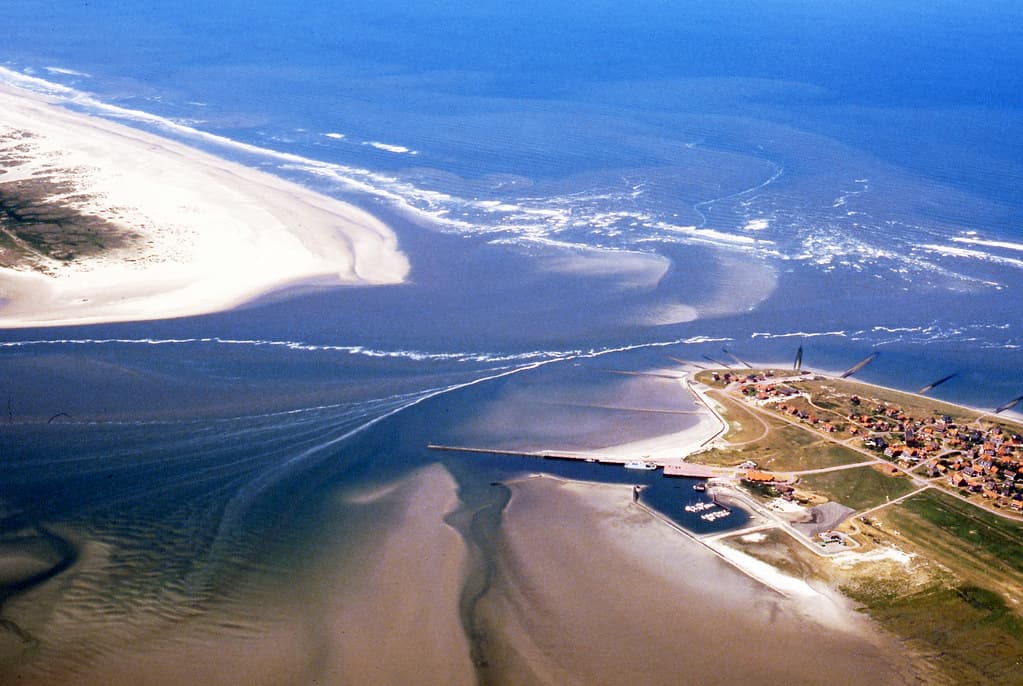
The beach at Salt Creek Recreation Area unfolds at the base of an eighty-foot bluff, accessible by a wooden staircase that switchbacks through salal and cedar. You emerge onto a crescent of sand and rounded stones where the Strait of Juan de Fuca stretches northwest toward Vancouver Island, often visible on clear days as a serrated blue ridge. Driftwood giants—bleached silver by wind and brine—lie scattered across the upper beach, their root balls polished smooth by decades of tides.
“One of the few Strait beaches where extensive sandstone tide pools meet family-friendly access and intact coastal forest in a single sweep.”
 Credit: Flickr
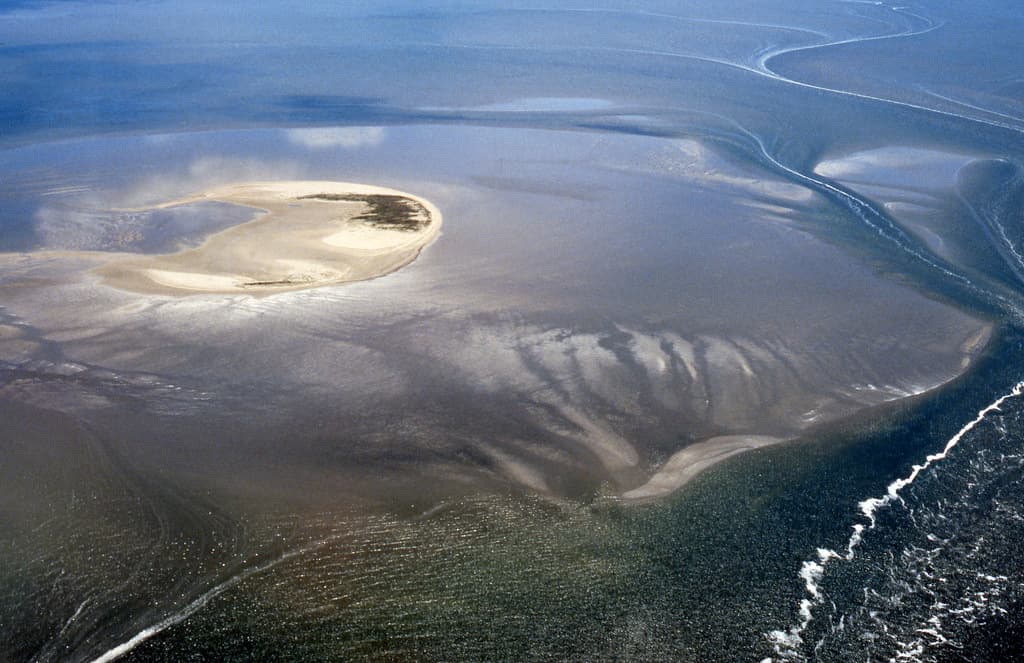
Tidal mudflats and creeks, Kachelotplate, Lower Saxony Wadden Sea National Park, Germany
Low tide transforms the shoreline into an intertidal classroom. Sandstone ledges carved by millennia of wave action form shallow pools where ochre stars grip the rock and bright green anemones retract at your shadow. Children crouch for hours here, nets in hand, while gulls wheel overhead and cormorants dry their wings on offshore rocks. The Olympic Mountains rise to the south, their snowfields catching the afternoon light.
This was once Tongue Point, a Klallam village site, and the beach still feels layered with history—World War II bunkers perch on the bluff above, now repurposed as picnic shelters. Families return year after year, drawn by the reliable access, the protected waters that rarely grow rough, and the sense that this beach exists for exploration rather than display. You leave with sand in your shoes and the briny smell of kelp on your jacket.


