

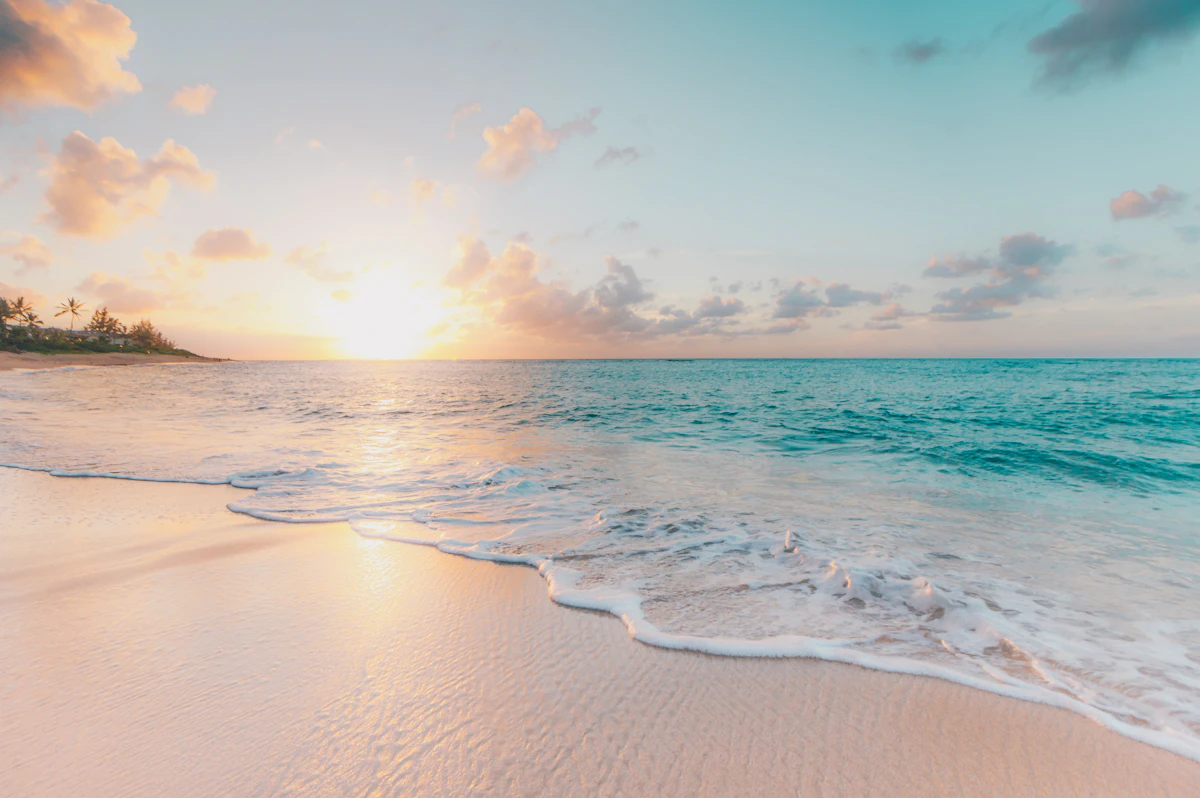
The sand here feels coarser underfoot, mixed with small shell fragments that catch the late-afternoon light. You're standing at the geographic hinge where Píritu's main beach gives way to a less-traveled point, the shoreline angling subtly as it reaches toward the Uchire estuary. A handful of wooden cayucos rest on their sides above the tide line, their paint worn to bare wood in places, rope coiled loosely inside. The air carries a sharper salt tang, cut with the faint vegetal smell of mangroves that fringe the lagoon system inland.
“The point marks a coastal transition where human activity thins and the shore begins its curve toward estuarine wilderness.”
 Credit: Unsplash
Aerial view of turquoise tropical bay
Fewer families venture this far—the access requires walking along the beach or navigating an unpaved track that floods during rainy season. That selective difficulty rewards you with emptier sand and uninterrupted views westward, where the sun sinks into haze above the water. Small waves arrive at irregular intervals, their rhythm less predictable than at the main town beach, breaking across sandbars that shift with storms and currents.
You settle onto damp sand near the waterline as the sky deepens to amber and violet. A lone fisherman wades knee-deep, casting a hand net in practiced arcs, the mesh spreading and collapsing in slow motion. Seabirds wheel overhead, their calls sharp against the wave-wash. This point doesn't announce itself—it simply occupies the margin between destinations, unhurried and unembellished.


